THE ADVENTURE COLLECTIVE® · Independent discovery and booking for outdoor travel

Drive up into the high Andes for a full-day guided hike to Vinicunca—Rainbow Mountain. This high-altitude trek delivers dramatic mineral colors, Ausangate views, and a close look at puna wildlife, but requires acclimatization and sturdy footwear.
Drive up into the high Andes for a full-day guided hike to Vinicunca—Rainbow Mountain. This high-altitude trek delivers dramatic mineral colors, Ausangate views, and a close look at puna wildlife, but requires acclimatization and sturdy footwear.
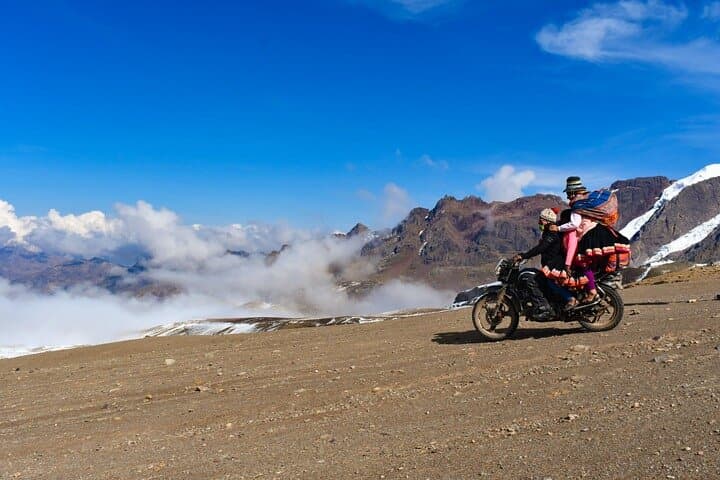
A thin, cold light breaks over the high Andes and the road toward Vinicunca unfolds like a ribbon of compacted earth. By the time you step from the minivan, wind reads your jacket like an open book; the colors of the mountain sit ahead—bands of ochre, rust, and mint—staring back as if daring you to climb.
Verified experiences and guided adventures in the surrounding area.
Operated by X Travel Peru · Cusco, Cusco
A thin, cold light breaks over the high Andes and the road toward Vinicunca unfolds like a ribbon of compacted earth. By the time you step from the minivan, wind reads your jacket like an open book; the colors of the mountain sit ahead—bands of ochre, rust, and mint—staring back as if daring you to climb.
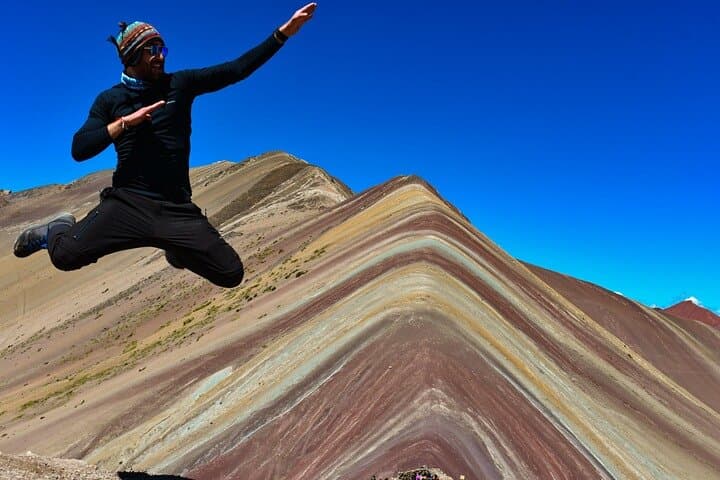
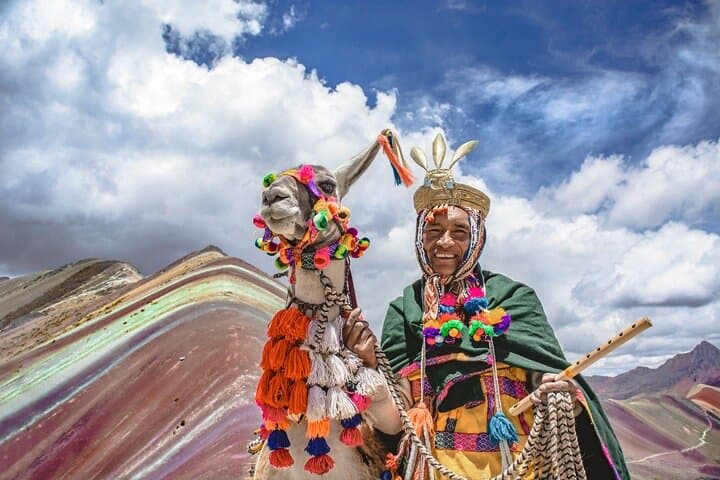
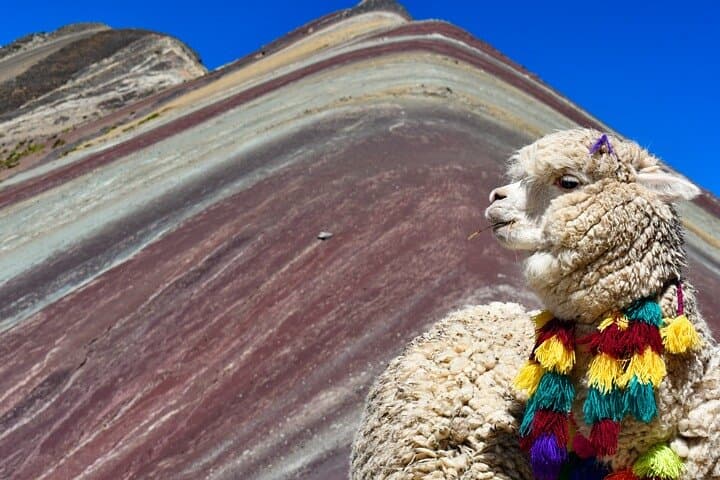
Vinicunca’s stripes are modern geology: mineral-laden sediments uplifted by tectonic pressure and exposed by glacial melt and erosion. The site sits within the Ausangate massif’s wider cultural landscape—highland communities here are Quechua-speaking and keep pastoral rhythms; vicuñas graze the puna and local shepherds still work alpaca fiber for garments sold in nearby villages.
This is a long, high-altitude day: expect 10–11 hours from Cusco, with a 3–4 hour round-trip hike at 4,300–5,200 m.a.s.l. Terrain alternates between hard-packed trail, loose scree and short steep pitches; oxygen is thin and weather flips fast. The reward is panoramic exposure—a close view of Ausangate’s snowy flanks and the optional Red Valley detour if conditions and time allow.
Practical edge: acclimatize in Cusco for 48–72 hours if you can, carry layers for wind and sun, and sip water steadily. Guides commonly provide breakfast, lunch, trekking poles and a first-aid kit. Leave no trace: the cushiony puna and painted slopes are fragile—stay on trail and pack out trash. Timing the visit in the dry season (May–September) increases your chances of clear color and safer footing.
challenging.
10–11 hours.
Good cardiovascular fitness with prior acclimatization; able to hike 3–4 hours at high altitude with 300–500 m of elevation change.
The trail reaches roughly 4,300–4,800 m above sea level; many visitors feel mild symptoms—headache, breathlessness—so acclimatize in Cusco and ascend slowly.
Technically yes, but the dry season (May–September) offers more stable weather and clearer colors; rains from November to March can make trails muddy and visibility poor.
Typical inclusions are round-trip transport from Cusco, breakfast, lunch, an official guide, trekking poles, oxygen/first-aid kit and entry to the site—confirm specifics with your operator.
Those with serious cardiovascular issues, pregnancy, or severe back problems should avoid it; alternative visits include shorter viewpoints or hiring a horse for part of the ascent (where locally offered).
The area sits within traditional Quechua lands around Ausangate; seasonal herding and textile crafts persist alongside recent tourism growth.
The colored slopes and puna are ecologically fragile—stay on established paths, avoid trampling vegetation, and follow local guides’ rules to reduce impact.
X Travel Peru operates guided outdoor trips and adventures with an emphasis on safety, stewardship, and memorable experiences.
A thin, cold light breaks over the high Andes and the road toward Vinicunca unfolds like a ribbon of compacted earth. By the time you step from the minivan, wind reads your jacket like an open book; the colors of the mountain sit ahead—bands of ochre, rust, and mint—staring back as if daring you to climb.
A thin, cold light breaks over the high Andes and the road toward Vinicunca unfolds like a ribbon of compacted earth. By the time you step from the minivan, wind reads your jacket like an open book; the colors of the mountain sit ahead—bands of ochre, rust, and mint—staring back as if daring you to climb.
Vinicunca’s stripes are modern geology: mineral-laden sediments uplifted by tectonic pressure and exposed by glacial melt and erosion. The site sits within the Ausangate massif’s wider cultural landscape—highland communities here are Quechua-speaking and keep pastoral rhythms; vicuñas graze the puna and local shepherds still work alpaca fiber for garments sold in nearby villages.
This is a long, high-altitude day: expect 10–11 hours from Cusco, with a 3–4 hour round-trip hike at 4,300–5,200 m.a.s.l. Terrain alternates between hard-packed trail, loose scree and short steep pitches; oxygen is thin and weather flips fast. The reward is panoramic exposure—a close view of Ausangate’s snowy flanks and the optional Red Valley detour if conditions and time allow.
Practical edge: acclimatize in Cusco for 48–72 hours if you can, carry layers for wind and sun, and sip water steadily. Guides commonly provide breakfast, lunch, trekking poles and a first-aid kit. Leave no trace: the cushiony puna and painted slopes are fragile—stay on trail and pack out trash. Timing the visit in the dry season (May–September) increases your chances of clear color and safer footing.