THE ADVENTURE COLLECTIVE® · Independent discovery and booking for outdoor travel

A long day from Cusco that climbs to 5,200 m to stand on Vinicunca’s famously striped slopes. This challenging, high‑altitude trek rewards early starts with dramatic light, Andean wildlife and sweeping views of the Vilcanota range.
A long day from Cusco that climbs to 5,200 m to stand on Vinicunca’s famously striped slopes. This challenging, high‑altitude trek rewards early starts with dramatic light, Andean wildlife and sweeping views of the Vilcanota range.
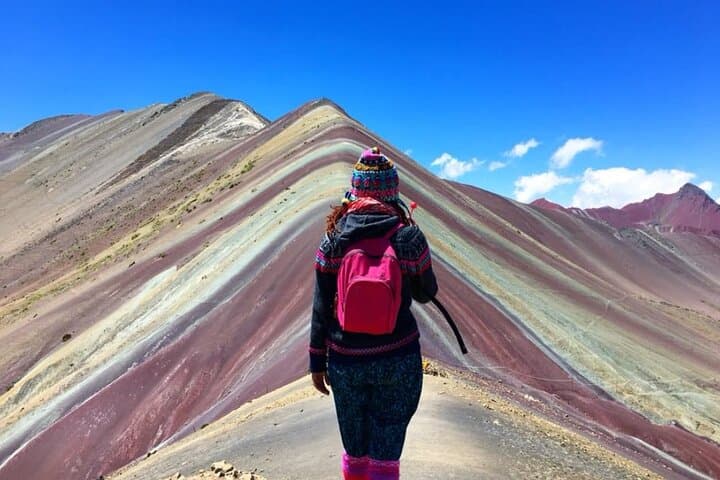
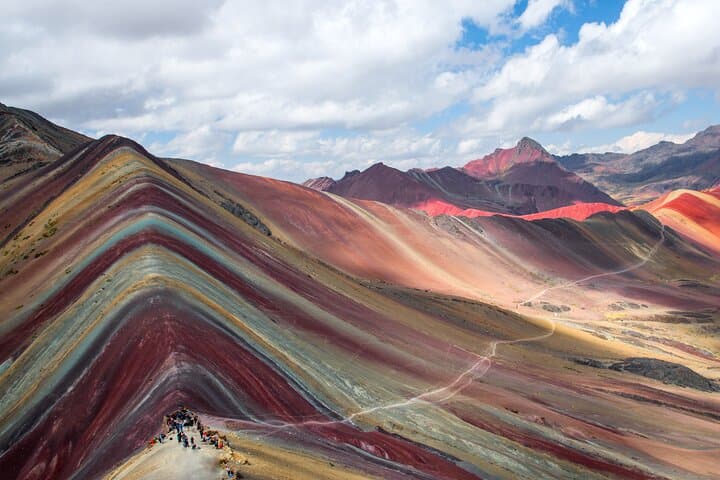
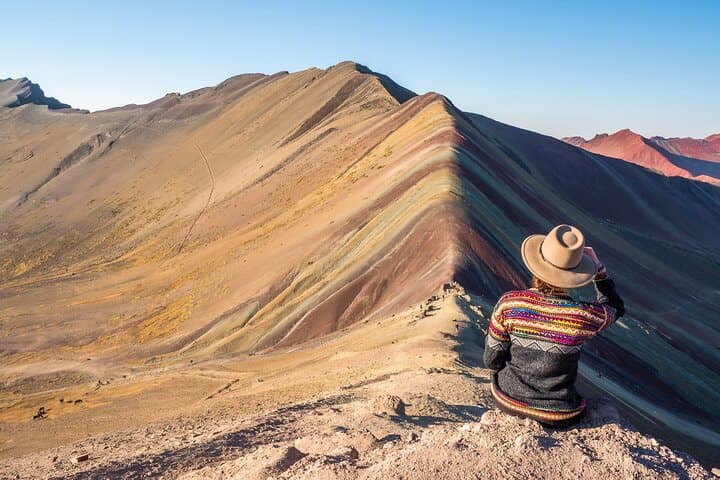
The sky is thin and hard here; every breath comes with a chill and a sharp clarity. Before dawn you’ll be loaded into a van in Cusco, the city lights shrinking as peaks grow around you. By the time the sun hits the red slopes, the mineral bands of Vinicunca—reds, ochres, greens and purples—begin to reveal themselves against the high plain.
Verified experiences and guided adventures in the surrounding area.
Operated by Tangol · Cusco, Cusco
The sky is thin and hard here; every breath comes with a chill and a sharp clarity. Before dawn you’ll be loaded into a van in Cusco, the city lights shrinking as peaks grow around you. By the time the sun hits the red slopes, the mineral bands of Vinicunca—reds, ochres, greens and purples—begin to reveal themselves against the high plain.
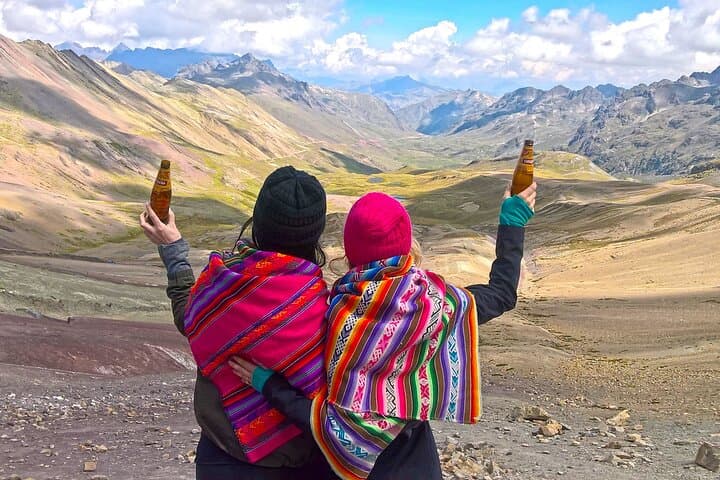
Geologically the colors are a map of iron, phyllites and other minerals laid bare by glacial trimming and erosion. Culturally this ridge sits beneath Ausangate, an Apu (sacred mountain) to Quechua communities whose herding traditions still shape the puna grasslands. You’ll pass grazing llamas and alpacas and might spot vicuñas higher on the ridge.
Expect a steady uphill from ~4,200 m (13,780 ft) with roughly four hours of ascent on rocky, often loose trail, followed by a 2‑hour descent. Weather switches fast—bright sun can flip to sleet in an hour—so layer and pace for altitude. Guides commonly include breakfast, a light lunch, oxygen and a trekking pole; acclimatization in Cusco beforehand is strongly recommended.
Practical tips: start early to avoid crowds and midday weather, sip water steadily, and keep movements measured on the final ridge. Photography windows are brief; aim for side‑lighting to bring out the bands. The hike is strenuous mostly because of altitude rather than technical terrain—come prepared, respect local land and leave no trace, and the color‑striped summit will repay the effort with a clear, alpine silence and expansive views of the Vilcanota range.
challenging.
12–14 hours.
Requires good cardiovascular fitness and prior high‑altitude experience or acclimatization; expect sustained uphill effort.
The viewpoint sits around 5,200 m (about 17,060 ft); the trailhead starts near 4,200 m so expect significant altitude gain.
The dry season (May–September) offers more stable skies and trail conditions; the rainy season (Dec–March) brings afternoon storms and muddier paths.
No technical climbing is required, but the sustained uphill on loose terrain and the altitude make it physically demanding.
This tour is not recommended for young children, pregnant travelers or those with cardiovascular or serious spinal conditions due to altitude and physical exertion.
Vinicunca’s striped appearance is a recent tourist phenomenon tied to post‑glacial erosion; the area sits in traditional Quechua territory and Ausangate has long been considered an Apu or sacred mountain.
High foot traffic stresses fragile puna soils—stick to marked trails, avoid camping on the summit slopes and carry out all trash to protect fragile high‑altitude ecosystems.
Tangol operates guided outdoor trips and adventures with an emphasis on safety, stewardship, and memorable experiences.
The sky is thin and hard here; every breath comes with a chill and a sharp clarity. Before dawn you’ll be loaded into a van in Cusco, the city lights shrinking as peaks grow around you. By the time the sun hits the red slopes, the mineral bands of Vinicunca—reds, ochres, greens and purples—begin to reveal themselves against the high plain.
The sky is thin and hard here; every breath comes with a chill and a sharp clarity. Before dawn you’ll be loaded into a van in Cusco, the city lights shrinking as peaks grow around you. By the time the sun hits the red slopes, the mineral bands of Vinicunca—reds, ochres, greens and purples—begin to reveal themselves against the high plain.
Geologically the colors are a map of iron, phyllites and other minerals laid bare by glacial trimming and erosion. Culturally this ridge sits beneath Ausangate, an Apu (sacred mountain) to Quechua communities whose herding traditions still shape the puna grasslands. You’ll pass grazing llamas and alpacas and might spot vicuñas higher on the ridge.
Expect a steady uphill from ~4,200 m (13,780 ft) with roughly four hours of ascent on rocky, often loose trail, followed by a 2‑hour descent. Weather switches fast—bright sun can flip to sleet in an hour—so layer and pace for altitude. Guides commonly include breakfast, a light lunch, oxygen and a trekking pole; acclimatization in Cusco beforehand is strongly recommended.
Practical tips: start early to avoid crowds and midday weather, sip water steadily, and keep movements measured on the final ridge. Photography windows are brief; aim for side‑lighting to bring out the bands. The hike is strenuous mostly because of altitude rather than technical terrain—come prepared, respect local land and leave no trace, and the color‑striped summit will repay the effort with a clear, alpine silence and expansive views of the Vilcanota range.