THE ADVENTURE COLLECTIVE® · Independent discovery and booking for outdoor travel

A high‑altitude day trip from Cusco to Vinicunca (Rainbow Mountain) that blends striking mineral bands with a brisk uphill hike. This practical guide covers what to expect—terrain, timing, and how to prepare for thin air and strong sun.
A high‑altitude day trip from Cusco to Vinicunca (Rainbow Mountain) that blends striking mineral bands with a brisk uphill hike. This practical guide covers what to expect—terrain, timing, and how to prepare for thin air and strong sun.
A thin light cuts across the high puna as you step from the van and the air pulls at your breath—the mountain is already there, a banded stripe of iron-rich reds and ochres layered against a pale sky. On a clear morning Vinicunca dares you to climb: the path rises steadily across red clay and loose scree, and the summit keeps its promise of vast altitude and a view that flattens distance.
Verified experiences and guided adventures in the surrounding area.
Operated by MACHUPICCHU SENSATIONS Travel & Expeditions · Cusco, Cusco Region
A thin light cuts across the high puna as you step from the van and the air pulls at your breath—the mountain is already there, a banded stripe of iron-rich reds and ochres layered against a pale sky. On a clear morning Vinicunca dares you to climb: the path rises steadily across red clay and loose scree, and the summit keeps its promise of vast altitude and a view that flattens distance.
Geologically the colors come from mineral deposits—iron oxides, phyllites and clays laid across sedimentary layers and exposed by glacial sculpting from the Ausangate massif. Culturally this land belongs to Quechua communities who consider the high peaks sacred (apu), and shepherds still move llamas and alpacas on the slopes. Historically, the region was shaped by glaciations that carved the valleys and left lakes and moraines visible on the drive from Cusco.
Expect a 10–12 hour day (including travel), with a hike roughly 3–4 km round-trip from the trailhead and about 350–500 m of elevation gain to reach the viewpoints—most visitors pause at the primary ridge rather than a formal summit. Terrain alternates packed earth, loose scree and short steep pitches; weather shifts fast and sun is intense above 4,000 m.
Practical essentials: acclimatize in Cusco for 48–72 hours, start early to avoid crowds and afternoon storms, and use trekking poles or canes provided if you need them. Hydrate, dress in layers, and allow extra time on the ascent—at these altitudes every step requires respect.
moderate.
10–12 hours.
Comfortable with moderate aerobic activity and able to walk on uneven ground; prior acclimatization is strongly recommended
From the parking area it's typically 1.5–2 km one way (3–4 km round‑trip) with roughly 350–500 m of elevation gain; total tour time including transport is about 10–12 hours.
You don’t need technical fitness, but moderate cardiovascular fitness and acclimatization are important because the route reaches around 5,000 m where exertion is harder.
Dry season (May–September) offers clearer skies and more stable trails; mornings are best on any day to avoid clouds and wind.
Many operators permit all ages, but individuals with heart or respiratory conditions, young children and unacclimatized seniors should exercise caution due to altitude.
The area sits on traditional Quechua lands tied to the Ausangate mountain cult; local communities maintain pastoral lifestyles and seasonal rituals.
High visitor numbers stress fragile alpine soils and grasses; stick to paths, avoid littering, and hire local guides to support community‑based tourism.
MACHUPICCHU SENSATIONS Travel & Expeditions operates guided outdoor trips and adventures with an emphasis on safety, stewardship, and memorable experiences.
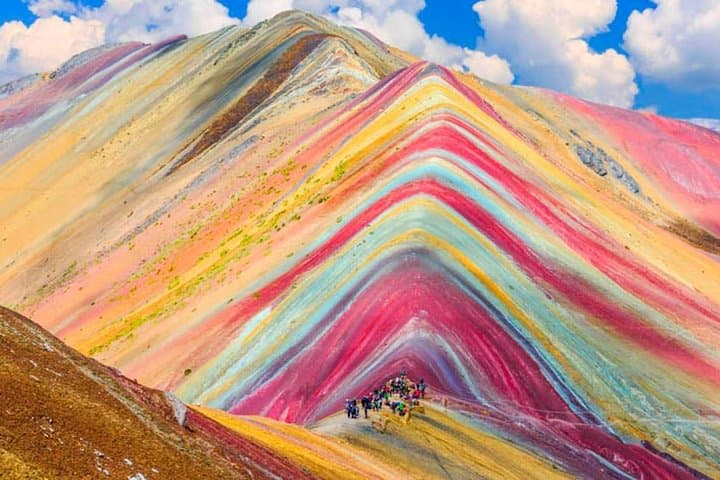


A thin light cuts across the high puna as you step from the van and the air pulls at your breath—the mountain is already there, a banded stripe of iron-rich reds and ochres layered against a pale sky. On a clear morning Vinicunca dares you to climb: the path rises steadily across red clay and loose scree, and the summit keeps its promise of vast altitude and a view that flattens distance.
A thin light cuts across the high puna as you step from the van and the air pulls at your breath—the mountain is already there, a banded stripe of iron-rich reds and ochres layered against a pale sky. On a clear morning Vinicunca dares you to climb: the path rises steadily across red clay and loose scree, and the summit keeps its promise of vast altitude and a view that flattens distance.
Geologically the colors come from mineral deposits—iron oxides, phyllites and clays laid across sedimentary layers and exposed by glacial sculpting from the Ausangate massif. Culturally this land belongs to Quechua communities who consider the high peaks sacred (apu), and shepherds still move llamas and alpacas on the slopes. Historically, the region was shaped by glaciations that carved the valleys and left lakes and moraines visible on the drive from Cusco.
Expect a 10–12 hour day (including travel), with a hike roughly 3–4 km round-trip from the trailhead and about 350–500 m of elevation gain to reach the viewpoints—most visitors pause at the primary ridge rather than a formal summit. Terrain alternates packed earth, loose scree and short steep pitches; weather shifts fast and sun is intense above 4,000 m.
Practical essentials: acclimatize in Cusco for 48–72 hours, start early to avoid crowds and afternoon storms, and use trekking poles or canes provided if you need them. Hydrate, dress in layers, and allow extra time on the ascent—at these altitudes every step requires respect.