THE ADVENTURE COLLECTIVE® · Independent discovery and booking for outdoor travel

Walk through working vineyards with a local winemaker, explore a historic vaulted cellar, and finish with Palatinate wines and Heurigen snacks. This four-hour guided hike pairs hands-on vineyard insights with relaxed tasting.
Walk through working vineyards with a local winemaker, explore a historic vaulted cellar, and finish with Palatinate wines and Heurigen snacks. This four-hour guided hike pairs hands-on vineyard insights with relaxed tasting.
Morning light slides across terraced rows as hikers set off from Markus Pfalz’s small winery, boots crunching over stony soil and vine prunings. The air carries a green, herbaceous scent; birds quarter the sky while the slopes push the eye toward wide Weinviertel plains.
Verified experiences and guided adventures in the surrounding area.
Morning light slides across terraced rows as hikers set off from Markus Pfalz’s small winery, boots crunching over stony soil and vine prunings. The air carries a green, herbaceous scent; birds quarter the sky while the slopes push the eye toward wide Weinviertel plains.
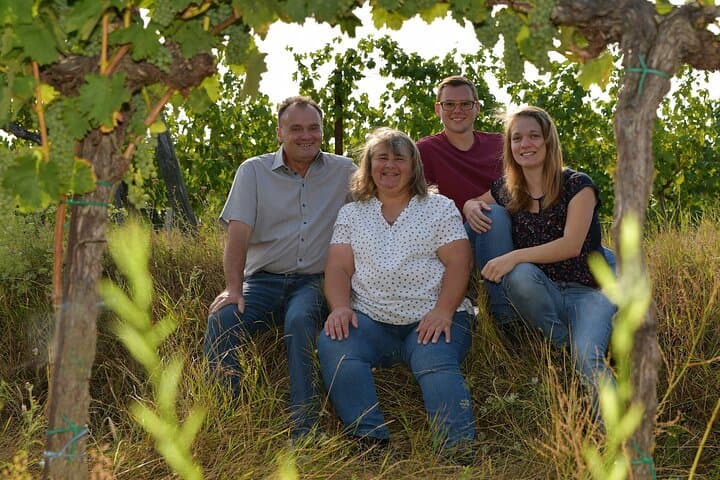
This guided vineyard walk traces working slopes and a family’s winemaking rhythm — vines trained for generations in loess-rich soils that drain quickly and force deep root growth. Hohenruppersdorf sits in Lower Austria’s long Heurigen tradition: local growers open cellars to share new wine with simple, salty snacks. The vaulted cellar you’ll visit dates to regional cellar-building practices designed to keep a steady cool temperature through hot summers and freezing winters.
Along the route Markus explains pruning, canopy work, and how local geology — wind-blown loess over limestone — shapes the wines. You’ll pass a small flock of vineyard chickens and get a behind-the-scenes look at barrel storage before sampling several Palatinate and Weinviertel styles with a Heurigen snack.
Practical guidance: plan for a 4-hour outing on uneven vineyard tracks; bring sun protection and layered clothing for cellar coolness. Walk slowly through rows, respect cordoned vines, and pace wine tastings with water and food. Public transport reaches nearby villages but check schedules; private cars are common. For groups or alternate times, contact Markus directly to arrange a different slot.
moderate.
4 hours.
Moderate fitness: comfortable walking on uneven terrain with short slopes for several hours.
The operator notes stroller access and that infants can ride in prams, but paths are uneven—parents should be prepared to carry children over steeper sections.
Service animals are permitted; check with the host in advance for other pets as vineyard work and tasting areas may limit animals.
The four-hour experience includes guided vineyard walk, cellar visit, wine tasting, and a traditional Heurigen snack as described.
Yes—if listed times don’t fit, you can contact Markus directly to arrange an alternate appointment.
Hohenruppersdorf lies in the Weinviertel wine region where small family-run cellars and Heurigen traditions date back centuries and shaped local rural life.
Stay on marked tracks to avoid compacting vine rows; support small producers by buying bottles locally and pack out any waste to protect soils.
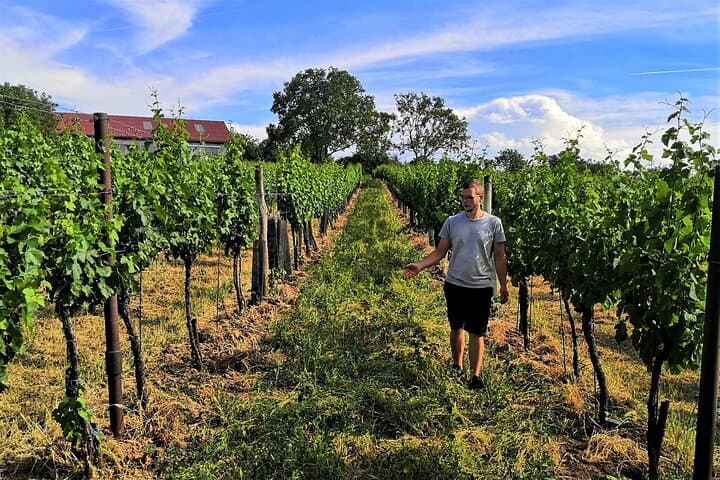
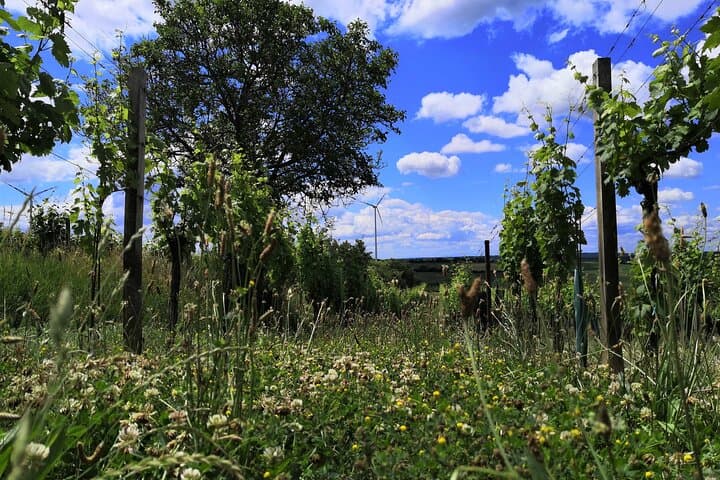
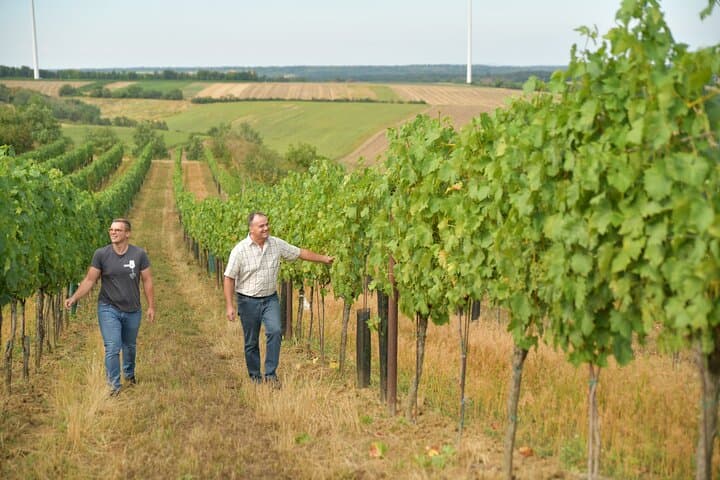
Morning light slides across terraced rows as hikers set off from Markus Pfalz’s small winery, boots crunching over stony soil and vine prunings. The air carries a green, herbaceous scent; birds quarter the sky while the slopes push the eye toward wide Weinviertel plains.
Morning light slides across terraced rows as hikers set off from Markus Pfalz’s small winery, boots crunching over stony soil and vine prunings. The air carries a green, herbaceous scent; birds quarter the sky while the slopes push the eye toward wide Weinviertel plains.
This guided vineyard walk traces working slopes and a family’s winemaking rhythm — vines trained for generations in loess-rich soils that drain quickly and force deep root growth. Hohenruppersdorf sits in Lower Austria’s long Heurigen tradition: local growers open cellars to share new wine with simple, salty snacks. The vaulted cellar you’ll visit dates to regional cellar-building practices designed to keep a steady cool temperature through hot summers and freezing winters.
Along the route Markus explains pruning, canopy work, and how local geology — wind-blown loess over limestone — shapes the wines. You’ll pass a small flock of vineyard chickens and get a behind-the-scenes look at barrel storage before sampling several Palatinate and Weinviertel styles with a Heurigen snack.
Practical guidance: plan for a 4-hour outing on uneven vineyard tracks; bring sun protection and layered clothing for cellar coolness. Walk slowly through rows, respect cordoned vines, and pace wine tastings with water and food. Public transport reaches nearby villages but check schedules; private cars are common. For groups or alternate times, contact Markus directly to arrange a different slot.