THE ADVENTURE COLLECTIVE® · Independent discovery and booking for outdoor travel

A 3‑hour guided bike tour that covers 14 km of Vilnius’ Old Town and modern neighborhoods, combining key landmarks with local stories. Ideal for first-time visitors who want fast orientation, historic context, and photo-friendly stops.
A 3‑hour guided bike tour that covers 14 km of Vilnius’ Old Town and modern neighborhoods, combining key landmarks with local stories. Ideal for first-time visitors who want fast orientation, historic context, and photo-friendly stops.
The ride begins with the city under your wheels: cobbles click, the Neris River nudges at the edge of view, and Gediminas Hill keeps watch as cyclists push off from the meeting point and rental shop.
Verified experiences and guided adventures in the surrounding area.
Operated by Bike Baltic Velotakas · Vilnius, Vilnius County
The ride begins with the city under your wheels: cobbles click, the Neris River nudges at the edge of view, and Gediminas Hill keeps watch as cyclists push off from the meeting point and rental shop.
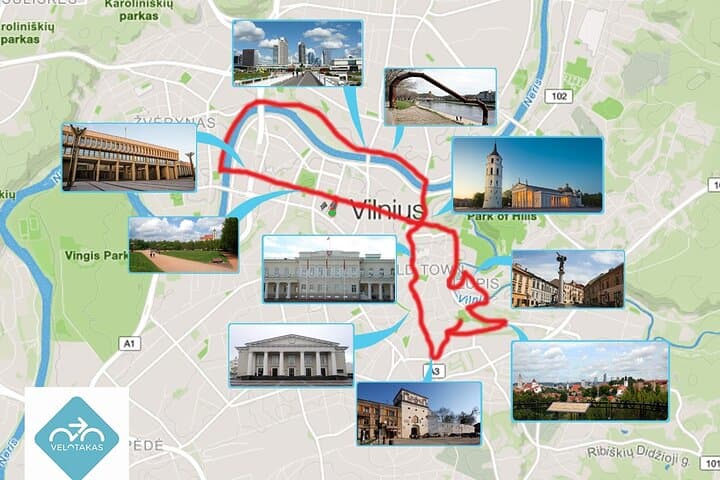
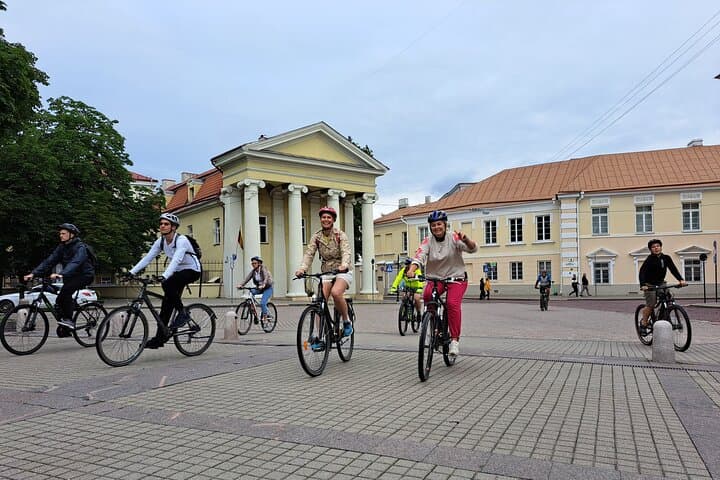
Over three hours the route threads 14 km of Vilnius — the tight alleys of the Old Town, the straight 19th‑century boulevard that became the imperial city center, and the artful lanes of Užupis. Guides stop where stories live: the Cathedral square and Gediminas Tower’s long shadow, the centuries-old university courtyards, and panoramic points that let the river’s curve and the timbered roofs speak for the city.
Vilnius’ story is visible in stone and street paint: medieval foundations from the Grand Duchy, layers of 20th‑century occupation and resistance, and a recent push toward contemporary culture in galleries and cafés. Geologically the city occupies a glacial plain carved by river valleys and dotted with modest hills that give views rather than alpine climbs.
Practicalities are straightforward. Expect 70% low‑traffic streets and sidewalks, 30% proper cycle paths — bring a helmet (provided), be ready for short dismounts on narrow lanes, and follow your guide for smoother navigation. The pace balances commentary with photo stops; weather can change fast, so a light raincoat and reflective vest are useful. This tour suits newcomers who want orientation and local context delivered by a knowledgeable rider-guide — it’s part city history lesson, part rolling reconnaissance of where to return later on foot.
easy.
3 hours.
Suitable for riders with basic cycling fitness and mobility; minimal hills but requires ability to ride 14 km with short stops.
Yes — child seats and infant seats are available but must be requested in advance; children should be accompanied by an adult.
Guides commonly speak English and often additional European languages; check with the operator when booking for specific needs.
Basic bike handling and comfort riding on mixed surfaces are sufficient; the pace is moderate with regular stops for explanation and photos.
Tours operate in light rain; operators commonly provide optional raincoats and may cancel for severe weather with refund policies in place if canceled 24 hours prior.
Vilnius grew as the capital of the Grand Duchy of Lithuania and later accumulated visible layers from Polish-Lithuanian commonwealth architecture through Soviet-era changes to modern independence-era revival.
Stick to streets and marked paths, avoid leaving litter in historic areas, and support local guides and bike rentals that follow low-impact tourism practices.
Bike Baltic Velotakas operates guided outdoor trips and adventures with an emphasis on safety, stewardship, and memorable experiences.
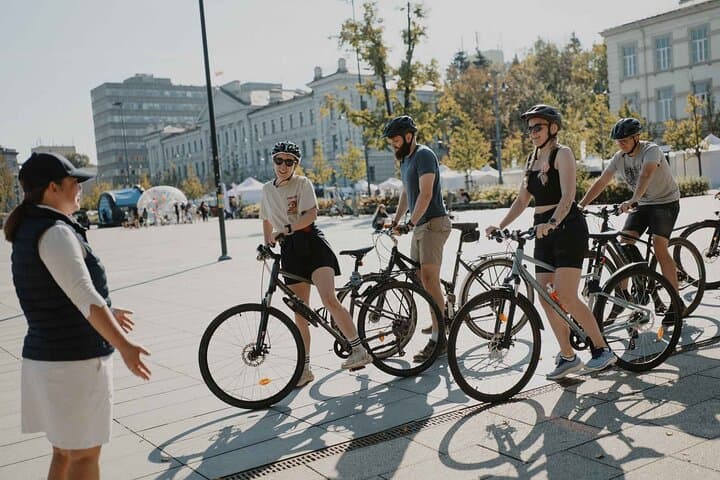
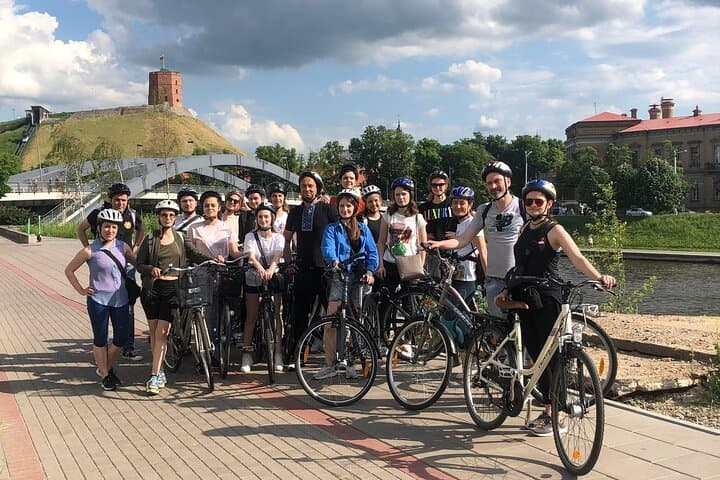
The ride begins with the city under your wheels: cobbles click, the Neris River nudges at the edge of view, and Gediminas Hill keeps watch as cyclists push off from the meeting point and rental shop.
The ride begins with the city under your wheels: cobbles click, the Neris River nudges at the edge of view, and Gediminas Hill keeps watch as cyclists push off from the meeting point and rental shop.
Over three hours the route threads 14 km of Vilnius — the tight alleys of the Old Town, the straight 19th‑century boulevard that became the imperial city center, and the artful lanes of Užupis. Guides stop where stories live: the Cathedral square and Gediminas Tower’s long shadow, the centuries-old university courtyards, and panoramic points that let the river’s curve and the timbered roofs speak for the city.
Vilnius’ story is visible in stone and street paint: medieval foundations from the Grand Duchy, layers of 20th‑century occupation and resistance, and a recent push toward contemporary culture in galleries and cafés. Geologically the city occupies a glacial plain carved by river valleys and dotted with modest hills that give views rather than alpine climbs.
Practicalities are straightforward. Expect 70% low‑traffic streets and sidewalks, 30% proper cycle paths — bring a helmet (provided), be ready for short dismounts on narrow lanes, and follow your guide for smoother navigation. The pace balances commentary with photo stops; weather can change fast, so a light raincoat and reflective vest are useful. This tour suits newcomers who want orientation and local context delivered by a knowledgeable rider-guide — it’s part city history lesson, part rolling reconnaissance of where to return later on foot.