THE ADVENTURE COLLECTIVE® · Independent discovery and booking for outdoor travel

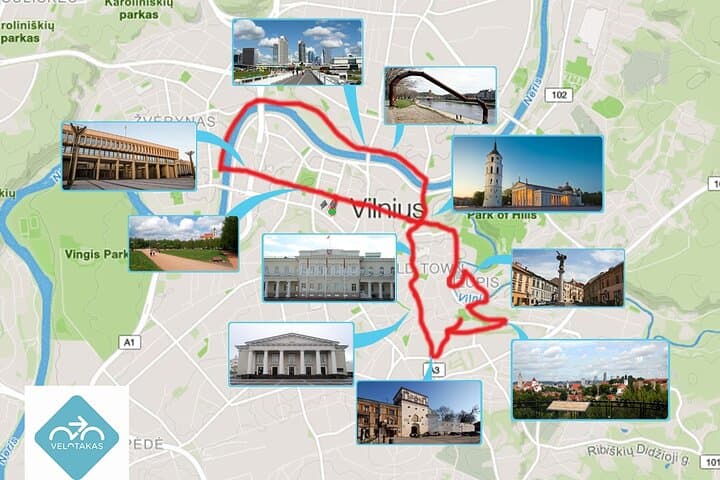
Explore Vilnius by bike on an 8 km guided loop that moves from cathedral squares to the artistic alleys of Užupis. Expect cobbles, riverfront views, and layered history with frequent photo stops and a practical pace for first-time visitors.
Explore Vilnius by bike on an 8 km guided loop that moves from cathedral squares to the artistic alleys of Užupis. Expect cobbles, riverfront views, and layered history with frequent photo stops and a practical pace for first-time visitors.
You push off from a narrow Old Town lane where church spires puncture a flat winter sky and the River Vilnia threads through the city, daring you to slow down and look. The group rolls past baroque towers and the occasional graffiti face of Užupis, pauses at a hill for a view of Gediminas Tower, then slips into quieter streets where carved stone and painted shopfronts tell different chapters of the same city.
Verified experiences and guided adventures in the surrounding area.
Operated by Bike Baltic Velotakas · Vilnius, Vilnius County
You push off from a narrow Old Town lane where church spires puncture a flat winter sky and the River Vilnia threads through the city, daring you to slow down and look. The group rolls past baroque towers and the occasional graffiti face of Užupis, pauses at a hill for a view of Gediminas Tower, then slips into quieter streets where carved stone and painted shopfronts tell different chapters of the same city.
Lithuania’s capital grew from a riverside settlement into the medieval capital of the Grand Duchy; 19th-century boulevards and later Soviet-era blocks leave distinct layers on the map. Geologically the area sits on a glacial plain—gentle hills and river terraces—so cycling is forgiving but sometimes interrupted by cobbles and narrow sidewalks. Culturally the ride stitches together civic landmarks (cathedral, presidential palace), Jewish quarter memories, and the artistic independence of Užupis where local creatives declared their own mini-republic.
Practical guidance: the route covers roughly 8 km with about 70% on sidewalks and low-traffic streets and 30% on cycle paths; expect frequent stops for storytelling and photos—total time ~2½ hours. A guide improves flow and safety through tight Old Town corners. Wear grippy shoes, be ready for short stretches of uneven cobbles, and bring a light rain layer—Vilnius weather can change fast. Helmets, bicycles, water and optional raincoats are typically included; infant seats are available. Aim for morning or late-afternoon to avoid the busiest café hours and get the best light on the towers.
easy.
2–2.5 hours.
Suitable for casual cyclists who can pedal intermittently for up to 8 km with brief stops; basic balance on mixed surfaces required
Yes. The 8 km route is paced for first-time cyclists with frequent stops; basic cycling ability and balance are enough.
Yes—most operators include bicycles, helmets and optional raincoats; infant seats are available on request.
Children can join if accompanied by an adult; specialized child seats are available but check age and weight limits with the operator.
Operators often cancel or offer full refunds if conditions are unsafe; light rain usually proceeds with rain gear provided or recommended.
Vilnius was the capital of the medieval Grand Duchy of Lithuania and later absorbed 19th-century Russian imperial architecture and 20th-century Soviet-era urban planning—the tour traces these layers.
Stick to paved paths and avoid trampling riverbanks; responsible operators limit group sizes and promote refillable water use to reduce single-use plastic.
Bike Baltic Velotakas operates guided outdoor trips and adventures with an emphasis on safety, stewardship, and memorable experiences.
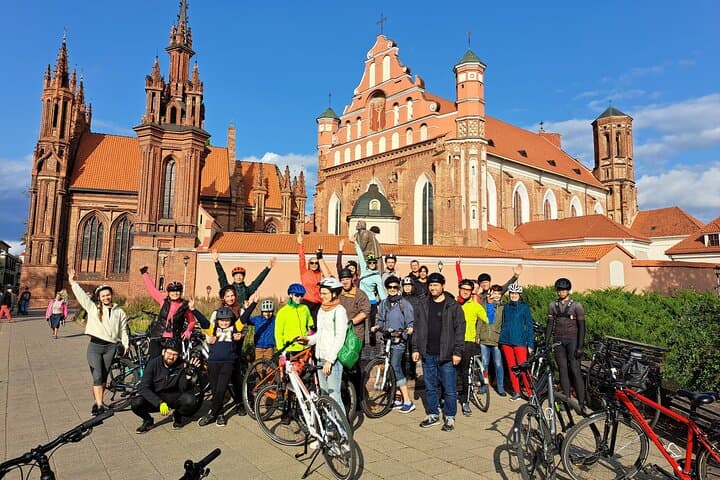
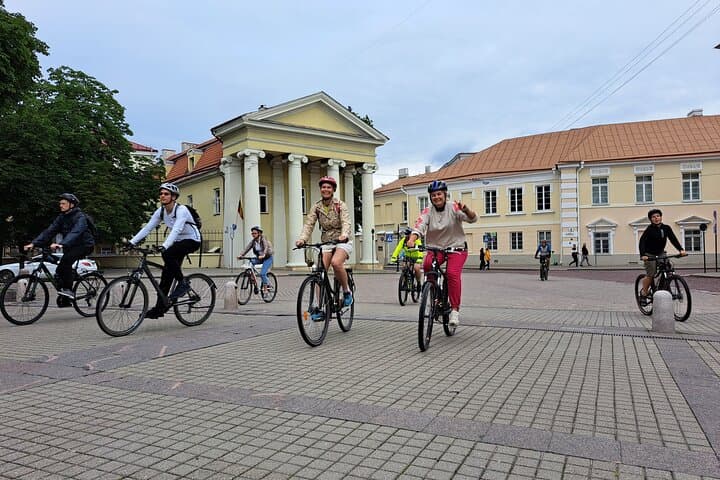
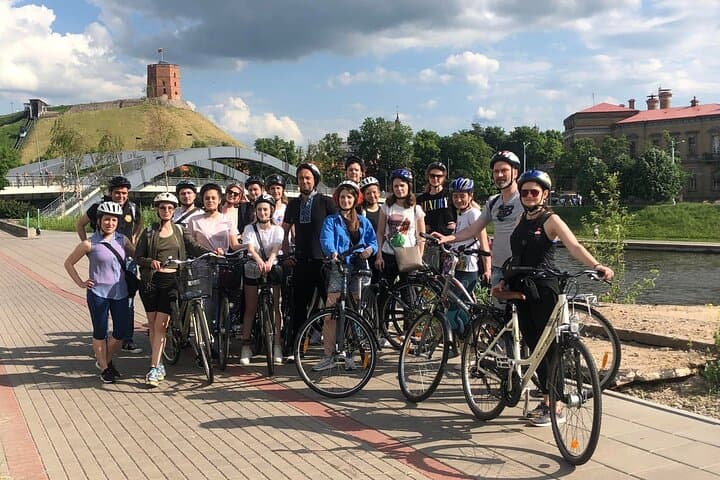
You push off from a narrow Old Town lane where church spires puncture a flat winter sky and the River Vilnia threads through the city, daring you to slow down and look. The group rolls past baroque towers and the occasional graffiti face of Užupis, pauses at a hill for a view of Gediminas Tower, then slips into quieter streets where carved stone and painted shopfronts tell different chapters of the same city.
You push off from a narrow Old Town lane where church spires puncture a flat winter sky and the River Vilnia threads through the city, daring you to slow down and look. The group rolls past baroque towers and the occasional graffiti face of Užupis, pauses at a hill for a view of Gediminas Tower, then slips into quieter streets where carved stone and painted shopfronts tell different chapters of the same city.
Lithuania’s capital grew from a riverside settlement into the medieval capital of the Grand Duchy; 19th-century boulevards and later Soviet-era blocks leave distinct layers on the map. Geologically the area sits on a glacial plain—gentle hills and river terraces—so cycling is forgiving but sometimes interrupted by cobbles and narrow sidewalks. Culturally the ride stitches together civic landmarks (cathedral, presidential palace), Jewish quarter memories, and the artistic independence of Užupis where local creatives declared their own mini-republic.
Practical guidance: the route covers roughly 8 km with about 70% on sidewalks and low-traffic streets and 30% on cycle paths; expect frequent stops for storytelling and photos—total time ~2½ hours. A guide improves flow and safety through tight Old Town corners. Wear grippy shoes, be ready for short stretches of uneven cobbles, and bring a light rain layer—Vilnius weather can change fast. Helmets, bicycles, water and optional raincoats are typically included; infant seats are available. Aim for morning or late-afternoon to avoid the busiest café hours and get the best light on the towers.