THE ADVENTURE COLLECTIVE® · Independent discovery and booking for outdoor travel

Ride an executive train from Villazon into the high Andes, spend a night in a salt hotel, then cross the vast white of the Salar de Uyuni with stops at Colchani, Incahuasi and Tunupa. Practical tips on altitude, sun protection, and what to expect on this two‑day experience.
Ride an executive train from Villazon into the high Andes, spend a night in a salt hotel, then cross the vast white of the Salar de Uyuni with stops at Colchani, Incahuasi and Tunupa. Practical tips on altitude, sun protection, and what to expect on this two‑day experience.
The train hisses out of Villazon and the Andean steppe unfolds like a slow-motion film: puna grass, grazing vicuñas, and distant volcanic teeth sliding across the horizon. You settle into an executive carriage with a large window, knowing the next day will open on one of the planet’s most extreme surfaces — the Salar de Uyuni.
Verified experiences and guided adventures in the surrounding area.
Operated by Joker Expedition, Bolivia. · Uyuni, Potosí
The train hisses out of Villazon and the Andean steppe unfolds like a slow-motion film: puna grass, grazing vicuñas, and distant volcanic teeth sliding across the horizon. You settle into an executive carriage with a large window, knowing the next day will open on one of the planet’s most extreme surfaces — the Salar de Uyuni.
This route stitches together railway history and salt-mining culture. The rail line that links Villazon to Uyuni was built to move minerals and people across the high plateau; Colchani still processes salt the same way, by hand. Geologically the salar sits atop a prehistoric lakebed — a near-flat crust of salt over many meters of brine and evaporites — with Incahuasi, an ancient coral island, rising like an island of cacti and volcanic rock in the white sea.
Culturally you’ll see Aymara and Quechua influences in small towns and artisan workshops; locally produced salt goods and cactus wood crafts are common. Wildlife — flamingos in shallow pools and herds of llamas or vicuñas at the margins — punctuate the wide open scene.
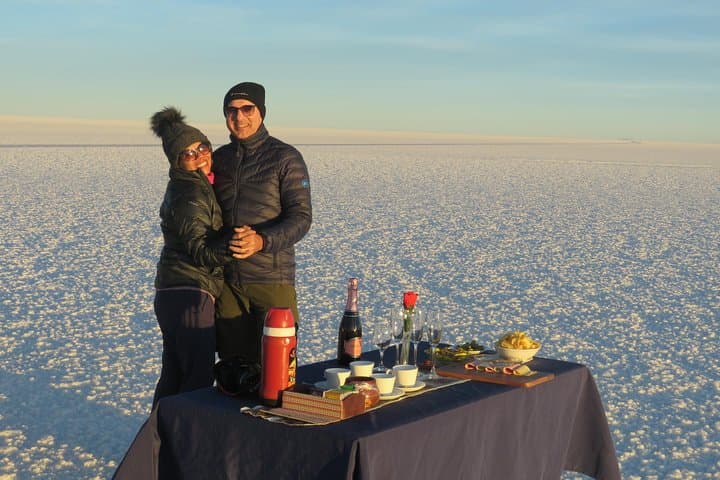
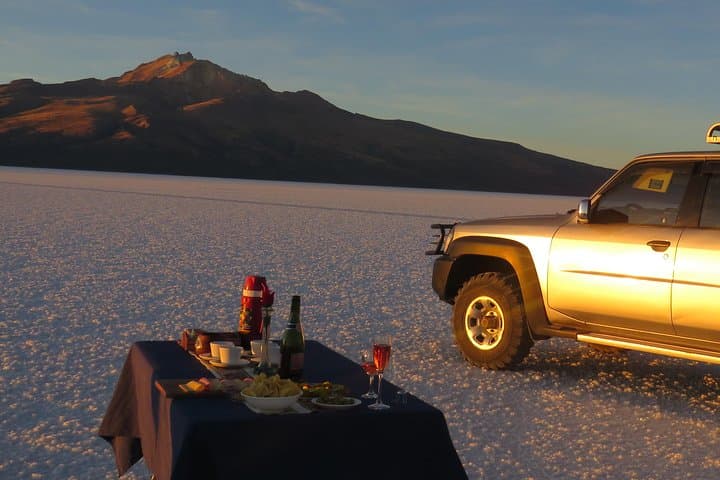
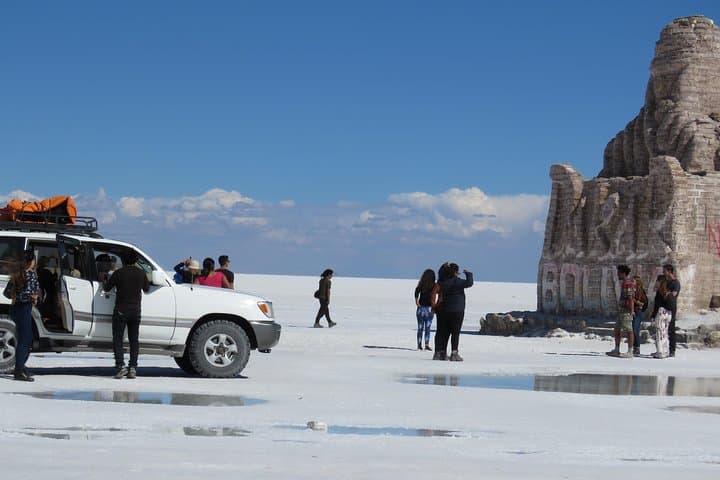
Practically: expect a ~6-hour executive train from Villazon to Uyuni, overnight options that include salt-built hotels, and a full-day salar circuit (Train Cemetery, Colchani, Playa Blanca, Incahuasi, Tunupa foothills) with a midday salt-lake lunch and sunset return. Altitude at Uyuni is ~3,650 m; drink water, move slowly the first day, and pack sun protection and warm layers for evenings. Boots can handle crusted salt; avoid getting vehicles off marked tracks. With clear planning this two-day rail-plus-salar combo is an accessible, unforgettable high‑altitude landscape adventure.
moderate.
2 days (approx 48 hours).
Moderate fitness recommended — able to walk short distances on uneven salty crust and tolerate high altitude.
The executive train takes roughly 6 hours; departures and onboard services vary, but expect an air‑conditioned carriage, a dining car, and onboard toilets.
Yes — Uyuni sits around 3,650 m. Acclimatize gradually, drink extra fluids, avoid heavy meals and alcohol on arrival, and consider medication if you have prior sensitivity.
Yes — several salt-built hotels in Uyuni offer a unique overnight stay; standards vary, so check amenities like heating and private bathrooms when booking.
Both dry season (May–Nov) for classic mirrorless expanses and wet season (Dec–Mar) for the thin reflective water layer exist; planning depends on whether you want perfect reflections or hard, salt-crusted driving conditions.
The salar is the remnant of prehistoric Lake Minchin; local communities have harvested salt for generations, and the rail line once supported mineral export across the altiplano.
The salar’s crust and underlying brine are fragile; stick to established routes, avoid removing salt or cactus fragments, and pack out waste to limit impact.
Joker Expedition, Bolivia. operates guided outdoor trips and adventures with an emphasis on safety, stewardship, and memorable experiences.
The train hisses out of Villazon and the Andean steppe unfolds like a slow-motion film: puna grass, grazing vicuñas, and distant volcanic teeth sliding across the horizon. You settle into an executive carriage with a large window, knowing the next day will open on one of the planet’s most extreme surfaces — the Salar de Uyuni.
The train hisses out of Villazon and the Andean steppe unfolds like a slow-motion film: puna grass, grazing vicuñas, and distant volcanic teeth sliding across the horizon. You settle into an executive carriage with a large window, knowing the next day will open on one of the planet’s most extreme surfaces — the Salar de Uyuni.
This route stitches together railway history and salt-mining culture. The rail line that links Villazon to Uyuni was built to move minerals and people across the high plateau; Colchani still processes salt the same way, by hand. Geologically the salar sits atop a prehistoric lakebed — a near-flat crust of salt over many meters of brine and evaporites — with Incahuasi, an ancient coral island, rising like an island of cacti and volcanic rock in the white sea.
Culturally you’ll see Aymara and Quechua influences in small towns and artisan workshops; locally produced salt goods and cactus wood crafts are common. Wildlife — flamingos in shallow pools and herds of llamas or vicuñas at the margins — punctuate the wide open scene.
Practically: expect a ~6-hour executive train from Villazon to Uyuni, overnight options that include salt-built hotels, and a full-day salar circuit (Train Cemetery, Colchani, Playa Blanca, Incahuasi, Tunupa foothills) with a midday salt-lake lunch and sunset return. Altitude at Uyuni is ~3,650 m; drink water, move slowly the first day, and pack sun protection and warm layers for evenings. Boots can handle crusted salt; avoid getting vehicles off marked tracks. With clear planning this two-day rail-plus-salar combo is an accessible, unforgettable high‑altitude landscape adventure.