THE ADVENTURE COLLECTIVE® · Independent discovery and booking for outdoor travel

Leave the crowds at the Bahnhof and take the small lanes toward the Eiger. This private 80–100 minute Village Explorer walk reveals hidden viewpoints, local history, and practical tips for navigating Grindelwald like a traveler who knows where to look.
Leave the crowds at the Bahnhof and take the small lanes toward the Eiger. This private 80–100 minute Village Explorer walk reveals hidden viewpoints, local history, and practical tips for navigating Grindelwald like a traveler who knows where to look.
The meeting point is the low stone platform outside Grindelwald Bahnhof, where the smell of coffee drifts from kiosks and the first cable cars of the day slip like silver beetles up the mountain. From here the Village Explorer peels away from the tourist magnets and into the small lanes and stepped alleys that the buses never see. You walk with the Eiger’s north face looming like a raw cliff in the near distance — a constant companion that changes with cloud and light.
Verified experiences and guided adventures in the surrounding area.
Operated by Grindelwald Walking Tours · Grindelwald, Bern
The meeting point is the low stone platform outside Grindelwald Bahnhof, where the smell of coffee drifts from kiosks and the first cable cars of the day slip like silver beetles up the mountain. From here the Village Explorer peels away from the tourist magnets and into the small lanes and stepped alleys that the buses never see. You walk with the Eiger’s north face looming like a raw cliff in the near distance — a constant companion that changes with cloud and light.
Grindelwald began as a hamlet of alpine farmers and muleteers; by the mid-1800s it pivoted toward mountaineering and tourism when British climbers made the Bernese Alps famous. Geologically you’re in young, jagged rock: metamorphic schists and limestone sculpted by glaciers until the valley read like a map of ice scars and U-shaped troughs. The village itself is practical and direct — wooden chalets with carved balconies, drying racks for mountain gear, and windows that often frame nothing but rock.
Culturally the visit is low-key. Locals speak Bernese German; you’ll see workers in bright jackets shuttling freight for alpine huts, and afternoon markets where local cheeses and cured meats replace souvenir tchotchkes. The guide will point out old barn carvings, tell a story about a particularly stubborn avalanche in the 19th century, and explain how Grindelwald’s modern tourist economy still leans on seasonality: ski season and summer hiking both shape daily life.
Practical route details: expect 80–100 minutes on foot, roughly 2.5–3.5 km with about 60–120 m cumulative elevation gain across cobbled streets, village steps and compact dirt paths. Terrain is easy but uneven; strollers are usable on main stretches but not on the narrower footpaths. The tour is private and photo-focused — your guide times turns to frame the Eiger, the Wetterhorn, and the quieter viewpoints above the river.
Timing matters: mornings and late afternoons offer softer light and fewer crowds for photos; mid-day can be busy around the Bahnhof and main promenade. Weather can shift fast — mountain air pushes up clouds that change temperature and visibility in a matter of minutes. Bring layered clothing, good walking shoes, and a compact rain shell.
This orientation walk is practical for first-time visitors who want immediate context — history, geology, and a list of local cafés and transport options — as well as photographers seeking original angles away from the main square. It’s less about hard mileage and more about reading the village: its paths, its views, and the way the mountains keep nudging closer as you move through town.
easy.
80–100 minutes.
Suitable for most fitness levels; requires comfortable walking on uneven village paths and short inclines
The tour lasts about 80–100 minutes and covers roughly 2.5–3.5 km with short, manageable elevation changes.
The route is marked as stroller-accessible on main streets but includes narrow footpaths and steps that may be challenging for limited mobility; contact the operator to discuss adaptations.
Meet outside Grindelwald Bahnhof — the operator provides a meeting-point photo and asks guests to arrive 10 minutes early.
This orientation walk is a sightseeing tour that passes viewpoints and village streets; there are no admissions included for attractions.
Yes — the guide times viewpoints and knows lesser-crowded frames to photograph the Eiger north face and surrounding peaks.
All sales are final; there are no refunds for cancellations, so plan accordingly.
Grindelwald evolved from alpine farming to an international mountaineering base in the 19th century, drawing climbers to the dramatic faces of the Bernese Alps.
Visitors are asked to stick to marked paths to protect fragile alpine meadows; local initiatives support sustainable waste management and seasonally adjusted tourist flows.
Grindelwald Walking Tours operates guided outdoor trips and adventures with an emphasis on safety, stewardship, and memorable experiences.
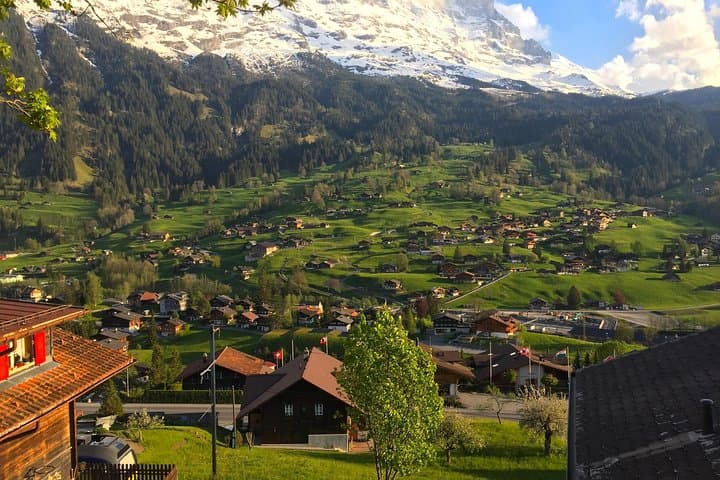
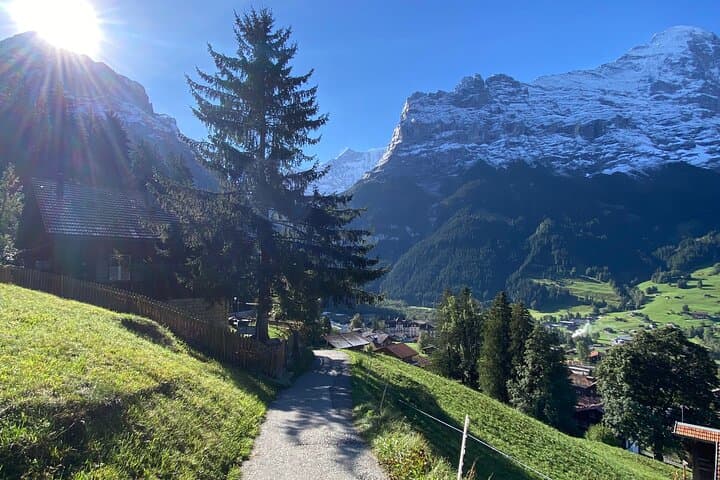
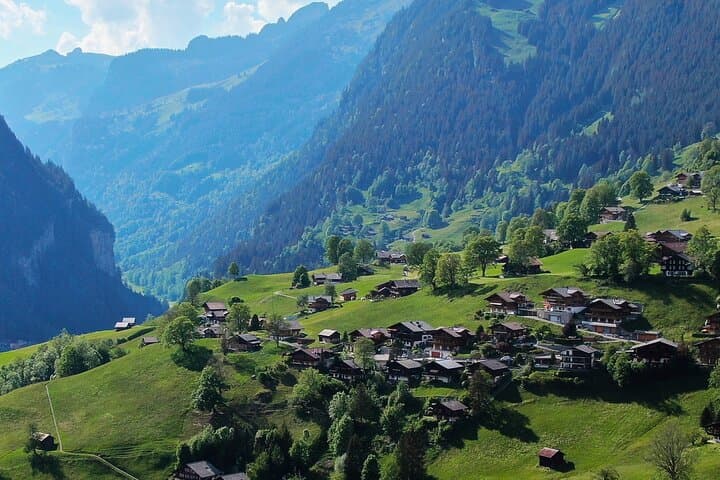
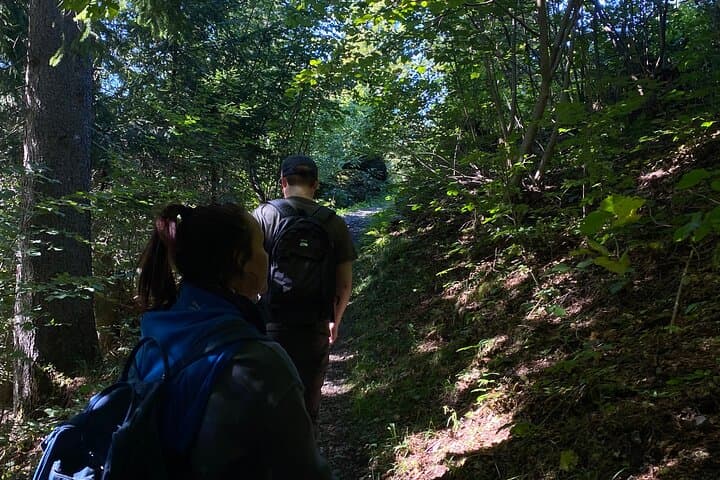
The meeting point is the low stone platform outside Grindelwald Bahnhof, where the smell of coffee drifts from kiosks and the first cable cars of the day slip like silver beetles up the mountain. From here the Village Explorer peels away from the tourist magnets and into the small lanes and stepped alleys that the buses never see. You walk with the Eiger’s north face looming like a raw cliff in the near distance — a constant companion that changes with cloud and light.
The meeting point is the low stone platform outside Grindelwald Bahnhof, where the smell of coffee drifts from kiosks and the first cable cars of the day slip like silver beetles up the mountain. From here the Village Explorer peels away from the tourist magnets and into the small lanes and stepped alleys that the buses never see. You walk with the Eiger’s north face looming like a raw cliff in the near distance — a constant companion that changes with cloud and light.
Grindelwald began as a hamlet of alpine farmers and muleteers; by the mid-1800s it pivoted toward mountaineering and tourism when British climbers made the Bernese Alps famous. Geologically you’re in young, jagged rock: metamorphic schists and limestone sculpted by glaciers until the valley read like a map of ice scars and U-shaped troughs. The village itself is practical and direct — wooden chalets with carved balconies, drying racks for mountain gear, and windows that often frame nothing but rock.
Culturally the visit is low-key. Locals speak Bernese German; you’ll see workers in bright jackets shuttling freight for alpine huts, and afternoon markets where local cheeses and cured meats replace souvenir tchotchkes. The guide will point out old barn carvings, tell a story about a particularly stubborn avalanche in the 19th century, and explain how Grindelwald’s modern tourist economy still leans on seasonality: ski season and summer hiking both shape daily life.
Practical route details: expect 80–100 minutes on foot, roughly 2.5–3.5 km with about 60–120 m cumulative elevation gain across cobbled streets, village steps and compact dirt paths. Terrain is easy but uneven; strollers are usable on main stretches but not on the narrower footpaths. The tour is private and photo-focused — your guide times turns to frame the Eiger, the Wetterhorn, and the quieter viewpoints above the river.
Timing matters: mornings and late afternoons offer softer light and fewer crowds for photos; mid-day can be busy around the Bahnhof and main promenade. Weather can shift fast — mountain air pushes up clouds that change temperature and visibility in a matter of minutes. Bring layered clothing, good walking shoes, and a compact rain shell.
This orientation walk is practical for first-time visitors who want immediate context — history, geology, and a list of local cafés and transport options — as well as photographers seeking original angles away from the main square. It’s less about hard mileage and more about reading the village: its paths, its views, and the way the mountains keep nudging closer as you move through town.