THE ADVENTURE COLLECTIVE® · Independent discovery and booking for outdoor travel

Escape Rome’s traffic for a guided e-bike circuit through Villa Borghese. Ride past neoclassical temples, the Water Clock and Terrazza del Pincio while a local guide weaves history, art and practical tips into a 2½-hour small-group tour.
Escape Rome’s traffic for a guided e-bike circuit through Villa Borghese. Ride past neoclassical temples, the Water Clock and Terrazza del Pincio while a local guide weaves history, art and practical tips into a 2½-hour small-group tour.
Morning light filters through plane trees as a small group pedals away from the city’s noise into the cooler hush of Villa Borghese. The e-bikes do the steady work; riders trade horns and scooters for the soft push of gears and the murmur of fountains. The route threads broad tree-lined avenues, skirts Temple of Aesculapius on a reflective pond and climbs a short slope to the Terrazza del Pincio for a wide view over domes and Tiber bends.
Verified experiences and guided adventures in the surrounding area.
Operated by Bicycle Roma · Rome, Lazio
Morning light filters through plane trees as a small group pedals away from the city’s noise into the cooler hush of Villa Borghese. The e-bikes do the steady work; riders trade horns and scooters for the soft push of gears and the murmur of fountains. The route threads broad tree-lined avenues, skirts Temple of Aesculapius on a reflective pond and climbs a short slope to the Terrazza del Pincio for a wide view over domes and Tiber bends.
Villa Borghese began as a 17th-century Borghese family estate; its gardens, sculptures and neoclassical temples reflect Rome’s layered history of aristocratic taste, papal patronage and 19th-century urban planning. Geologically, the park sits on ancient alluvial terraces above the Tiber, offering gentle rises rather than steep climbs. Culturally, it’s where Romans promenade—artists, families and cyclists share paths beside the Galleria Borghese, which houses Bernini and Caravaggio highlights.
Expect mostly paved cycle lanes and compact gravel—about 90% traffic-free—suitable for riders with basic cycling experience. The guide pauses at the Water Clock, Piazza di Siena and the Pincio terrace; occasional detours bring you past small monuments and lawned vistas. Bring sunscreen and a refillable bottle; the shade can be patchy in midday. Ride timing matters: early or late afternoon offers softer light and fewer crowds. Helmets and e-bikes are provided; children under rules ride in tag-alongs or child seats. This is an accessible, low-elevation ride that replaces the city’s tempo with a steadier, outdoor rhythm—an efficient way to see art, history and green space without leaving Rome’s center.
easy.
2–3 hours.
Suitable for casual fitness: comfortable walking and basic cycling skills required; short gentle climbs present
Yes—e-bikes and helmets are provided; the operator also supplies child seats or tag-alongs for eligible children.
A basic cycling level is mandatory; guides conduct a short pre-ride test to confirm ability and safety.
Infants up to 20 kg can ride free in a provided child seat; children under 139 cm must use a trailer or tag-along.
The operator may cancel for heavy rain and offer an alternative date or full refund if minimum participants aren’t met.
The gardens were developed from a 17th-century Borghese family estate and later opened to the public during 19th-century urban reforms, preserving art collections in the Galleria Borghese.
High foot and bike traffic requires staying on designated paths; avoid trampling lawns and do not feed wildlife to protect the park’s plantings and bird populations.
Bicycle Roma operates guided outdoor trips and adventures with an emphasis on safety, stewardship, and memorable experiences.
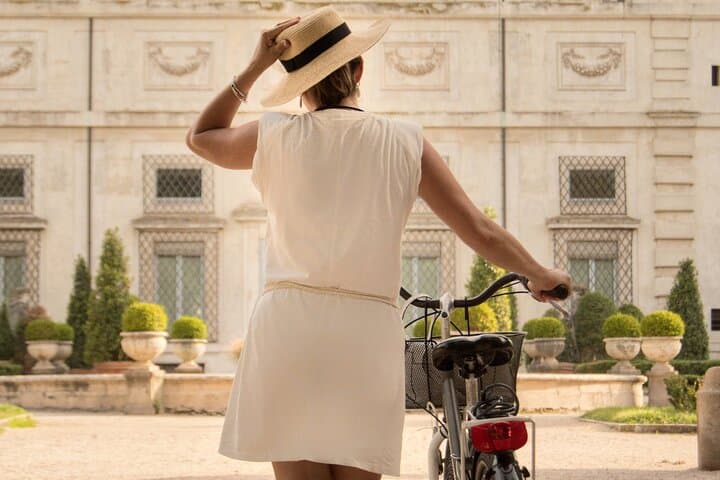
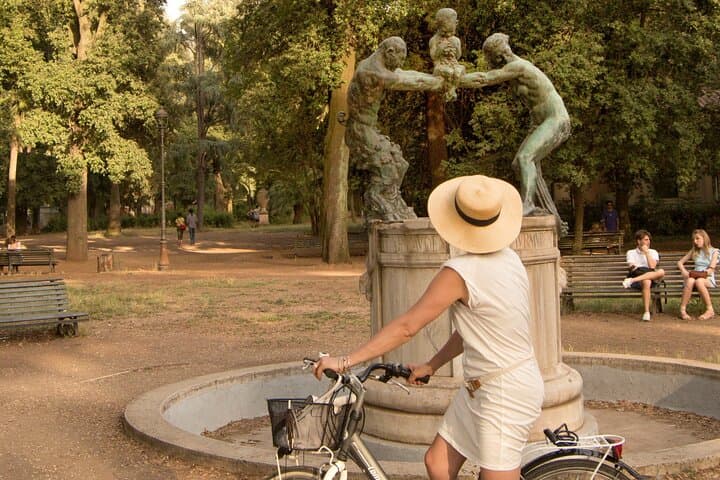
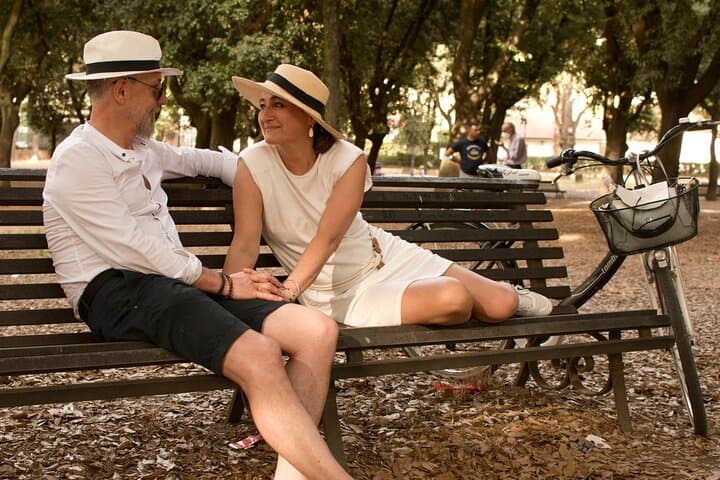
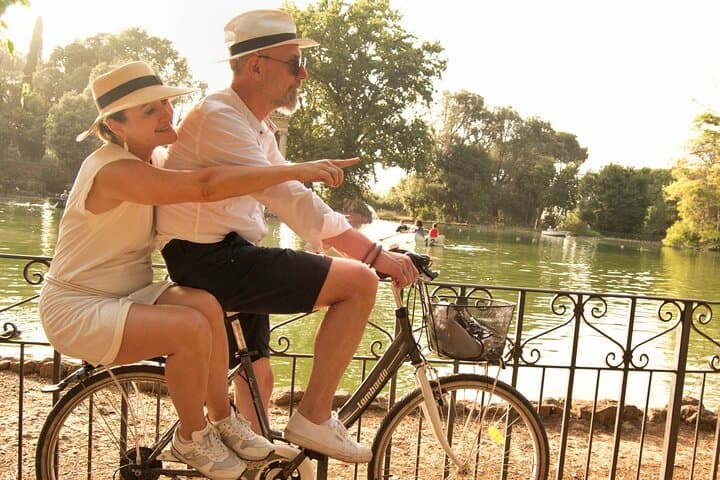
Morning light filters through plane trees as a small group pedals away from the city’s noise into the cooler hush of Villa Borghese. The e-bikes do the steady work; riders trade horns and scooters for the soft push of gears and the murmur of fountains. The route threads broad tree-lined avenues, skirts Temple of Aesculapius on a reflective pond and climbs a short slope to the Terrazza del Pincio for a wide view over domes and Tiber bends.
Morning light filters through plane trees as a small group pedals away from the city’s noise into the cooler hush of Villa Borghese. The e-bikes do the steady work; riders trade horns and scooters for the soft push of gears and the murmur of fountains. The route threads broad tree-lined avenues, skirts Temple of Aesculapius on a reflective pond and climbs a short slope to the Terrazza del Pincio for a wide view over domes and Tiber bends.
Villa Borghese began as a 17th-century Borghese family estate; its gardens, sculptures and neoclassical temples reflect Rome’s layered history of aristocratic taste, papal patronage and 19th-century urban planning. Geologically, the park sits on ancient alluvial terraces above the Tiber, offering gentle rises rather than steep climbs. Culturally, it’s where Romans promenade—artists, families and cyclists share paths beside the Galleria Borghese, which houses Bernini and Caravaggio highlights.
Expect mostly paved cycle lanes and compact gravel—about 90% traffic-free—suitable for riders with basic cycling experience. The guide pauses at the Water Clock, Piazza di Siena and the Pincio terrace; occasional detours bring you past small monuments and lawned vistas. Bring sunscreen and a refillable bottle; the shade can be patchy in midday. Ride timing matters: early or late afternoon offers softer light and fewer crowds. Helmets and e-bikes are provided; children under rules ride in tag-alongs or child seats. This is an accessible, low-elevation ride that replaces the city’s tempo with a steadier, outdoor rhythm—an efficient way to see art, history and green space without leaving Rome’s center.