THE ADVENTURE COLLECTIVE® · Independent discovery and booking for outdoor travel

Head offshore from Vilamoura Marina on a 2–2.5 hour Dolphin Quest tour that pairs local expertise with responsible wildlife viewing. Learn about coastal ecology and watch for bottlenose dolphins while following Portugal’s viewing rules.
Head offshore from Vilamoura Marina on a 2–2.5 hour Dolphin Quest tour that pairs local expertise with responsible wildlife viewing. Learn about coastal ecology and watch for bottlenose dolphins while following Portugal’s viewing rules.
The boat slips out of Vilamoura Marina and the open Atlantic stretches ahead, cool spray punctuating the morning air. Salt and sea grass mix with the hum of the engine as the crew scans the horizon — you feel the coastline pull away and the ocean take center stage.
Verified experiences and guided adventures in the surrounding area.
Operated by Ocean Quest LDA · Vilamoura, Algarve
The boat slips out of Vilamoura Marina and the open Atlantic stretches ahead, cool spray punctuating the morning air. Salt and sea grass mix with the hum of the engine as the crew scans the horizon — you feel the coastline pull away and the ocean take center stage.
This stretch of the Algarve has long been shaped by maritime trade and fishing; its limestone cliffs and offshore sandbanks were carved by waves and wind, creating channels where fish and dolphins concentrate. Local crews have worked these waters for generations and, in recent decades, organized watching guidelines and research partnerships to protect cetaceans. Portugal enforces approach rules for whales and dolphins; reputable operators in the region, like this one trained with AIMM, follow them closely.
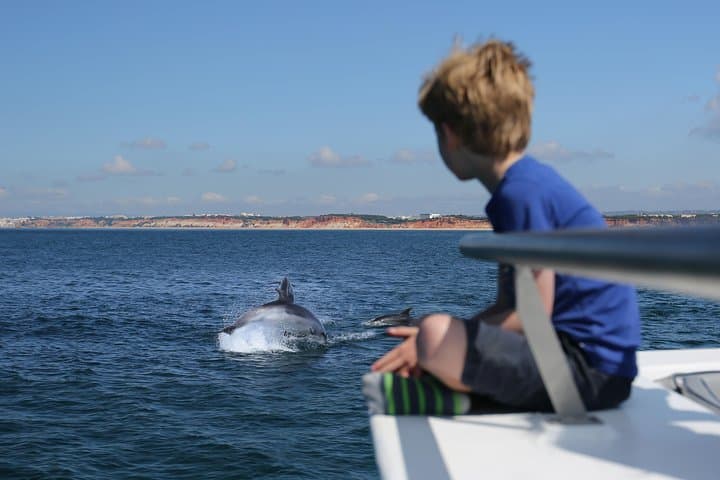
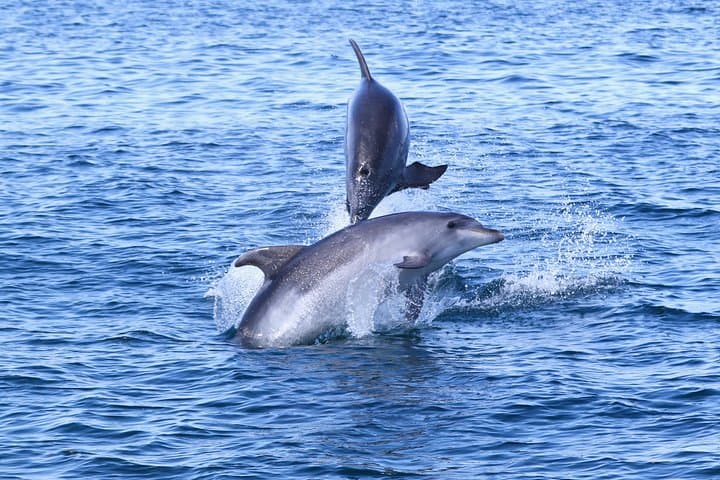
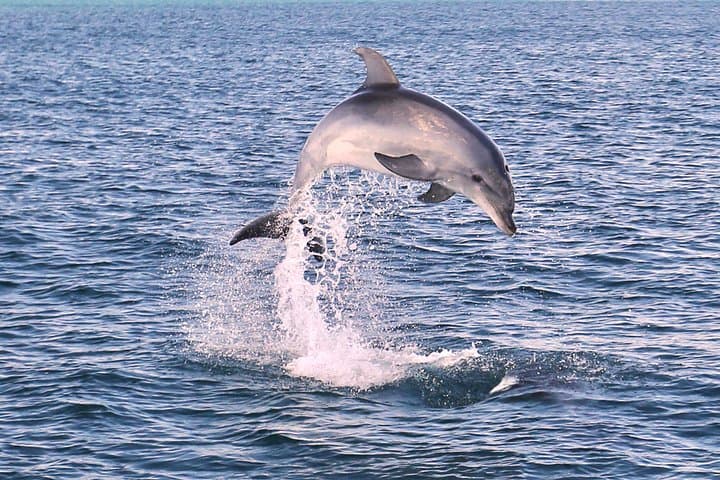
Expect to search rather than guarantee a sighting: common bottlenose dolphins are the likely stars, occasionally joined by sea turtles or migratory seabirds. The boat ride offers a practical education — crew will point out behavior, talk about migration and feeding, and explain why certain coastal shelves are hotspots.
Plan for changing conditions: bring layered clothing, sun protection, and a pair of binoculars. The trip runs about 2–2.5 hours and is suitable for most fitness levels; stable boarding and some standing on deck are typical. For quieter wildlife viewing, choose early morning departures when the sea is calmer and light is best for photos. Above all, follow the crew’s instructions on distance and noise to keep encounters safe and low-impact.
easy.
2–2.5 hours.
Suitable for most people who can step on/off a small vessel and stand for portions of the trip.
No—sightings depend on animal movements and sea conditions; most trips have a high success rate but operators cannot guarantee encounters.
Yes—this tour is marketed as accessible and suitable for all fitness levels, though boarding a boat requires a step; notify the operator of special needs in advance.
Common additional sightings include seabirds, occasional sea turtles, and sometimes small baleen whales or other cetaceans depending on season.
Operators typically cancel if conditions are unsafe; this listing allows full refunds if canceled at least 24 hours before departure and may cancel for bad weather with refund options.
The Algarve’s coastline has been a maritime corridor for centuries; small ports like Vilamoura evolved from fishing settlements into modern marinas while retaining fisheries knowledge used in current conservation efforts.
Operators trained with AIMM follow Portugal’s viewing regulations and donate per-ticket funds to marine research; maintaining distance and limiting noise are key to minimizing disturbance.
Ocean Quest LDA operates guided outdoor trips and adventures with an emphasis on safety, stewardship, and memorable experiences.
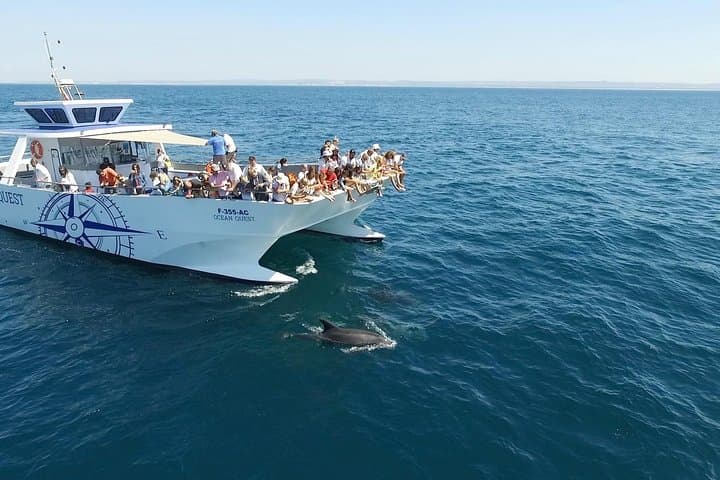
The boat slips out of Vilamoura Marina and the open Atlantic stretches ahead, cool spray punctuating the morning air. Salt and sea grass mix with the hum of the engine as the crew scans the horizon — you feel the coastline pull away and the ocean take center stage.
The boat slips out of Vilamoura Marina and the open Atlantic stretches ahead, cool spray punctuating the morning air. Salt and sea grass mix with the hum of the engine as the crew scans the horizon — you feel the coastline pull away and the ocean take center stage.
This stretch of the Algarve has long been shaped by maritime trade and fishing; its limestone cliffs and offshore sandbanks were carved by waves and wind, creating channels where fish and dolphins concentrate. Local crews have worked these waters for generations and, in recent decades, organized watching guidelines and research partnerships to protect cetaceans. Portugal enforces approach rules for whales and dolphins; reputable operators in the region, like this one trained with AIMM, follow them closely.
Expect to search rather than guarantee a sighting: common bottlenose dolphins are the likely stars, occasionally joined by sea turtles or migratory seabirds. The boat ride offers a practical education — crew will point out behavior, talk about migration and feeding, and explain why certain coastal shelves are hotspots.
Plan for changing conditions: bring layered clothing, sun protection, and a pair of binoculars. The trip runs about 2–2.5 hours and is suitable for most fitness levels; stable boarding and some standing on deck are typical. For quieter wildlife viewing, choose early morning departures when the sea is calmer and light is best for photos. Above all, follow the crew’s instructions on distance and noise to keep encounters safe and low-impact.