THE ADVENTURE COLLECTIVE® · Independent discovery and booking for outdoor travel

Ride the glass elevator up Palm Tower and peer down on the palm-shaped island, the glittering Arabian Gulf and Dubai’s skyline. This guide covers what you’ll see, the engineering behind Palm Jumeirah, and practical tips for timing, accessibility and photography.
Ride the glass elevator up Palm Tower and peer down on the palm-shaped island, the glittering Arabian Gulf and Dubai’s skyline. This guide covers what you’ll see, the engineering behind Palm Jumeirah, and practical tips for timing, accessibility and photography.
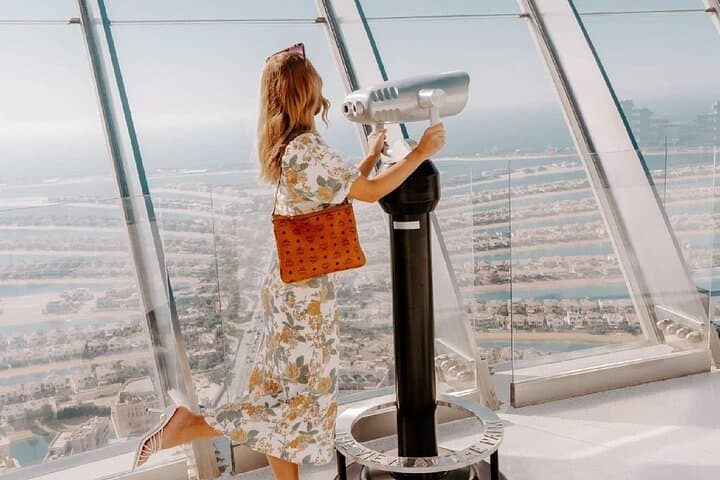
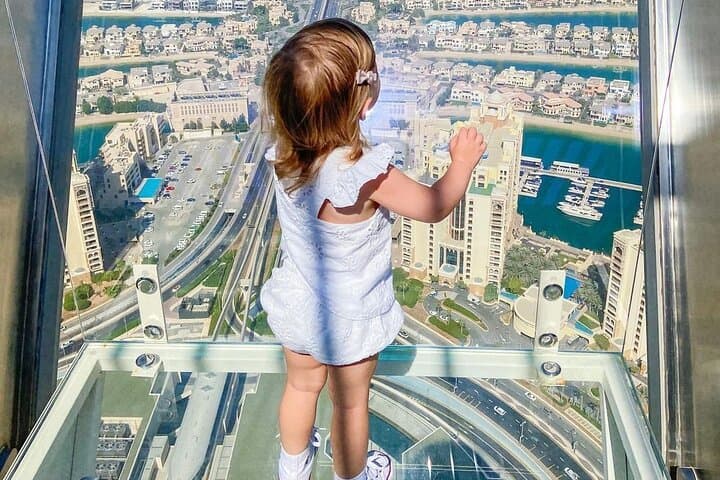
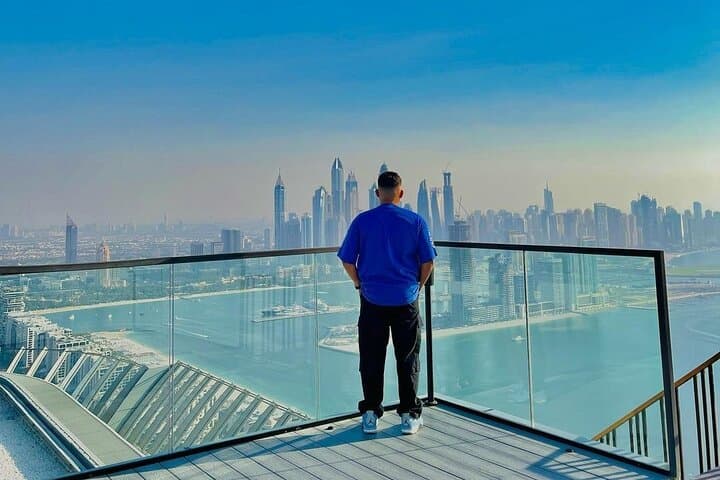
A glass-floored elevator shuttles you up the Palm Tower and the city opens like an engineered horizon: the fronds of Palm Jumeirah fan away beneath, the Arabian Gulf glints, and the Burj Khalifa pins the skyline. From the View at The Palm, Dubai’s human-made island reads as a precise geometry of sand, seawalls and ambition — a place where engineering meets spectacle.
Verified experiences and guided adventures in the surrounding area.
Operated by Tripline Tourism · Dubai, Dubai
A glass-floored elevator shuttles you up the Palm Tower and the city opens like an engineered horizon: the fronds of Palm Jumeirah fan away beneath, the Arabian Gulf glints, and the Burj Khalifa pins the skyline. From the View at The Palm, Dubai’s human-made island reads as a precise geometry of sand, seawalls and ambition — a place where engineering meets spectacle.
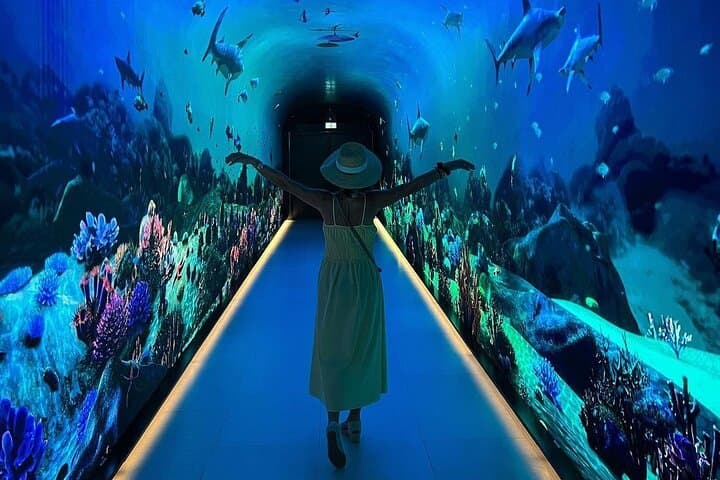
The Palm is recent history: reclaimed land built from millions of cubic meters of sand and rock over two decades, reshaping the Persian Gulf shoreline and Dubai’s identity as a place that builds at scale. Geology here is less ancestral bedrock than purpose-built coastline; the island’s crescent breakwater and frond layout are visible from the deck, and interpretive exhibits explain the dredging, coastal engineering and the ecological measures tied to the build.
Culturally, the view foregrounds Dubai’s appetite for bold urban gestures — hotels, marinas and residences stacked into the horizon. Local guides highlight marine life research around the Palm and efforts to monitor shoreline effects.
Practically: plan 60–90 minutes for the observation deck and exhibits, book morning or late afternoon light for photography, and expect elevators and ramps for easy access. Tickets are mobile-friendly and stroller-accessible; interactive displays provide context if you’d rather learn than linger at the rail. Bring sun protection and a camera with zoom — distant icons like Burj Al Arab and the Burj Khalifa reward a steady lens. The deck is an efficient, low-effort stop that places Dubai’s scale — and its complex environmental story — directly in view.
easy.
60–90 minutes.
Suitable for all fitness levels; minimal walking and stairs are involved
Plan on 60–90 minutes to view the observation deck, use the telescopes and explore the interactive exhibits.
Yes — elevators and ramps are available and infants may sit on laps; staff can assist with access needs.
Mobile or paper tickets are accepted; standard cancellation policy allows a full refund if canceled at least 24 hours in advance.
You can see the Palm Jumeirah fronds, the crescent breakwater, the Arabian Gulf, Burj Al Arab and the distant Burj Khalifa on clear days.
Palm Jumeirah is a 21st-century reclamation project built by massive dredging and rock placement, transforming Dubai’s coastline into a palm-shaped archipelago.
Ongoing monitoring around the Palm assesses coastal erosion and marine habitats; visitors are encouraged to follow on-site guidance to minimize disturbance.
Tripline Tourism operates guided outdoor trips and adventures with an emphasis on safety, stewardship, and memorable experiences.
A glass-floored elevator shuttles you up the Palm Tower and the city opens like an engineered horizon: the fronds of Palm Jumeirah fan away beneath, the Arabian Gulf glints, and the Burj Khalifa pins the skyline. From the View at The Palm, Dubai’s human-made island reads as a precise geometry of sand, seawalls and ambition — a place where engineering meets spectacle.
A glass-floored elevator shuttles you up the Palm Tower and the city opens like an engineered horizon: the fronds of Palm Jumeirah fan away beneath, the Arabian Gulf glints, and the Burj Khalifa pins the skyline. From the View at The Palm, Dubai’s human-made island reads as a precise geometry of sand, seawalls and ambition — a place where engineering meets spectacle.
The Palm is recent history: reclaimed land built from millions of cubic meters of sand and rock over two decades, reshaping the Persian Gulf shoreline and Dubai’s identity as a place that builds at scale. Geology here is less ancestral bedrock than purpose-built coastline; the island’s crescent breakwater and frond layout are visible from the deck, and interpretive exhibits explain the dredging, coastal engineering and the ecological measures tied to the build.
Culturally, the view foregrounds Dubai’s appetite for bold urban gestures — hotels, marinas and residences stacked into the horizon. Local guides highlight marine life research around the Palm and efforts to monitor shoreline effects.
Practically: plan 60–90 minutes for the observation deck and exhibits, book morning or late afternoon light for photography, and expect elevators and ramps for easy access. Tickets are mobile-friendly and stroller-accessible; interactive displays provide context if you’d rather learn than linger at the rail. Bring sun protection and a camera with zoom — distant icons like Burj Al Arab and the Burj Khalifa reward a steady lens. The deck is an efficient, low-effort stop that places Dubai’s scale — and its complex environmental story — directly in view.