THE ADVENTURE COLLECTIVE® · Independent discovery and booking for outdoor travel

Explore Vieux Lyon on a focused 2½‑hour walking tour that climbs to Fourvière for sweeping city views, threads secretive traboules and narrates the district’s silk‑era and Roman past. Ideal for history buffs and city walkers who prefer small groups.
Explore Vieux Lyon on a focused 2½‑hour walking tour that climbs to Fourvière for sweeping city views, threads secretive traboules and narrates the district’s silk‑era and Roman past. Ideal for history buffs and city walkers who prefer small groups.
You step out of the Vieux‑Lyon metro into a narrow seam of light and stone: cobbles slick with centuries of footsteps, shutters painted in deep blues and greens, and a cluster of buildings that lean together as if sharing secrets. The guide—badge pinned, voice steady—leads the small group uphill where the hill of Fourvière rises above the city like a watchful neighbor.
Verified experiences and guided adventures in the surrounding area.
Operated by Noémie guide Lyon · Lyon, Auvergne-Rhône-Alpes
You step out of the Vieux‑Lyon metro into a narrow seam of light and stone: cobbles slick with centuries of footsteps, shutters painted in deep blues and greens, and a cluster of buildings that lean together as if sharing secrets. The guide—badge pinned, voice steady—leads the small group uphill where the hill of Fourvière rises above the city like a watchful neighbor.
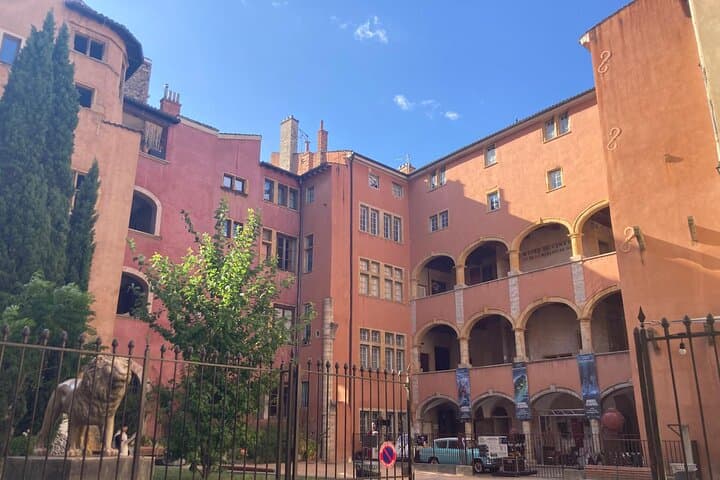
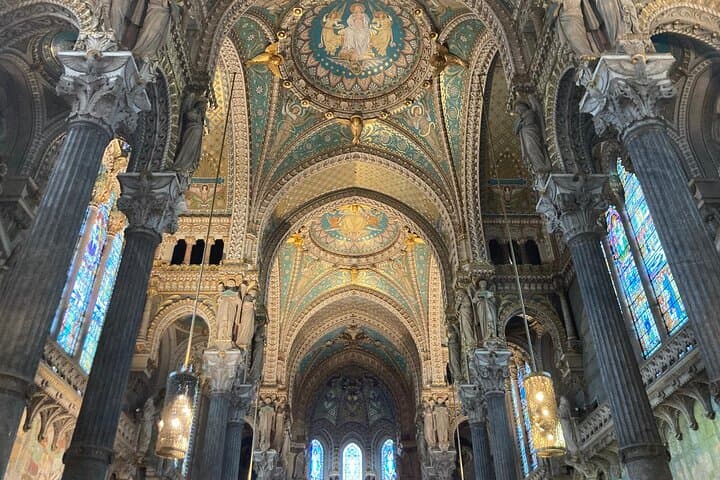
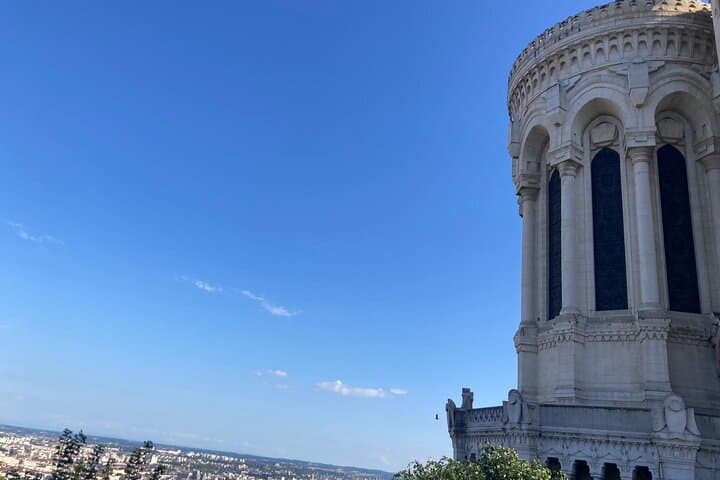
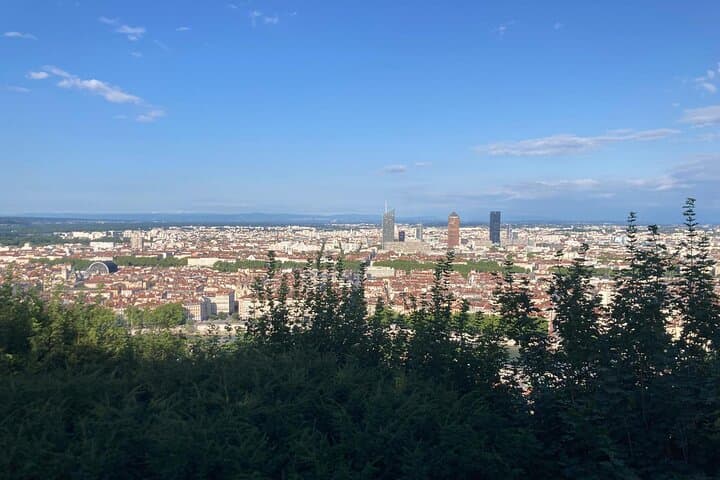
This route threads Roman remains, Gothic church façades and the city’s famous traboules—covered passageways once used by silk workers to move goods quickly through cramped blocks. Old Lyon is a UNESCO World Heritage district because it preserves a stratified urban history: Gallo-Roman foundations, medieval guild quarters, and Renaissance façades that recall the city’s silk-era wealth. Fourvière’s basilica crowns the skyline; its esplanade opens a broad panorama across the Rhône and Saône rivers and the patchwork roofs below.
Expect stair climbs and narrow alleys rather than flat promenades. The walking tour blends local culture—tips on bouchons and the Canut (silk weaver) history—with practical stops: viewpoints, cathedral exteriors and several traboules where the guide explains their architecture and social role.
Practical notes: the tour lasts about 2½ hours, runs in small groups (up to 12), and includes access to some monuments. Wear sturdy shoes for uneven cobbles and stairs, bring a light layer for hilltop winds, and carry water—summer heat can be sharp on exposed viewpoints. If you want photos inside private courtyards, ask first; many traboules are partly residential. The route is rewarding for anyone who enjoys urban history served with brisk walking and panoramic payoffs.
easy.
2–3 hours.
Suitable for most fitness levels but requires comfortable walking ability and the ability to climb multiple flights of stairs.
The tour is roughly 2½ hours and covers a few kilometers of city streets and stairs, with stops for viewpoints and traboules.
Parts of Vieux Lyon include narrow passageways and stairs; while some sections are accessible, the full route is not wheelchair‑friendly—check accessibility details before booking.
The tour description notes access to monuments and some traboules, but confirm in advance which specific entries are included or may require separate fees.
This specific listing is led by a local Speaker Guide—confirm language availability at booking; guides commonly offer tours in French and English.
Vieux Lyon grew wealthy on silk weaving; traboules allowed Canuts (silk workers) to move fabric between workshops while sheltered from weather.
Respect for private courtyards and limited group sizes helps preserve fragile interiors; avoid littering and stay on marked paths to reduce impact.
Noémie guide Lyon operates guided outdoor trips and adventures with an emphasis on safety, stewardship, and memorable experiences.
You step out of the Vieux‑Lyon metro into a narrow seam of light and stone: cobbles slick with centuries of footsteps, shutters painted in deep blues and greens, and a cluster of buildings that lean together as if sharing secrets. The guide—badge pinned, voice steady—leads the small group uphill where the hill of Fourvière rises above the city like a watchful neighbor.
You step out of the Vieux‑Lyon metro into a narrow seam of light and stone: cobbles slick with centuries of footsteps, shutters painted in deep blues and greens, and a cluster of buildings that lean together as if sharing secrets. The guide—badge pinned, voice steady—leads the small group uphill where the hill of Fourvière rises above the city like a watchful neighbor.
This route threads Roman remains, Gothic church façades and the city’s famous traboules—covered passageways once used by silk workers to move goods quickly through cramped blocks. Old Lyon is a UNESCO World Heritage district because it preserves a stratified urban history: Gallo-Roman foundations, medieval guild quarters, and Renaissance façades that recall the city’s silk-era wealth. Fourvière’s basilica crowns the skyline; its esplanade opens a broad panorama across the Rhône and Saône rivers and the patchwork roofs below.
Expect stair climbs and narrow alleys rather than flat promenades. The walking tour blends local culture—tips on bouchons and the Canut (silk weaver) history—with practical stops: viewpoints, cathedral exteriors and several traboules where the guide explains their architecture and social role.
Practical notes: the tour lasts about 2½ hours, runs in small groups (up to 12), and includes access to some monuments. Wear sturdy shoes for uneven cobbles and stairs, bring a light layer for hilltop winds, and carry water—summer heat can be sharp on exposed viewpoints. If you want photos inside private courtyards, ask first; many traboules are partly residential. The route is rewarding for anyone who enjoys urban history served with brisk walking and panoramic payoffs.