THE ADVENTURE COLLECTIVE® · Independent discovery and booking for outdoor travel

Paddle through Mosquito Bay’s glowing waters on a guided night tour and watch each stroke light up the lagoon. This practical guide covers what to expect, how to prep for the ferry and the rules that protect Vieques’ brightest bio bay.
Paddle through Mosquito Bay’s glowing waters on a guided night tour and watch each stroke light up the lagoon. This practical guide covers what to expect, how to prep for the ferry and the rules that protect Vieques’ brightest bio bay.
The night opens like a velvet bowl and your paddle cuts a comet of blue—each stroke writing light across black water.
Verified experiences and guided adventures in the surrounding area.
Operated by Mosquito Bio Bay Tours · Isabel Segunda, Puerto Rico
The night opens like a velvet bowl and your paddle cuts a comet of blue—each stroke writing light across black water.
Mosquito Bay on Vieques is the kind of place where motion creates its own stars: dinoflagellates react to disturbance and the whole lagoon seems to sigh in phosphorescent wake. The bay sits behind a fringe of mangroves and shallow flats, sheltered from Atlantic swells, which concentrates the microorganisms and makes the glow unusually intense. Historically the bay drew scientific attention for its brightness; Vieques itself carries layers of history from Taíno habitation to Spanish colonial agriculture and decades of U.S. Navy use that shaped today’s access and conservation priorities.
Geologically the bay is a shallow lagoon over carbonate sediments and mangrove roots; culturally the island is small and service-oriented—expect friendly guides and simple local eateries in Isabel Segunda and Esperanza.
Practically: tours run after dark and usually last about 60 minutes on the water within a 90-minute booking window. Paddle quietly; avoid flash photography and lotions—sunscreen and soaps reduce bioluminescence and harm the bay. Guides supply life jackets and glass‑bottom kayaks for viewing without leaving the boat. Ferries from Ceiba require planning—buy tickets early and coordinate transport to the meeting point. Dress in quick‑dry layers, bring a waterproof case for your phone, and be ready for humidity and mosquitos onshore.
The experience is equal parts natural wonder and low‑impact stewardship: your silence, timing, and choices keep the blue alive for the next paddlers.
moderate.
1.5 hours.
Suitable for most people who can sit and paddle for ~60 minutes; basic upper‑body stamina helps.
No advanced skills required; guides provide a brief orientation and life jackets—basic paddling and the ability to sit for an hour are sufficient.
Most operators prohibit swimming to protect the dinoflagellates and for safety; staying in the kayak preserves the glow for everyone.
Aim for a new‑moon or darker nights with little wind and no recent heavy rain—those conditions concentrate dinoflagellates and maximize visibility.
Most visitors take the Ceiba ferry or a small plane from Puerto Rico; coordinate ferry times with your tour operator and allow extra time for check‑in.
Mosquito Bay has long been known to local fishermen; scientific studies later identified its density of dinoflagellates, and the island’s landscape was shaped by decades of U.S. Navy use before civilian restoration.
Access is managed to limit disturbance—operators follow no‑swim, no‑sunscreen rules and restrict light to protect the dinoflagellates and mangrove habitat.
Mosquito Bio Bay Tours operates guided outdoor trips and adventures with an emphasis on safety, stewardship, and memorable experiences.
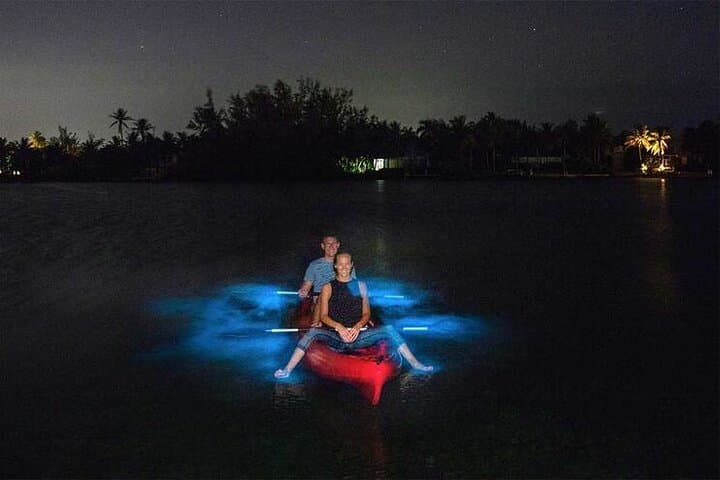
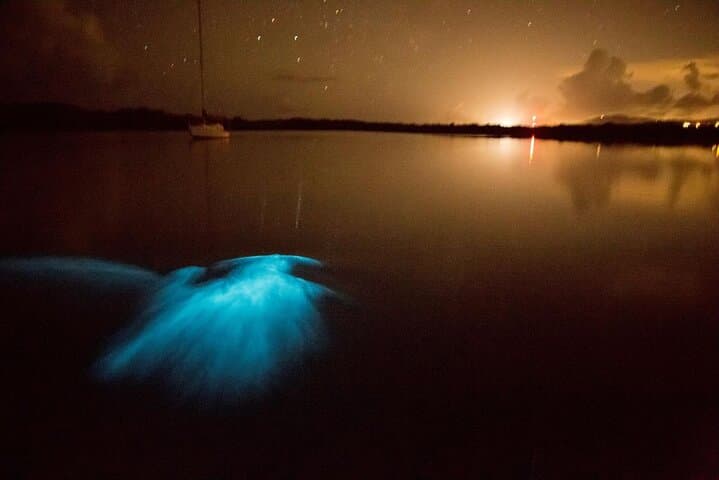
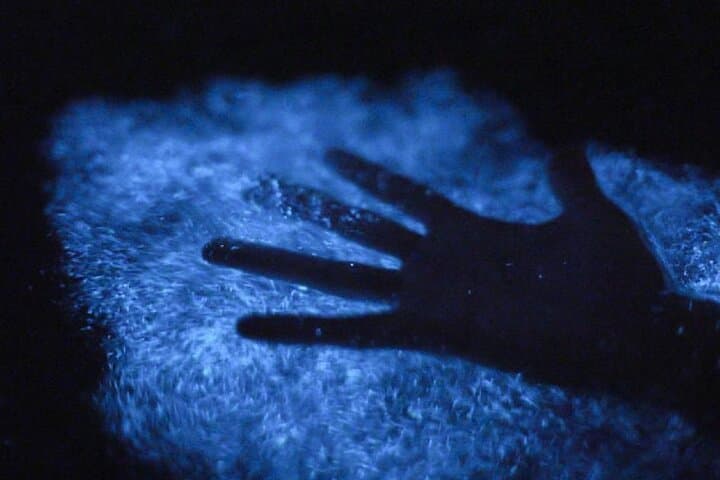
The night opens like a velvet bowl and your paddle cuts a comet of blue—each stroke writing light across black water.
The night opens like a velvet bowl and your paddle cuts a comet of blue—each stroke writing light across black water.
Mosquito Bay on Vieques is the kind of place where motion creates its own stars: dinoflagellates react to disturbance and the whole lagoon seems to sigh in phosphorescent wake. The bay sits behind a fringe of mangroves and shallow flats, sheltered from Atlantic swells, which concentrates the microorganisms and makes the glow unusually intense. Historically the bay drew scientific attention for its brightness; Vieques itself carries layers of history from Taíno habitation to Spanish colonial agriculture and decades of U.S. Navy use that shaped today’s access and conservation priorities.
Geologically the bay is a shallow lagoon over carbonate sediments and mangrove roots; culturally the island is small and service-oriented—expect friendly guides and simple local eateries in Isabel Segunda and Esperanza.
Practically: tours run after dark and usually last about 60 minutes on the water within a 90-minute booking window. Paddle quietly; avoid flash photography and lotions—sunscreen and soaps reduce bioluminescence and harm the bay. Guides supply life jackets and glass‑bottom kayaks for viewing without leaving the boat. Ferries from Ceiba require planning—buy tickets early and coordinate transport to the meeting point. Dress in quick‑dry layers, bring a waterproof case for your phone, and be ready for humidity and mosquitos onshore.
The experience is equal parts natural wonder and low‑impact stewardship: your silence, timing, and choices keep the blue alive for the next paddlers.