THE ADVENTURE COLLECTIVE® · Independent discovery and booking for outdoor travel

Walk the rainforest rim of Mosi-oa-Tunya, descend toward the Boiling Pot and visit the historic Victoria Falls Bridge on a private, 2–3 hour guided tour from Livingstone. Expect misty spray, basalt cliffs and short but steep stair descents.
Walk the rainforest rim of Mosi-oa-Tunya, descend toward the Boiling Pot and visit the historic Victoria Falls Bridge on a private, 2–3 hour guided tour from Livingstone. Expect misty spray, basalt cliffs and short but steep stair descents.
You step off the shuttle into a humid rainforest corridor, the air carrying a constant, distant roar. Mist threads through the trees like a living veil; every footfall brings the falls closer until the ground trembles beneath your boots. The guided walk on the Zambian side frames the cascade as a moving wall of water, and the path leads down roughly 700 meters toward the river to a place locals call the Boiling Pot — churned currents that dare you to look over the rail.
Verified experiences and guided adventures in the surrounding area.
Operated by Chris Travel and Tours Private Limited Company · Livingstone, Southern Province
You step off the shuttle into a humid rainforest corridor, the air carrying a constant, distant roar. Mist threads through the trees like a living veil; every footfall brings the falls closer until the ground trembles beneath your boots. The guided walk on the Zambian side frames the cascade as a moving wall of water, and the path leads down roughly 700 meters toward the river to a place locals call the Boiling Pot — churned currents that dare you to look over the rail.
Mosi-oa-Tunya, “Smoke That Thunders,” was named by the Kololo people long before David Livingstone recorded the sight for Victorian Britain. Geologically, the falls are the product of resistant basalt over which the Zambezi drains eastward; the combination of width (about 1,700m) and 108m drops makes for dramatic hydraulics and constant spray. Cultural touchpoints — the century-old Victoria Falls Bridge and nearby Livingstone town — recall early explorers, railway engineering, and cross-border commerce.
Practically, expect a rainforest walk on well-worn paths and steps with multiple viewpoints. The operator includes private transport and bottled water; the tour is suitable for most fitness levels but involves stairs on the descent. Waterproof your camera and pack light layers: spray can soak you even on warm days. Aim for morning light for clearer photos and fewer crowds; if you visit in the wet season, bring full rain protection and fast-drying clothes. Guides will keep the group moving to cover the Boiling Pot and the bridge viewpoint within the 2–3 hour window, and park fees are included. Respect barriers and follow the guide — currents and slippery rock are real hazards here.
easy.
2–3 hours.
Suitable for most fitness levels; involves stair descent/ascent and standing periods.
The tour runs about 2–3 hours and includes a guided rainforest walk to multiple viewpoints, descent to the Boiling Pot, a Victoria Falls Bridge viewpoint, private transport and bottled water; park fees are included.
The operator notes wheelchair-accessible options for some areas, but the descent to the Boiling Pot involves stairs and uneven terrain; discuss mobility needs when booking.
This specific guided tour is focused on the Zambian side; crossing the border requires separate arrangements, passport/visa checks and additional time.
Dry-season months (June–August) offer clearer views and less spray; the wet season (Dec–Feb) shows the falls at peak volume but with much more mist.
Named Mosi-oa-Tunya by local peoples long before David Livingstone recorded it for Europe; the Victoria Falls Bridge (completed 1905) links colonial-era transport history with modern tourism.
The falls and surrounding rainforest are protected by national park rules and visitor fees support conservation; stay on paths and avoid disturbing vegetation to reduce erosion and habitat impact.
Chris Travel and Tours Private Limited Company operates guided outdoor trips and adventures with an emphasis on safety, stewardship, and memorable experiences.

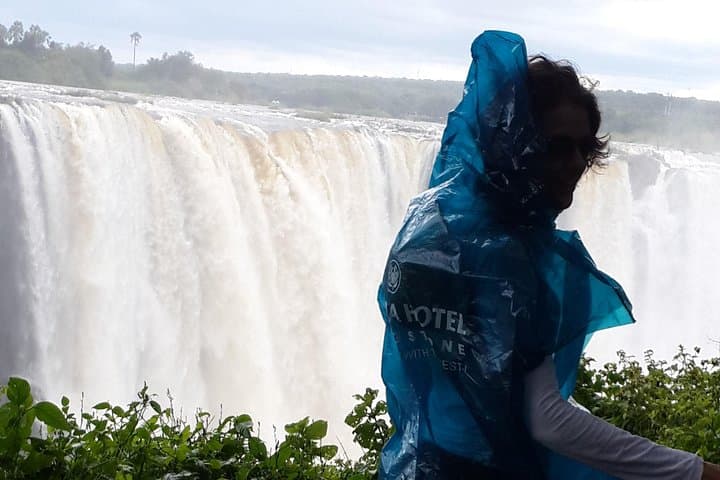
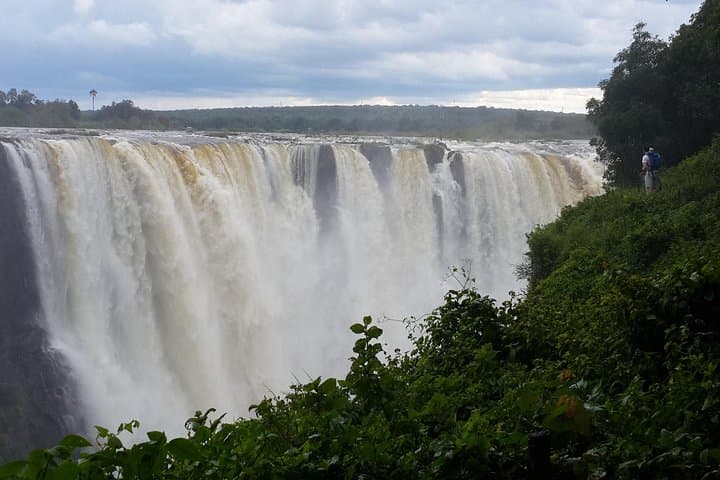
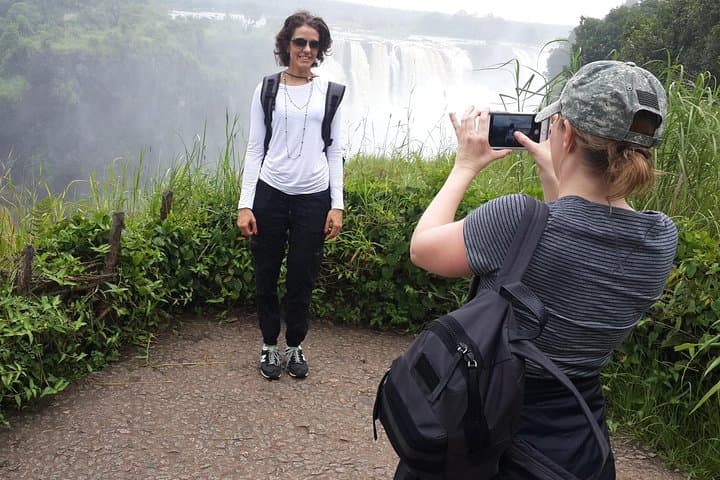
You step off the shuttle into a humid rainforest corridor, the air carrying a constant, distant roar. Mist threads through the trees like a living veil; every footfall brings the falls closer until the ground trembles beneath your boots. The guided walk on the Zambian side frames the cascade as a moving wall of water, and the path leads down roughly 700 meters toward the river to a place locals call the Boiling Pot — churned currents that dare you to look over the rail.
You step off the shuttle into a humid rainforest corridor, the air carrying a constant, distant roar. Mist threads through the trees like a living veil; every footfall brings the falls closer until the ground trembles beneath your boots. The guided walk on the Zambian side frames the cascade as a moving wall of water, and the path leads down roughly 700 meters toward the river to a place locals call the Boiling Pot — churned currents that dare you to look over the rail.
Mosi-oa-Tunya, “Smoke That Thunders,” was named by the Kololo people long before David Livingstone recorded the sight for Victorian Britain. Geologically, the falls are the product of resistant basalt over which the Zambezi drains eastward; the combination of width (about 1,700m) and 108m drops makes for dramatic hydraulics and constant spray. Cultural touchpoints — the century-old Victoria Falls Bridge and nearby Livingstone town — recall early explorers, railway engineering, and cross-border commerce.
Practically, expect a rainforest walk on well-worn paths and steps with multiple viewpoints. The operator includes private transport and bottled water; the tour is suitable for most fitness levels but involves stairs on the descent. Waterproof your camera and pack light layers: spray can soak you even on warm days. Aim for morning light for clearer photos and fewer crowds; if you visit in the wet season, bring full rain protection and fast-drying clothes. Guides will keep the group moving to cover the Boiling Pot and the bridge viewpoint within the 2–3 hour window, and park fees are included. Respect barriers and follow the guide — currents and slippery rock are real hazards here.