THE ADVENTURE COLLECTIVE® · Independent discovery and booking for outdoor travel

This small-group guided walk on the Zimbabwe side combines a short wildlife safari through bushland with a rain-forest circuit at Victoria Falls. Expect close-up views, spray-soaked paths, and licensed local guides—plus practical guidance on fees, footwear, and timing.
This small-group guided walk on the Zimbabwe side combines a short wildlife safari through bushland with a rain-forest circuit at Victoria Falls. Expect close-up views, spray-soaked paths, and licensed local guides—plus practical guidance on fees, footwear, and timing.
You step off the dry scrub and into a wall of spray—the Zambezi’s roar growing until the mist dares you forward. A licensed local guide leads a small group across bush tracks toward the Zimbabwean rim of Victoria Falls, pausing where game trails cut through thorn and riverine acacia. Before the lookout points, the walk includes a short wildlife safari across open veld, where elephant dust clouds and troop-moving baboons remind you the river commands more than water.
Verified experiences and guided adventures in the surrounding area.
Operated by Savannah Adventures Safaris · Victoria Falls, Matabeleland North
You step off the dry scrub and into a wall of spray—the Zambezi’s roar growing until the mist dares you forward. A licensed local guide leads a small group across bush tracks toward the Zimbabwean rim of Victoria Falls, pausing where game trails cut through thorn and riverine acacia. Before the lookout points, the walk includes a short wildlife safari across open veld, where elephant dust clouds and troop-moving baboons remind you the river commands more than water.
Geology here is honest and raw: basalt cliffs split by the Zambezi form the world’s largest sheet of falling water, carving a long series of gorges downstream. Culturally, the falls are Mosi-oa-Tunya—"The Smoke That Thunders"—a place of spiritual importance to local Tonga communities and the site noted by David Livingstone in 1855. The protected rainforest that clings to the spray is a pocket ecosystem, feeding insect-eating birds and moisture-loving ferns.
Practically, expect a guided walk of roughly 110–120 minutes, small groups (up to 12), and variable wildlife sightings—common but not guaranteed. National park entrance fees are charged on arrival and vary by nationality. Wear sturdy, grippy shoes: paths are wet and uneven. Carry water, a lightweight rain jacket or poncho for the spray, and binoculars for game viewing. Morning departures increase chances of animal encounters and softer light for photography. The operator recommends this for most fitness levels; it is not wheelchair accessible. Respect park rules, stay on trails, and avoid feeding animals—conservation here depends on visitors keeping the wild wild.
easy.
110–120 minutes.
Suitable for most people who can walk on uneven terrain for up to two hours; not recommended for those with limited mobility.
No; National Park fees are charged on entry and vary by nationality—payable separately at the gate.
Wildlife sightings are common but not guaranteed; animals follow seasonal water and food patterns, so sightings vary by time of day and year.
Yes—it's rated easy and suitable for most fitness levels, but not wheelchair accessible; children should be supervised near viewpoints and cliffs.
Guides are licensed local operators who typically speak English; shared groups are kept small—up to about 12 people—for a personal experience.
The falls were named Victoria Falls by David Livingstone in 1855 but are long known to local Tonga people as Mosi-oa-Tunya; the surrounding area has been a cultural crossroads for riverine communities.
Victoria Falls National Park is protected to conserve both the waterfall’s rainforest and riverine wildlife—stay on marked trails and avoid disturbing animals to minimize impact.
Savannah Adventures Safaris operates guided outdoor trips and adventures with an emphasis on safety, stewardship, and memorable experiences.
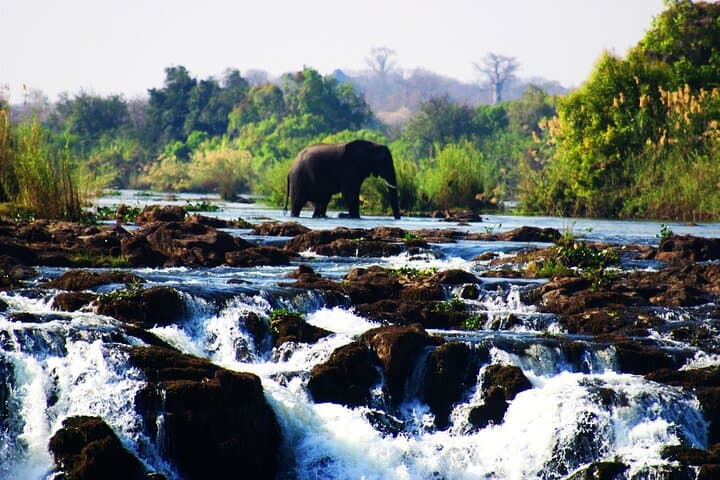
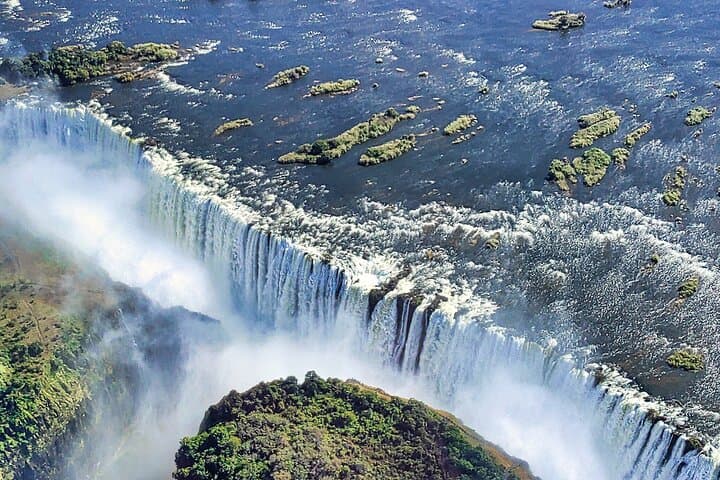
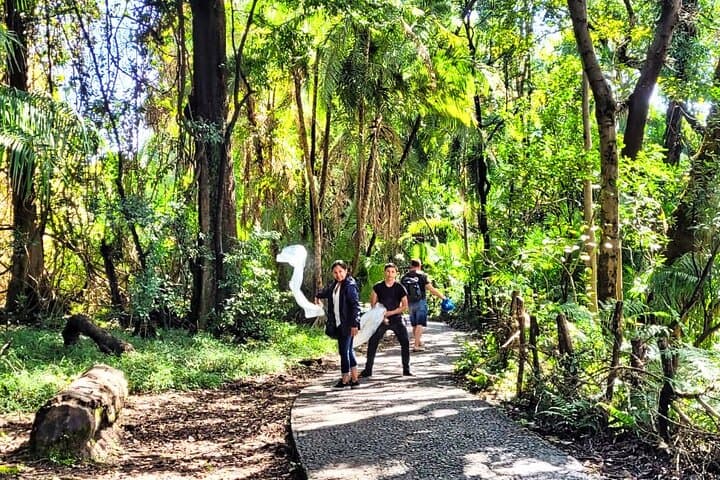
You step off the dry scrub and into a wall of spray—the Zambezi’s roar growing until the mist dares you forward. A licensed local guide leads a small group across bush tracks toward the Zimbabwean rim of Victoria Falls, pausing where game trails cut through thorn and riverine acacia. Before the lookout points, the walk includes a short wildlife safari across open veld, where elephant dust clouds and troop-moving baboons remind you the river commands more than water.
You step off the dry scrub and into a wall of spray—the Zambezi’s roar growing until the mist dares you forward. A licensed local guide leads a small group across bush tracks toward the Zimbabwean rim of Victoria Falls, pausing where game trails cut through thorn and riverine acacia. Before the lookout points, the walk includes a short wildlife safari across open veld, where elephant dust clouds and troop-moving baboons remind you the river commands more than water.
Geology here is honest and raw: basalt cliffs split by the Zambezi form the world’s largest sheet of falling water, carving a long series of gorges downstream. Culturally, the falls are Mosi-oa-Tunya—"The Smoke That Thunders"—a place of spiritual importance to local Tonga communities and the site noted by David Livingstone in 1855. The protected rainforest that clings to the spray is a pocket ecosystem, feeding insect-eating birds and moisture-loving ferns.
Practically, expect a guided walk of roughly 110–120 minutes, small groups (up to 12), and variable wildlife sightings—common but not guaranteed. National park entrance fees are charged on arrival and vary by nationality. Wear sturdy, grippy shoes: paths are wet and uneven. Carry water, a lightweight rain jacket or poncho for the spray, and binoculars for game viewing. Morning departures increase chances of animal encounters and softer light for photography. The operator recommends this for most fitness levels; it is not wheelchair accessible. Respect park rules, stay on trails, and avoid feeding animals—conservation here depends on visitors keeping the wild wild.