THE ADVENTURE COLLECTIVE® · Independent discovery and booking for outdoor travel

Walk the Zambia side of Victoria Falls with a guide through Knife-Edge Bridge, the Boiling Point, and rainforest paths. This three-hour tour combines geology, local history, and prime photo vantage points for first-time visitors.
Walk the Zambia side of Victoria Falls with a guide through Knife-Edge Bridge, the Boiling Point, and rainforest paths. This three-hour tour combines geology, local history, and prime photo vantage points for first-time visitors.
You step from the humid bustle of Livingstone into a green corridor where the Zambezi’s roar arrives before the falls do. Spray hangs like a moving veil and the path narrows toward the Knife-Edge Bridge; water dares you to come closer as the gorge drops away in a raw, vertical chorus.
Verified experiences and guided adventures in the surrounding area.
Operated by Royal Tours Zambia · Livingstone, Southern Province
You step from the humid bustle of Livingstone into a green corridor where the Zambezi’s roar arrives before the falls do. Spray hangs like a moving veil and the path narrows toward the Knife-Edge Bridge; water dares you to come closer as the gorge drops away in a raw, vertical chorus.
The Zambia side of Victoria Falls—Mosi-oa-Tunya, “The Smoke That Thunders”—sits on a basalt plateau the river has carved through millennia. David Livingstone first brought European attention here in 1855, and generations since have built the park’s trails and viewpoints that frame the thundering cataract and the sculpted gorges below.
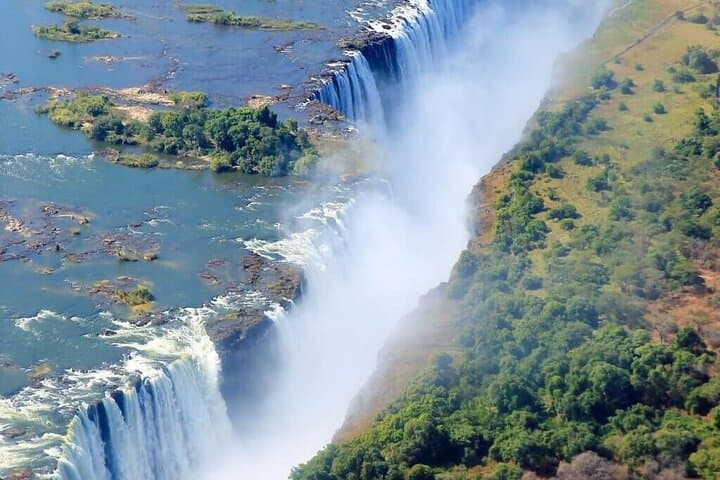
Culturally, Livingstone town is a practical base: markets, guides, and craft stalls complement the natural spectacle. Geologically, the falls mark a hinge between hard basalt and softer sediments downstream, producing the series of gorges that look ferocious from the rim.
Practically, expect 2–3 km of walking over paved paths, boardwalks and stone steps with roughly 50–80 m of cumulative elevation change. Trails include the Boiling Point overlook, rainforest paths, and Knife-Edge Bridge; in the wet season paths can be slick with spray. The guided 3-hour tour covers major viewpoints, story-led natural history, and photo stops—pack a waterproof layer, sturdy footwear, and a camera cover. Visit early for softer light and fewer crowds, or late afternoon when the spray catches the sun. Respect park signage, stay behind barriers at viewpoints, and plan for changing weather: the falls are dramatic in every season, but different in volume and visibility.
easy.
3 hours.
Suitable for most fitness levels; requires ability to walk 2–3 km on uneven surfaces and steps.
The tour runs approximately three hours and covers the main viewpoints on the Zambia side, including Knife-Edge Bridge and the Boiling Point.
Many paths are wheelchair- and stroller-accessible; however, some viewpoints require steps—check with the operator about accessible route options.
Yes—spray levels depend on river flow. The wet season produces heavy spray that can drench clothing and cameras, so waterproofs are recommended.
Bookings are instant confirmation; to receive a full refund, cancel at least 24 hours before departure per standard policy.
David Livingstone popularized the falls to European audiences in 1855; locally it is called Mosi-oa-Tunya, meaning 'The Smoke That Thunders.'
The park manages visitor access to protect riverine forest and fragile viewpoints; stick to paths, avoid litter, and favor local guides to support conservation efforts.
Royal Tours Zambia operates guided outdoor trips and adventures with an emphasis on safety, stewardship, and memorable experiences.
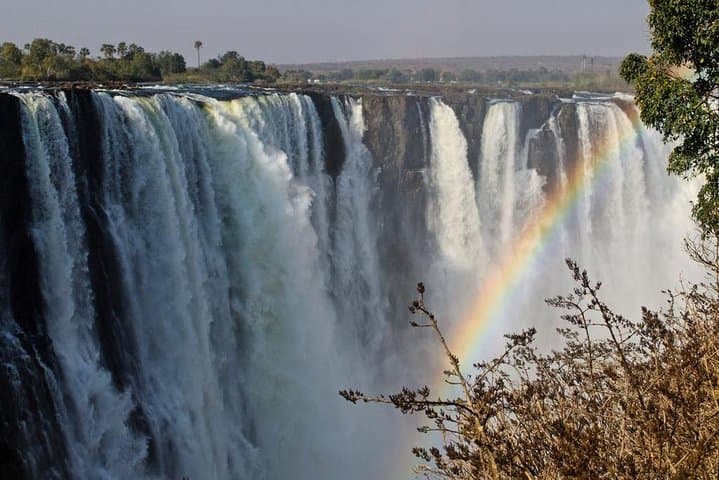
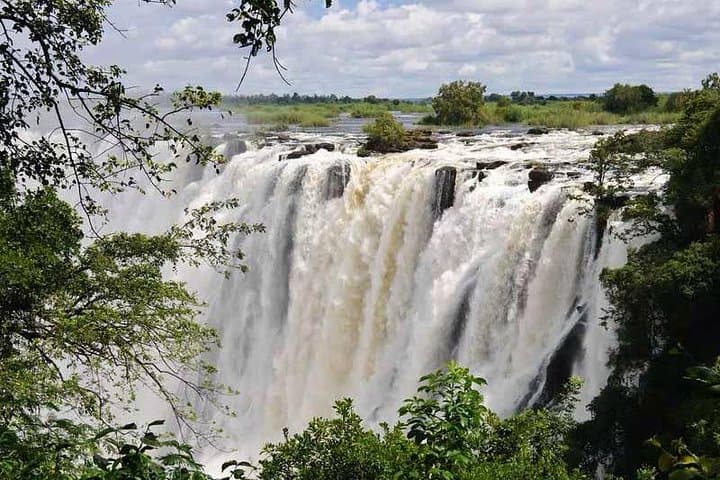
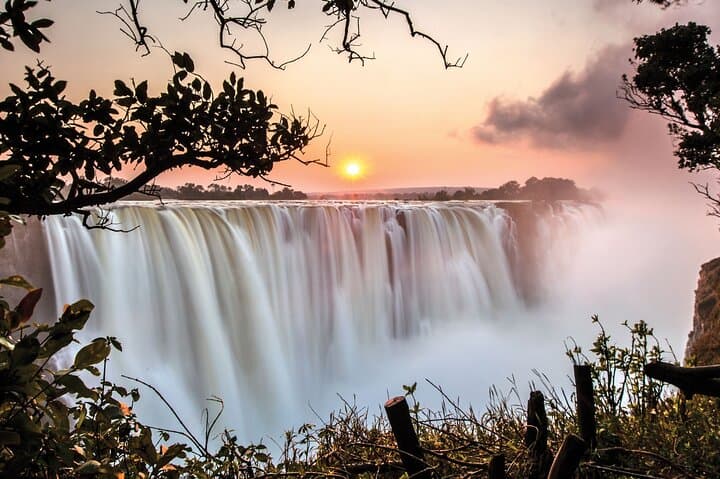
You step from the humid bustle of Livingstone into a green corridor where the Zambezi’s roar arrives before the falls do. Spray hangs like a moving veil and the path narrows toward the Knife-Edge Bridge; water dares you to come closer as the gorge drops away in a raw, vertical chorus.
You step from the humid bustle of Livingstone into a green corridor where the Zambezi’s roar arrives before the falls do. Spray hangs like a moving veil and the path narrows toward the Knife-Edge Bridge; water dares you to come closer as the gorge drops away in a raw, vertical chorus.
The Zambia side of Victoria Falls—Mosi-oa-Tunya, “The Smoke That Thunders”—sits on a basalt plateau the river has carved through millennia. David Livingstone first brought European attention here in 1855, and generations since have built the park’s trails and viewpoints that frame the thundering cataract and the sculpted gorges below.
Culturally, Livingstone town is a practical base: markets, guides, and craft stalls complement the natural spectacle. Geologically, the falls mark a hinge between hard basalt and softer sediments downstream, producing the series of gorges that look ferocious from the rim.
Practically, expect 2–3 km of walking over paved paths, boardwalks and stone steps with roughly 50–80 m of cumulative elevation change. Trails include the Boiling Point overlook, rainforest paths, and Knife-Edge Bridge; in the wet season paths can be slick with spray. The guided 3-hour tour covers major viewpoints, story-led natural history, and photo stops—pack a waterproof layer, sturdy footwear, and a camera cover. Visit early for softer light and fewer crowds, or late afternoon when the spray catches the sun. Respect park signage, stay behind barriers at viewpoints, and plan for changing weather: the falls are dramatic in every season, but different in volume and visibility.