THE ADVENTURE COLLECTIVE® · Independent discovery and booking for outdoor travel

Experience Victoria Falls’ thunderous spray and sculpted gorges on a guided walk from Livingstone. This expert-led tour pairs prime viewpoints with local history and practical guidance for photographing and navigating the rainforest paths.
Experience Victoria Falls’ thunderous spray and sculpted gorges on a guided walk from Livingstone. This expert-led tour pairs prime viewpoints with local history and practical guidance for photographing and navigating the rainforest paths.
You arrive to the steady thunder before you see the falls: a wall of spray hanging over the Zambezi, rainbows cutting through the mist like quicksilver. On a guided walk from Livingstone you thread paved paths and wooden platforms that edge toward the gorge, the spray daring you closer and the river’s roar pushing forward beneath your feet.
Verified experiences and guided adventures in the surrounding area.
Operated by Victoria Falls Mudo Tours and Travel Logistics · Livingstone, Southern Province
You arrive to the steady thunder before you see the falls: a wall of spray hanging over the Zambezi, rainbows cutting through the mist like quicksilver. On a guided walk from Livingstone you thread paved paths and wooden platforms that edge toward the gorge, the spray daring you closer and the river’s roar pushing forward beneath your feet.
Geology here is blunt and immediate — basalt lavas and deep gorges carved by the Zambezi over millennia, producing the dramatic chasm that splits Zambia and Zimbabwe. David Livingstone named the cascade in 1855; locally it’s Mosi-oa-Tunya, “The Smoke That Thunders.” The rainforest that clings to the cliff face supports an outsize biodiversity: colorful kingfishers, vervet monkeys, and the occasional bushbuck seen between viewpoints.
Culturally, Livingstone is a small hub of tourism mixed with market stalls selling carved wood and woven goods; guides often weave oral history, local legend, and colonial-era notes into the walk. Conservation is visible: park fees support riverbank protection and habitat maintenance, and the park enforces strict trail use to limit erosion.
Practical guidance: expect 1–3 km of walking on mixed paved and muddy trails with short stairs and slippery sections when spray is heavy. Tours often last about two hours at the falls; bring a waterproof layer, secure footwear, and a dry bag for electronics. Early morning brings softer light and fewer crowds; midday offers bigger spray and dramatic rainbows. Stay aware of changing weather, follow your guide’s route, and plan extra time if you want to visit Livingstone Island or take a sunset cruise on the Zambezi.
easy.
2–3 hours.
Suitable for most fitness levels; requires comfortable walking for up to 2–3 hours and negotiating short stair sections.
Yes — this tour includes the Victoria Falls National Park entrance fee as part of the booking.
Expect to get misted or soaked at close viewpoints; waterproof clothing is recommended and camera protection is advised.
The route is generally easy and suitable for most ages, but there are slippery sections and steps; guests with serious mobility issues should check accessibility options in advance.
Livingstone Island visits and Devil’s Pool are separate, seasonal experiences and require advance booking; ask your guide if you want to add them.
David Livingstone brought Victorian attention to the falls in 1855; the local Tonga name Mosi-oa-Tunya predates colonial naming and reflects the falls’ cultural significance.
Tourism revenue helps fund park maintenance and anti-erosion work; stick to designated paths and avoid feeding wildlife to minimize impact.
Victoria Falls Mudo Tours and Travel Logistics operates guided outdoor trips and adventures with an emphasis on safety, stewardship, and memorable experiences.
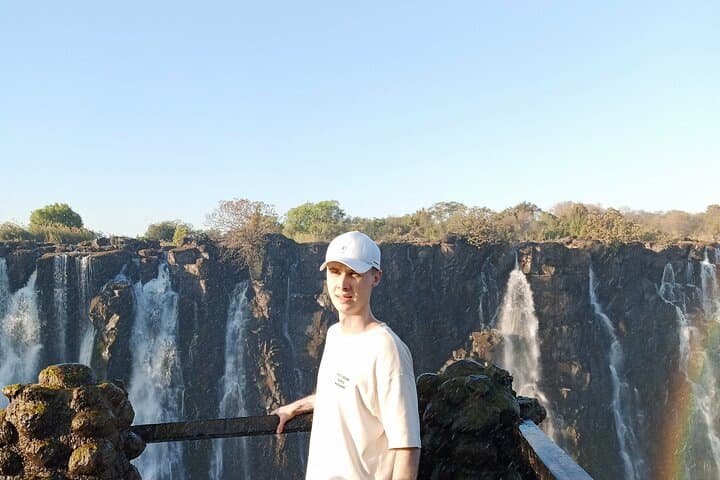

You arrive to the steady thunder before you see the falls: a wall of spray hanging over the Zambezi, rainbows cutting through the mist like quicksilver. On a guided walk from Livingstone you thread paved paths and wooden platforms that edge toward the gorge, the spray daring you closer and the river’s roar pushing forward beneath your feet.
You arrive to the steady thunder before you see the falls: a wall of spray hanging over the Zambezi, rainbows cutting through the mist like quicksilver. On a guided walk from Livingstone you thread paved paths and wooden platforms that edge toward the gorge, the spray daring you closer and the river’s roar pushing forward beneath your feet.
Geology here is blunt and immediate — basalt lavas and deep gorges carved by the Zambezi over millennia, producing the dramatic chasm that splits Zambia and Zimbabwe. David Livingstone named the cascade in 1855; locally it’s Mosi-oa-Tunya, “The Smoke That Thunders.” The rainforest that clings to the cliff face supports an outsize biodiversity: colorful kingfishers, vervet monkeys, and the occasional bushbuck seen between viewpoints.
Culturally, Livingstone is a small hub of tourism mixed with market stalls selling carved wood and woven goods; guides often weave oral history, local legend, and colonial-era notes into the walk. Conservation is visible: park fees support riverbank protection and habitat maintenance, and the park enforces strict trail use to limit erosion.
Practical guidance: expect 1–3 km of walking on mixed paved and muddy trails with short stairs and slippery sections when spray is heavy. Tours often last about two hours at the falls; bring a waterproof layer, secure footwear, and a dry bag for electronics. Early morning brings softer light and fewer crowds; midday offers bigger spray and dramatic rainbows. Stay aware of changing weather, follow your guide’s route, and plan extra time if you want to visit Livingstone Island or take a sunset cruise on the Zambezi.