THE ADVENTURE COLLECTIVE® · Independent discovery and booking for outdoor travel

Climb iron rungs through a narrow limestone gorge to reach the medieval Castle of Drena. This guided via ferrata mixes exposed ladders, a rope bridge and canyon-like scenery—ideal for fit hikers comfortable with heights.
Climb iron rungs through a narrow limestone gorge to reach the medieval Castle of Drena. This guided via ferrata mixes exposed ladders, a rope bridge and canyon-like scenery—ideal for fit hikers comfortable with heights.
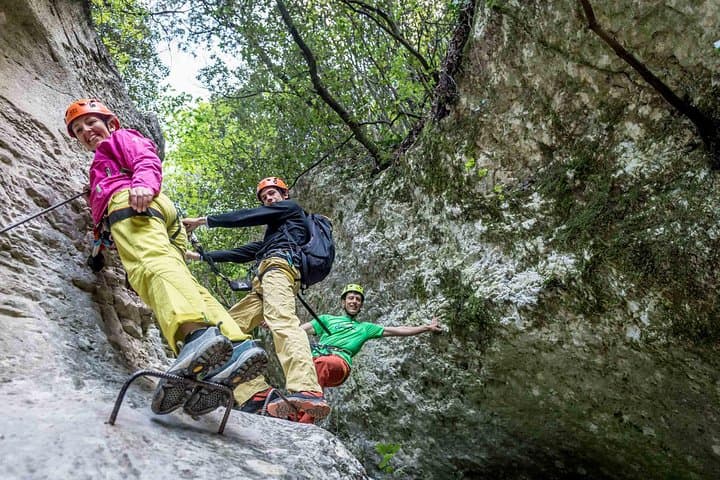
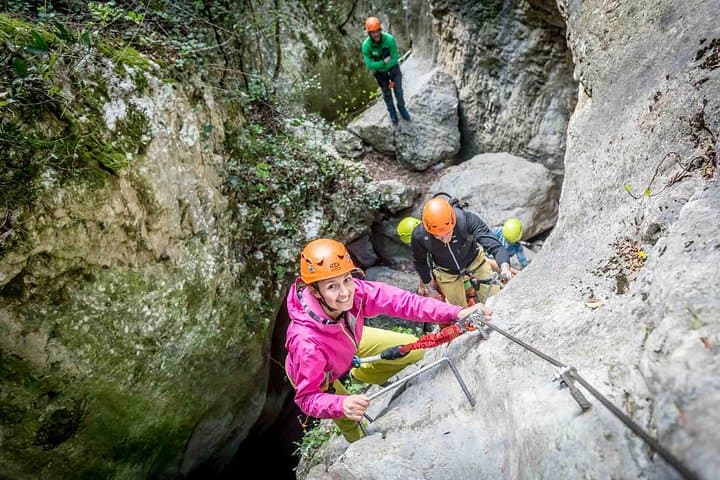
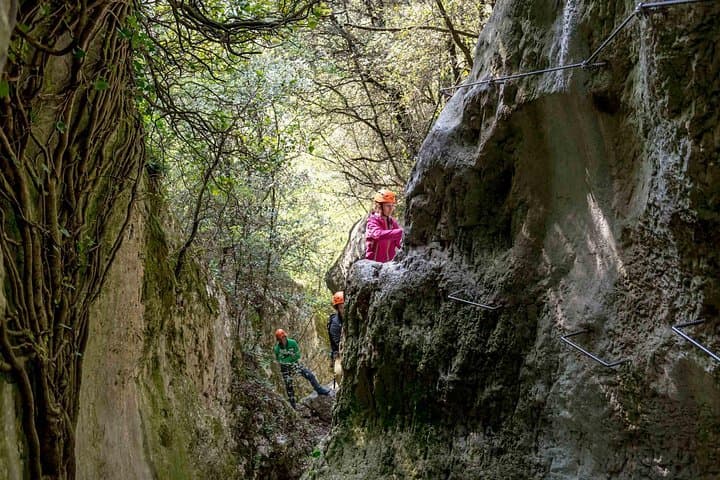
You step into a narrow ravine where light carves bands across wet limestone and the river dares you to listen. Steel rungs bite into the cliff face, rope bridges sway above spray, and the canyon walls close in—this is the Rio Sallagoni via ferrata, an exposed ascent that finishes beneath the medieval silhouette of Castello di Drena.
Verified experiences and guided adventures in the surrounding area.
Operated by Mmove - Into Nature · Drena, Trentino-Alto Adige
You step into a narrow ravine where light carves bands across wet limestone and the river dares you to listen. Steel rungs bite into the cliff face, rope bridges sway above spray, and the canyon walls close in—this is the Rio Sallagoni via ferrata, an exposed ascent that finishes beneath the medieval silhouette of Castello di Drena.
The route follows a small gorge cut into Jurassic-era limestone, a landscape shaped by glacial runoff and centuries of karst erosion. Local history is visible in the castle above—a 12th-century fortress that once controlled routes toward Lake Garda—and in the farming terraces and villages that dot the valley. The ferrata itself blends canyoning textures with alpine climbing: you travel along iron brackets and cables rather than through water, passing waterfalls, niches, and a rope “Tibetan” bridge that tests balance and focus.
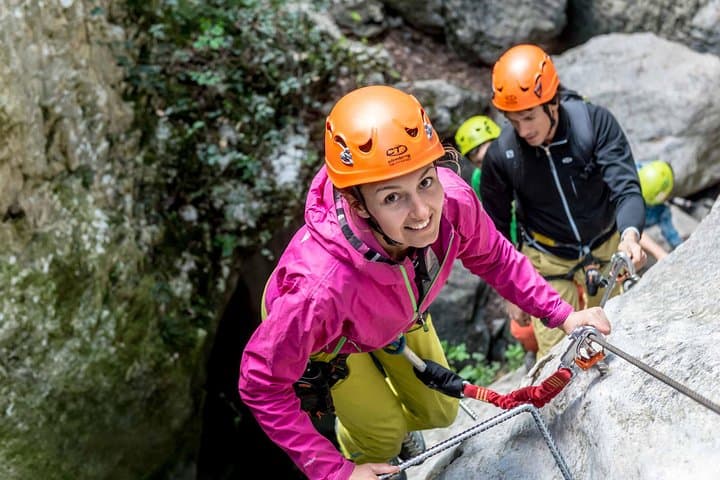
Practically, expect 3–4 hours from meeting to return, with sections requiring upper-body effort and comfort with exposure. Guides supply harness, helmet and a ferrata set; small group sizes keep transitions quick. Not recommended for those with serious heart, back conditions, or a fear of heights, and children under 140 cm are excluded. Spring and early summer bring high water and mossy, slippery rock; late summer and early fall usually offer the driest conditions.
Bring sturdy hiking shoes with sticky soles, layered clothing for spray and shade, and plan logistics with nearby Arco or Riva del Garda as your base. The route rewards steady technique and curiosity: move deliberately, clip each runnel, and look up when the castle appears—the climb reads like a short, wild chapter of the valley’s story.
challenging.
3–4 hours.
Participants should have good aerobic fitness, upper-body endurance for short overhangs, and no serious fear of exposure.
The guided experience lasts about 3–4 hours including approach and return; actual climbing time is shorter but includes technical, exposed pitches.
No formal climbing certification is required, but participants must be comfortable with exposure and able to clip a via ferrata set confidently.
An alpine guide, use of harness, helmet and ferrata set, and basic RC insurance are provided; groups are typically up to eight people.
Children under 140 cm are not recommended; operators also advise against participation by those with serious heart or back conditions and pregnant travelers.
The Castle of Drena overlooks the gorge and dates back to the Middle Ages when local lords controlled trade and transit toward Lake Garda.
Trails through the gorge are sensitive; stick to established paths, avoid chalking or stepping on fragile plants, and follow guide instructions to minimize erosion and disturbance.
Mmove - Into Nature operates guided outdoor trips and adventures with an emphasis on safety, stewardship, and memorable experiences.
You step into a narrow ravine where light carves bands across wet limestone and the river dares you to listen. Steel rungs bite into the cliff face, rope bridges sway above spray, and the canyon walls close in—this is the Rio Sallagoni via ferrata, an exposed ascent that finishes beneath the medieval silhouette of Castello di Drena.
You step into a narrow ravine where light carves bands across wet limestone and the river dares you to listen. Steel rungs bite into the cliff face, rope bridges sway above spray, and the canyon walls close in—this is the Rio Sallagoni via ferrata, an exposed ascent that finishes beneath the medieval silhouette of Castello di Drena.
The route follows a small gorge cut into Jurassic-era limestone, a landscape shaped by glacial runoff and centuries of karst erosion. Local history is visible in the castle above—a 12th-century fortress that once controlled routes toward Lake Garda—and in the farming terraces and villages that dot the valley. The ferrata itself blends canyoning textures with alpine climbing: you travel along iron brackets and cables rather than through water, passing waterfalls, niches, and a rope “Tibetan” bridge that tests balance and focus.
Practically, expect 3–4 hours from meeting to return, with sections requiring upper-body effort and comfort with exposure. Guides supply harness, helmet and a ferrata set; small group sizes keep transitions quick. Not recommended for those with serious heart, back conditions, or a fear of heights, and children under 140 cm are excluded. Spring and early summer bring high water and mossy, slippery rock; late summer and early fall usually offer the driest conditions.
Bring sturdy hiking shoes with sticky soles, layered clothing for spray and shade, and plan logistics with nearby Arco or Riva del Garda as your base. The route rewards steady technique and curiosity: move deliberately, clip each runnel, and look up when the castle appears—the climb reads like a short, wild chapter of the valley’s story.