THE ADVENTURE COLLECTIVE® · Independent discovery and booking for outdoor travel

A short, technical via ferrata that climbs alongside and over the Rio Ruzza waterfall near Passo Ballino. Expect wet rock, exposed traverses and three Tibetan bridges in a compact 4-hour outing.
A short, technical via ferrata that climbs alongside and over the Rio Ruzza waterfall near Passo Ballino. Expect wet rock, exposed traverses and three Tibetan bridges in a compact 4-hour outing.
You step out of a narrow mountain lane into a bowl of beech forest; the steady roar of the waterfall grows louder and the air smells of wet stone and moss. A short meadow and tree-lined approach from the village of Ballino leads to the base of Rio Ruzza, where steel cables, rungs and three Tibetan bridges slice across the torrent. Water dares you closer as exposed passages offer the odd, thrilling moment when your gloved hand can almost touch the spray.
Verified experiences and guided adventures in the surrounding area.
Operated by Mmove - Into Nature · Ballino, Trentino-Alto Adige
You step out of a narrow mountain lane into a bowl of beech forest; the steady roar of the waterfall grows louder and the air smells of wet stone and moss. A short meadow and tree-lined approach from the village of Ballino leads to the base of Rio Ruzza, where steel cables, rungs and three Tibetan bridges slice across the torrent. Water dares you closer as exposed passages offer the odd, thrilling moment when your gloved hand can almost touch the spray.
The route sits in the southern Trentino massif where glacial carving and limestone bedding created vertical drops and narrow gorges. Historically these high valleys supported seasonal grazing and small mountain hamlets; today the via ferrata repurposes local climbing heritage into a technical day-adventure that threads cultural mountain trails and engineered protections.
Expect a compact, technical experience rather than a long alpine push: a 20–40 minute approach through meadows and beech woods, followed by 1.5–2.5 hours on the via ferrata depending on pace and conditions, and a short descent back to Ballino—total outing around four hours. Terrain is mixed: wet rock, metal rungs, fixed cables and exposed traverses over spray; good balance, confidence on exposure and steady legs are required. Guides or small-group bookings are common; harnesses, helmets and via ferrata sets are usually provided, but bring gloves, stable footwear and a waterproof layer. Start early to avoid slippage from midday melt and cancel in heavy rain—operators will cancel for safety. The route rewards technical play and keeps the dramatic plunge of the waterfall at the center of the climb.
challenging.
4 hours.
Requires excellent aerobic fitness, strong legs and comfort on exposed, vertical terrain
Not strictly required, but prior experience with exposure and fixed-rope routes is strongly recommended; guides are recommended for less-experienced climbers.
Yes—most operators include a harness, helmet and a via ferrata lanyard set as part of the booking.
There are multiple exposed traverses and suspended bridges where the drop is obvious; you should be comfortable with heights and clipping/unclipping to the safety cable.
The operator typically cancels for heavy rain or high flows; wet rock and increased current make the route hazardous, and refunds follow the 24-hour cancellation policy.
The valley has a pastoral and alpine grazing history; many ferrate in the region adapt traditional mountain paths into protected routes for modern climbers.
High visitor flow near waterfalls stresses fragile vegetation and limestone; stick to trails, avoid trampling meadows and carry out all waste to protect water quality.
Mmove - Into Nature operates guided outdoor trips and adventures with an emphasis on safety, stewardship, and memorable experiences.
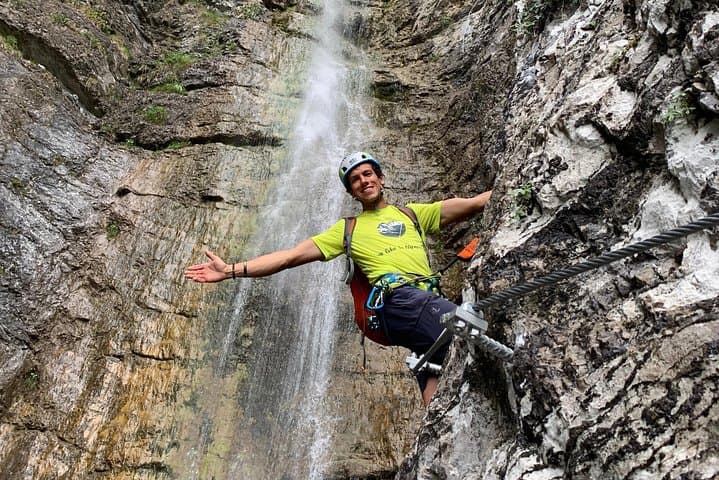
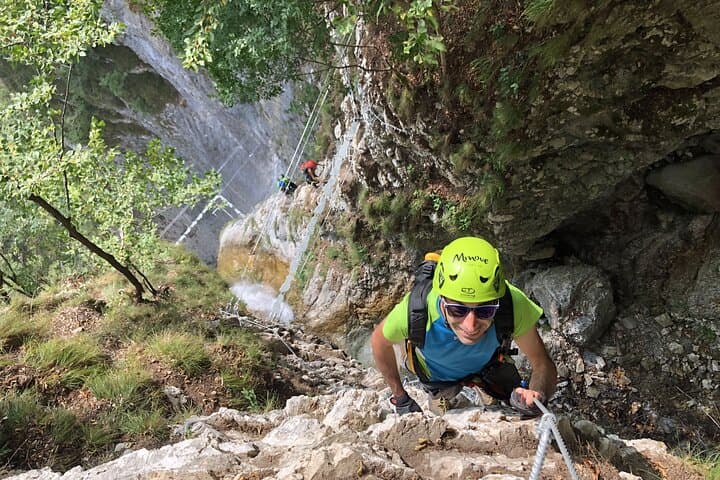
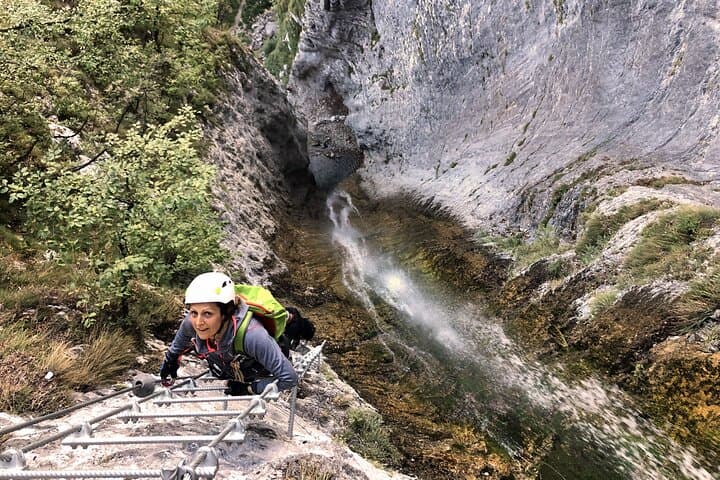
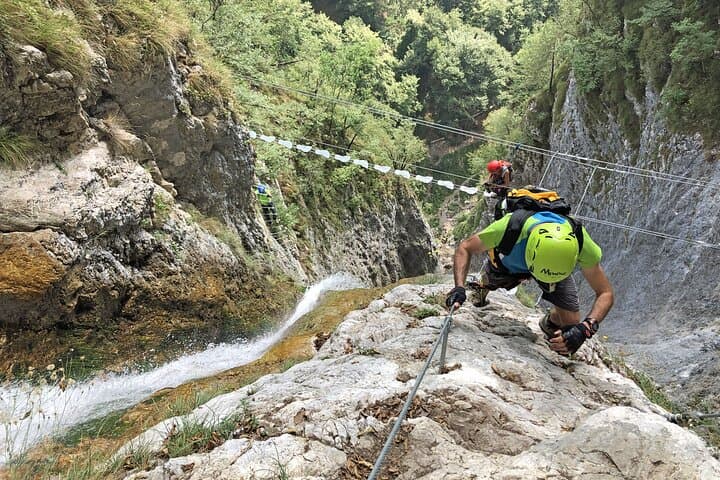
You step out of a narrow mountain lane into a bowl of beech forest; the steady roar of the waterfall grows louder and the air smells of wet stone and moss. A short meadow and tree-lined approach from the village of Ballino leads to the base of Rio Ruzza, where steel cables, rungs and three Tibetan bridges slice across the torrent. Water dares you closer as exposed passages offer the odd, thrilling moment when your gloved hand can almost touch the spray.
You step out of a narrow mountain lane into a bowl of beech forest; the steady roar of the waterfall grows louder and the air smells of wet stone and moss. A short meadow and tree-lined approach from the village of Ballino leads to the base of Rio Ruzza, where steel cables, rungs and three Tibetan bridges slice across the torrent. Water dares you closer as exposed passages offer the odd, thrilling moment when your gloved hand can almost touch the spray.
The route sits in the southern Trentino massif where glacial carving and limestone bedding created vertical drops and narrow gorges. Historically these high valleys supported seasonal grazing and small mountain hamlets; today the via ferrata repurposes local climbing heritage into a technical day-adventure that threads cultural mountain trails and engineered protections.
Expect a compact, technical experience rather than a long alpine push: a 20–40 minute approach through meadows and beech woods, followed by 1.5–2.5 hours on the via ferrata depending on pace and conditions, and a short descent back to Ballino—total outing around four hours. Terrain is mixed: wet rock, metal rungs, fixed cables and exposed traverses over spray; good balance, confidence on exposure and steady legs are required. Guides or small-group bookings are common; harnesses, helmets and via ferrata sets are usually provided, but bring gloves, stable footwear and a waterproof layer. Start early to avoid slippage from midday melt and cancel in heavy rain—operators will cancel for safety. The route rewards technical play and keeps the dramatic plunge of the waterfall at the center of the climb.