THE ADVENTURE COLLECTIVE® · Independent discovery and booking for outdoor travel

Clip in and climb above vineyards: this guided via ferrata near Saint-Paul-de-Fenouillet turns limestone cliffs into a focused half-day climb with ladders, cables and a narrow bridge. Expect exposed traverses, strong wind and panoramic views of the Agly Valley and the Pyrenees.
Clip in and climb above vineyards: this guided via ferrata near Saint-Paul-de-Fenouillet turns limestone cliffs into a focused half-day climb with ladders, cables and a narrow bridge. Expect exposed traverses, strong wind and panoramic views of the Agly Valley and the Pyrenees.
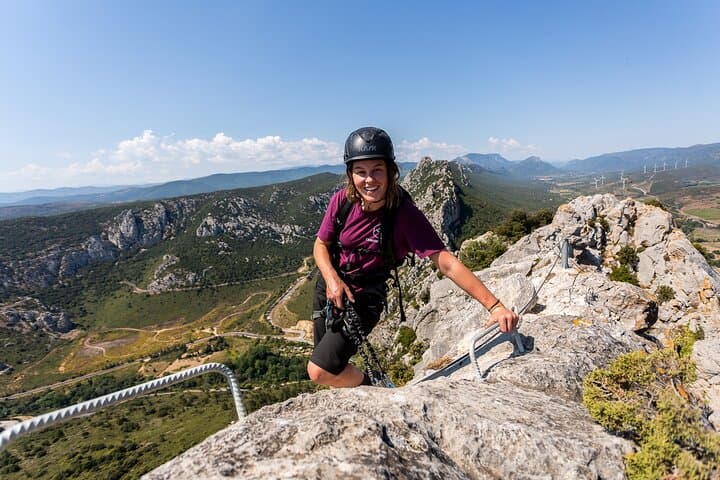
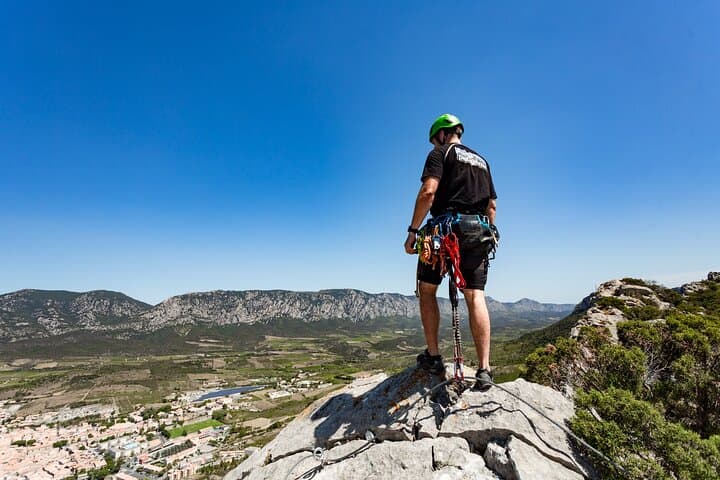
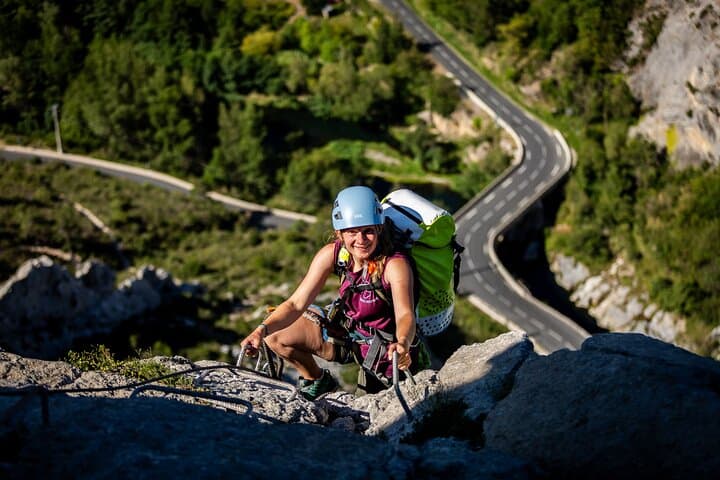
The limestone wall waits like a vertical map—cracks, pockets and iron rungs tracing a line up into open sky. You clip in under the guide’s practiced eye, the click of carabiners a quiet promise, and the Agly Valley spreads below: patchwork vineyards, a ribbon of road and the distant serrated mass of the Pyrenees. Wind moves through the exposed face with a blunt, cool hand that keeps the sun from sticking to your skin.
Verified experiences and guided adventures in the surrounding area.
Operated by Canigou Outdoor · Saint-Paul-de-Fenouillet, Occitanie
The limestone wall waits like a vertical map—cracks, pockets and iron rungs tracing a line up into open sky. You clip in under the guide’s practiced eye, the click of carabiners a quiet promise, and the Agly Valley spreads below: patchwork vineyards, a ribbon of road and the distant serrated mass of the Pyrenees. Wind moves through the exposed face with a blunt, cool hand that keeps the sun from sticking to your skin.
This via ferrata route outside Saint-Paul-de-Fenouillet is not a free-climb; it is a managed confrontation with exposure, where fixed cables, ladders and a narrow suspension bridge turn a hiking day into a focused, airborne ascent. Geologically, you’re on late Jurassic to Cretaceous limestone — the same strata that carved caves and steep escarpments across Roussillon. The rock offers solid pockets and sharp edges, the product of ancient seabeds pushed up and etched by millennia of water and wind.
Locals point to the vineyards below as much as to the cliffs. The Agly Valley has long supported wine producers and small villages; the ferrata routes were developed in the late 20th century to open these cliffs safely to non-technical climbers while preserving farmed land below. Guides here often speak French, English, Dutch or German and combine ropecraft with a respect for the area’s agricultural rhythms.
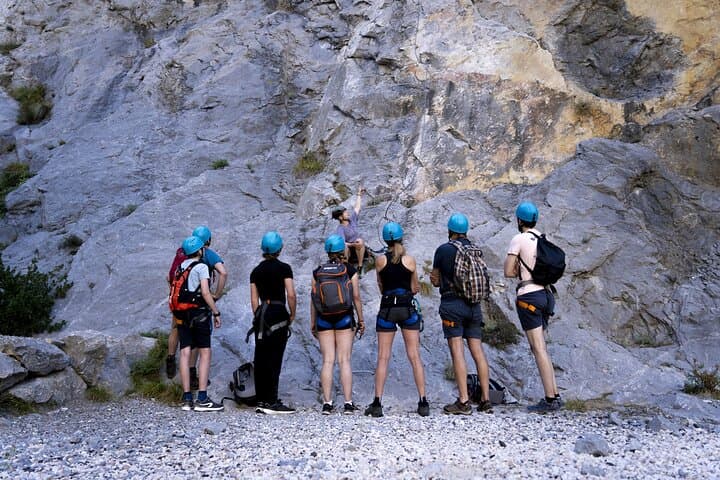
The route itself is roughly a half-day commitment—expect about 3–4 hours including briefing and descent—with approximately 150–200 meters of vertical exposure across steep sections and airy traverses. You’ll cross a narrow metal bridge that frames the valley, squeeze through an overhang and push past exposed ledges where the wind tests your concentration. A marked trail brings you back to the parking area, and the whole experience is run in small groups (up to ten) with helmets, harnesses and via ferrata sets provided.
Practical edge: wear snug hiking boots with sticky soles and gloves with thin palms; bring 1–1.5 liters of water and a light wind shell. If you’re uneasy on vertical terrain, tell your guide—techniques are taught on site and pacing is adapted, but a high level of fitness is required. This activity is not recommended for those with serious back or heart conditions or for pregnant travelers.
Timing matters: early morning or late afternoon reduces heat and light glare on the rock. If weather turns, operators cancel for safety—this is exposed terrain and rain makes the limestone treacherous. For a full, confident climb, pair the via ferrata with a night in Perpignan or a stay in one of the valley’s gîtes; the region’s quiet villages make an easy, restorative conclusion to a day spent climbing the walls of an ancient seabed.
challenging.
3–4 hours.
Good cardiovascular fitness and leg strength; comfortable on exposed trails and vertical sections
No technical climbing experience is required; guides teach via ferrata techniques on-site, but you should be comfortable with exposure and have strong fitness.
Age and weight requirements vary by operator—confirm at booking; typically participants must be old enough to follow safety instructions and fit standard harness sizes.
Meet at the parking area indicated in your booking; guides wear Canigou Outdoor or Mountainsport T-shirts and will greet the group there.
Operators cancel for rain, lightning or high winds for safety and offer full refunds if canceled at least 24 hours before departure per the policy.
The return is a marked path that involves steep hiking but not technical climbing; allow extra time if fatigued or if terrain is loose.
Yes—helmets, harnesses and a certified via ferrata set are provided and included in the trip price.
The cliffs are part of Roussillon’s limestone backbone, uplifted from ancient seabeds; the valley below has cultivated vines and small hamlets for centuries.
Operators use established routes and limit group sizes to reduce erosion; stick to marked paths and avoid chalking holds to protect rock and local flora.
Canigou Outdoor operates guided outdoor trips and adventures with an emphasis on safety, stewardship, and memorable experiences.
The limestone wall waits like a vertical map—cracks, pockets and iron rungs tracing a line up into open sky. You clip in under the guide’s practiced eye, the click of carabiners a quiet promise, and the Agly Valley spreads below: patchwork vineyards, a ribbon of road and the distant serrated mass of the Pyrenees. Wind moves through the exposed face with a blunt, cool hand that keeps the sun from sticking to your skin.
The limestone wall waits like a vertical map—cracks, pockets and iron rungs tracing a line up into open sky. You clip in under the guide’s practiced eye, the click of carabiners a quiet promise, and the Agly Valley spreads below: patchwork vineyards, a ribbon of road and the distant serrated mass of the Pyrenees. Wind moves through the exposed face with a blunt, cool hand that keeps the sun from sticking to your skin.
This via ferrata route outside Saint-Paul-de-Fenouillet is not a free-climb; it is a managed confrontation with exposure, where fixed cables, ladders and a narrow suspension bridge turn a hiking day into a focused, airborne ascent. Geologically, you’re on late Jurassic to Cretaceous limestone — the same strata that carved caves and steep escarpments across Roussillon. The rock offers solid pockets and sharp edges, the product of ancient seabeds pushed up and etched by millennia of water and wind.
Locals point to the vineyards below as much as to the cliffs. The Agly Valley has long supported wine producers and small villages; the ferrata routes were developed in the late 20th century to open these cliffs safely to non-technical climbers while preserving farmed land below. Guides here often speak French, English, Dutch or German and combine ropecraft with a respect for the area’s agricultural rhythms.
The route itself is roughly a half-day commitment—expect about 3–4 hours including briefing and descent—with approximately 150–200 meters of vertical exposure across steep sections and airy traverses. You’ll cross a narrow metal bridge that frames the valley, squeeze through an overhang and push past exposed ledges where the wind tests your concentration. A marked trail brings you back to the parking area, and the whole experience is run in small groups (up to ten) with helmets, harnesses and via ferrata sets provided.
Practical edge: wear snug hiking boots with sticky soles and gloves with thin palms; bring 1–1.5 liters of water and a light wind shell. If you’re uneasy on vertical terrain, tell your guide—techniques are taught on site and pacing is adapted, but a high level of fitness is required. This activity is not recommended for those with serious back or heart conditions or for pregnant travelers.
Timing matters: early morning or late afternoon reduces heat and light glare on the rock. If weather turns, operators cancel for safety—this is exposed terrain and rain makes the limestone treacherous. For a full, confident climb, pair the via ferrata with a night in Perpignan or a stay in one of the valley’s gîtes; the region’s quiet villages make an easy, restorative conclusion to a day spent climbing the walls of an ancient seabed.