THE ADVENTURE COLLECTIVE® · Independent discovery and booking for outdoor travel

Climb a guided via ferrata through Gran Canaria’s moonlike south, where iron rungs and cables turn steep volcanic faces into a navigable route for beginners and seasoned climbers alike. Learn the ropes, test exposure, and finish with a secret beach dip at Bahía Feliz.
Climb a guided via ferrata through Gran Canaria’s moonlike south, where iron rungs and cables turn steep volcanic faces into a navigable route for beginners and seasoned climbers alike. Learn the ropes, test exposure, and finish with a secret beach dip at Bahía Feliz.
You step off the van and the air is dry, warmed by volcanic sun; a ragged ridge throws long shadows across a desert-smooth valley. Guides from RockNatour fit you into a harness and helmet, handing over a via ferrata lanyard that will be your tether up iron rungs drilled into the basalt. The route rises above the scrub, alternating exposed traverses with short chimney sections where footholds demand focus and breath.
Verified experiences and guided adventures in the surrounding area.
Operated by RockNatour Experiences · Bahía Feliz, Canary Islands
You step off the van and the air is dry, warmed by volcanic sun; a ragged ridge throws long shadows across a desert-smooth valley. Guides from RockNatour fit you into a harness and helmet, handing over a via ferrata lanyard that will be your tether up iron rungs drilled into the basalt. The route rises above the scrub, alternating exposed traverses with short chimney sections where footholds demand focus and breath.
Gran Canaria’s south is geologically young—lava flows and wind-carved conglomerates create abrupt cliffs and broad, arid basins that look more Arizona than Atlantic. The island’s aboriginal Canarian history is visible in faint shepherd tracks and ancient stone walls; modern culture layers on with fishing villages and resort towns tucked along the coast.
This RockNatour route begins with a 30-minute hike to the base, where guides teach basic via ferrata technique and safety—clip, move, and keep three points of contact. Iron steps, fixed cables and occasional steel rungs make the line accessible to beginners while still offering sustained exposure for experienced climbers. A sunset or night version adds a different mood and headlamp navigation.
Expect 3–4 hours total, moderate fitness, and terrain that shifts from sandy scrub to vertical rock. Guides provide harness, helmet, snacks, photos and insurance; bring sturdy shoes, gloves, water and sun protection. Finish the day with a dip or a quiet moment on the small beach at Bahía Feliz to cool off and watch the Atlantic take the heat away.
Practical tip: book in advance for sunset slots, and tell guides about any cardiovascular or spinal concerns—this activity requires a moderate level of fitness and steady footing.
moderate.
3–4 hours.
Moderate level of fitness; comfortable with sustained hiking and some exposed scrambling.
No—this route is designed for first-time via ferrata participants; guides teach techniques, rigging and safety before you climb.
Guides supply a harness, helmet, via ferrata kit, snacks, photos and insurance as part of the experience.
Yes—there is a sunset/night option, but it adds headlamp navigation and reduced visibility; ask guides if you’re unsure about low-light conditions.
Not recommended for people with serious heart or spinal conditions, or for pregnant travelers; a moderate level of fitness is required.
The south of Gran Canaria bears remnants of pre-Hispanic pastoral life and centuries of volcanic shaping; modern routes often follow old shepherd tracks and terraces.
Stick to established paths and avoid brushing against fragile desert plants; local operators emphasize leave-no-trace practices and limit group sizes to reduce erosion.
RockNatour Experiences operates guided outdoor trips and adventures with an emphasis on safety, stewardship, and memorable experiences.
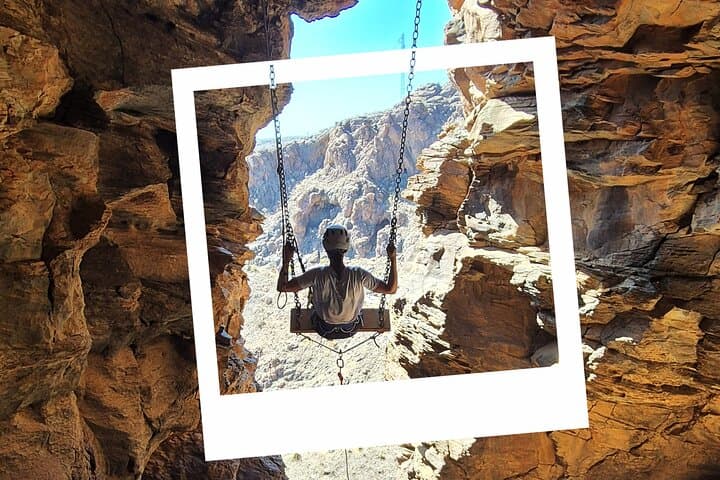
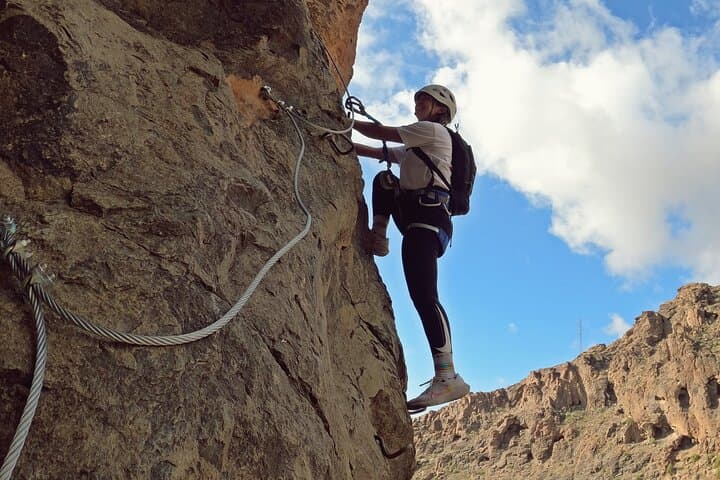
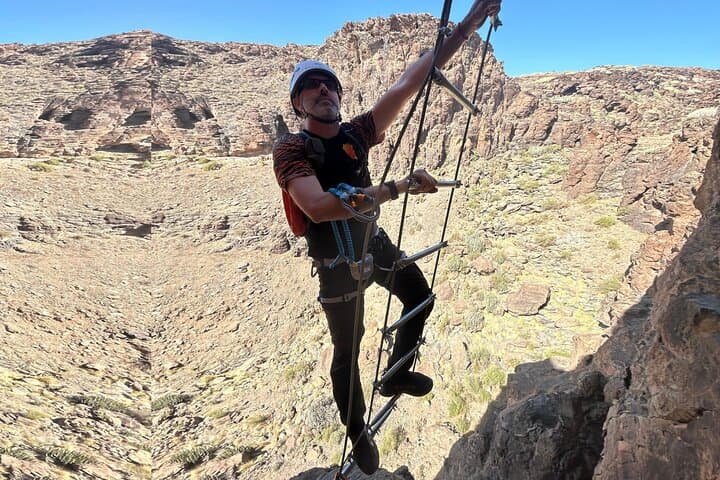
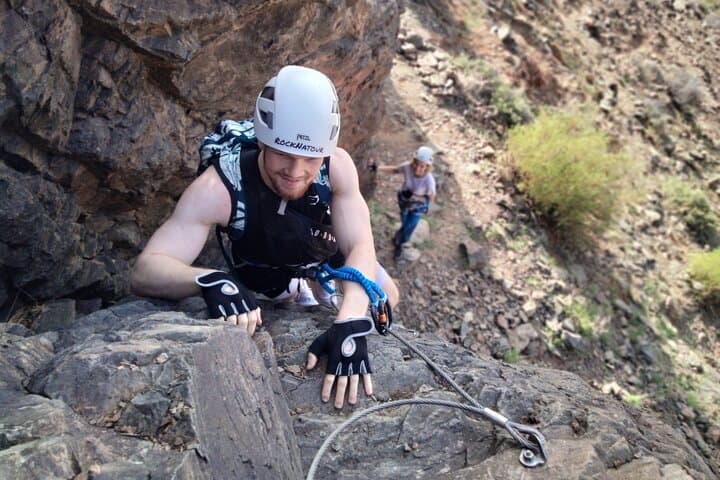
You step off the van and the air is dry, warmed by volcanic sun; a ragged ridge throws long shadows across a desert-smooth valley. Guides from RockNatour fit you into a harness and helmet, handing over a via ferrata lanyard that will be your tether up iron rungs drilled into the basalt. The route rises above the scrub, alternating exposed traverses with short chimney sections where footholds demand focus and breath.
You step off the van and the air is dry, warmed by volcanic sun; a ragged ridge throws long shadows across a desert-smooth valley. Guides from RockNatour fit you into a harness and helmet, handing over a via ferrata lanyard that will be your tether up iron rungs drilled into the basalt. The route rises above the scrub, alternating exposed traverses with short chimney sections where footholds demand focus and breath.
Gran Canaria’s south is geologically young—lava flows and wind-carved conglomerates create abrupt cliffs and broad, arid basins that look more Arizona than Atlantic. The island’s aboriginal Canarian history is visible in faint shepherd tracks and ancient stone walls; modern culture layers on with fishing villages and resort towns tucked along the coast.
This RockNatour route begins with a 30-minute hike to the base, where guides teach basic via ferrata technique and safety—clip, move, and keep three points of contact. Iron steps, fixed cables and occasional steel rungs make the line accessible to beginners while still offering sustained exposure for experienced climbers. A sunset or night version adds a different mood and headlamp navigation.
Expect 3–4 hours total, moderate fitness, and terrain that shifts from sandy scrub to vertical rock. Guides provide harness, helmet, snacks, photos and insurance; bring sturdy shoes, gloves, water and sun protection. Finish the day with a dip or a quiet moment on the small beach at Bahía Feliz to cool off and watch the Atlantic take the heat away.
Practical tip: book in advance for sunset slots, and tell guides about any cardiovascular or spinal concerns—this activity requires a moderate level of fitness and steady footing.