THE ADVENTURE COLLECTIVE® · Independent discovery and booking for outdoor travel

Clip in, look down and feel the alpine air—this five-hour guided via ferrata and rock-climbing day above Innsbruck pairs technical coaching with sweeping Tyrolean views. Routes are chosen by guides to match skill and weather, so both newcomers and scrappier climbers find a line.
Clip in, look down and feel the alpine air—this five-hour guided via ferrata and rock-climbing day above Innsbruck pairs technical coaching with sweeping Tyrolean views. Routes are chosen by guides to match skill and weather, so both newcomers and scrappier climbers find a line.
The rope hums as the guide clips the carabiner to the steel cable and the city below becomes a patchwork of red roofs and the pale arc of the Inn River. High above Innsbruck, the limestone faces of the Nordkette push up like a wall, offering exposed ridges, iron rungs and vistas that make the ascent feel less like a climb and more like an argument with gravity—with the mountains winning in the best possible way.
Verified experiences and guided adventures in the surrounding area.
Operated by Alles Klettersteig · Innsbruck, Tyrol
The rope hums as the guide clips the carabiner to the steel cable and the city below becomes a patchwork of red roofs and the pale arc of the Inn River. High above Innsbruck, the limestone faces of the Nordkette push up like a wall, offering exposed ridges, iron rungs and vistas that make the ascent feel less like a climb and more like an argument with gravity—with the mountains winning in the best possible way.
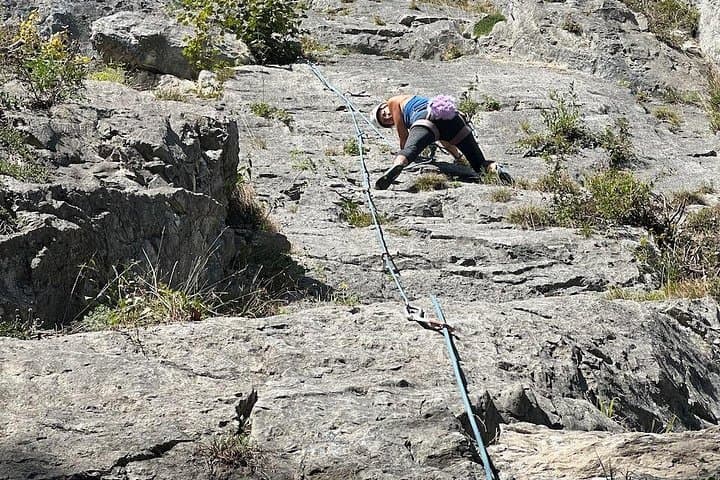
This guided half-day blends classic rock climbing with via ferrata techniques, putting climbers on routes between the valley floor (roughly 574 m) and alpine ledges that top out closer to 2,000–2,300 m depending on the day’s venue. The geology here is hard Tyrolean limestone—fractured, rooted with pockets and edges that force precise footwork and reward careful route reading. Via ferrata lines, a relatively modern addendum to mountain travel, were developed in the Alps in the early 20th century to allow passage on exposed faces; today they’re the fastest route to big views and immediate exposure without multi-pitch climbing.
Culturally, Innsbruck has always been a gateway—an alpine market town turned mountaineering hub. Guides here balance old-school alpine knowledge with the contemporary emphasis on low-impact travel: you’ll follow marked routes, avoid fragile alpine meadows, and move deliberately so the landscape, not the group, stays dominant.
Practicalities are straightforward. The experience runs about five hours and is tailored to the group's skill level; expect 300–800 m of elevation change depending on the chosen route. Operators supply harnesses, via ferrata sets, helmets and belay devices; clients should bring climbing shoes (approach shoes are acceptable for less technical via ferratas), a small daypack, water and weatherproof layers. Routes can be sunny and exposed—bring sun protection—and weather in the Stubai Alps can turn quickly, so morning starts are best.
Skillwise, participants should be comfortable with heights and have a moderate level of fitness. Guides teach rope skills and safe clipping technique, and will choose lines that match your confidence and ability: structured instruction for newcomers, or steeper rock pitches for climbers looking to push grade lines.
Book a private tour to lock in the flexibility of route selection and pickup from central Innsbruck hotels. Cancellation is generally allowed up to 24 hours before departure; operators will reschedule or cancel in unsafe weather. For photographers, the mix of chiseled limestone and wide valley views is compelling—aim for late afternoon for softer light, or clear mornings to avoid clouds filling the valley.
A guided day here is efficient: it gets you into exposure and above the city in one expertly run push, with enough technical coaching to build confidence and enough scenery to make the effort feel worthwhile.
moderate.
5 hours.
Able to hike steep terrain and handle sustained exposure for several hours; moderate cardiovascular fitness recommended.
No prior technical experience is required; guides provide instruction for via ferrata clipping and basic rope work, but you should be comfortable with heights and have moderate fitness.
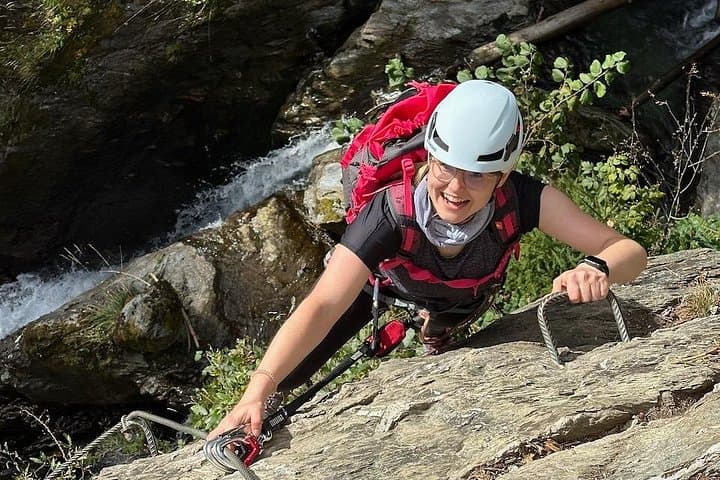
Guides supply harnesses, helmets, carabiners and via ferrata lanyards; bring your own climbing shoes if possible.
Full refund is generally available if you cancel at least 24 hours before departure; trips may be canceled by the operator in unsafe weather.
Tours are private by listing—size can be tailored, but operators typically limit groups to maintain safety and instruction quality.
Pickup from central Innsbruck hotels is usually available for an additional fee—confirm your pickup point when booking.
Children may participate if they are confident on exposed terrain and sized for harnesses; check with the operator about minimum age and tandem restrictions.
Via ferrata routes in the Alps originated in the early 20th century to aid movement on steep faces; Tyrolean guides later adapted the techniques for recreational alpine access.
Stick to established routes and avoid trampling alpine vegetation; local operators emphasize low-impact guiding and proper waste pack-out to protect fragile high-altitude flora.
Alles Klettersteig operates guided outdoor trips and adventures with an emphasis on safety, stewardship, and memorable experiences.
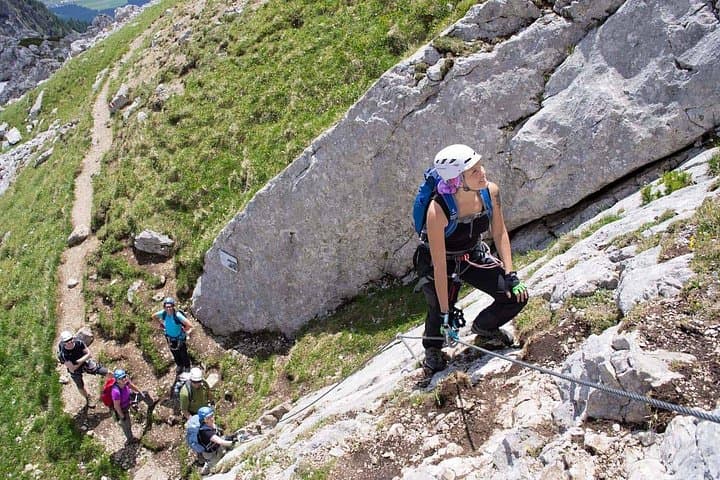
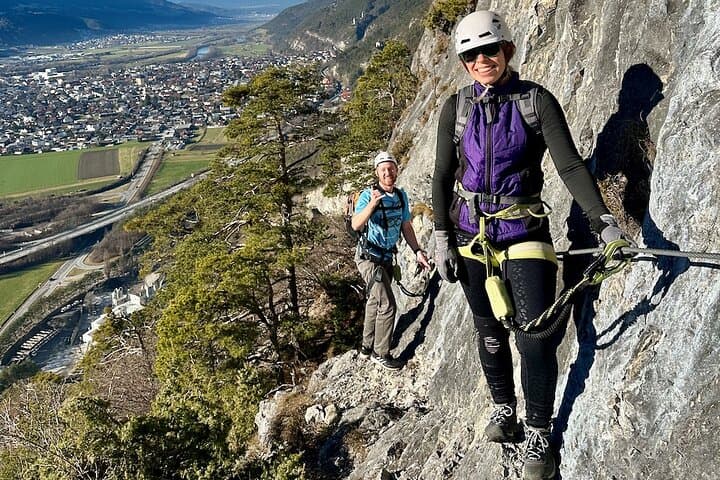
The rope hums as the guide clips the carabiner to the steel cable and the city below becomes a patchwork of red roofs and the pale arc of the Inn River. High above Innsbruck, the limestone faces of the Nordkette push up like a wall, offering exposed ridges, iron rungs and vistas that make the ascent feel less like a climb and more like an argument with gravity—with the mountains winning in the best possible way.
The rope hums as the guide clips the carabiner to the steel cable and the city below becomes a patchwork of red roofs and the pale arc of the Inn River. High above Innsbruck, the limestone faces of the Nordkette push up like a wall, offering exposed ridges, iron rungs and vistas that make the ascent feel less like a climb and more like an argument with gravity—with the mountains winning in the best possible way.
This guided half-day blends classic rock climbing with via ferrata techniques, putting climbers on routes between the valley floor (roughly 574 m) and alpine ledges that top out closer to 2,000–2,300 m depending on the day’s venue. The geology here is hard Tyrolean limestone—fractured, rooted with pockets and edges that force precise footwork and reward careful route reading. Via ferrata lines, a relatively modern addendum to mountain travel, were developed in the Alps in the early 20th century to allow passage on exposed faces; today they’re the fastest route to big views and immediate exposure without multi-pitch climbing.
Culturally, Innsbruck has always been a gateway—an alpine market town turned mountaineering hub. Guides here balance old-school alpine knowledge with the contemporary emphasis on low-impact travel: you’ll follow marked routes, avoid fragile alpine meadows, and move deliberately so the landscape, not the group, stays dominant.
Practicalities are straightforward. The experience runs about five hours and is tailored to the group's skill level; expect 300–800 m of elevation change depending on the chosen route. Operators supply harnesses, via ferrata sets, helmets and belay devices; clients should bring climbing shoes (approach shoes are acceptable for less technical via ferratas), a small daypack, water and weatherproof layers. Routes can be sunny and exposed—bring sun protection—and weather in the Stubai Alps can turn quickly, so morning starts are best.
Skillwise, participants should be comfortable with heights and have a moderate level of fitness. Guides teach rope skills and safe clipping technique, and will choose lines that match your confidence and ability: structured instruction for newcomers, or steeper rock pitches for climbers looking to push grade lines.
Book a private tour to lock in the flexibility of route selection and pickup from central Innsbruck hotels. Cancellation is generally allowed up to 24 hours before departure; operators will reschedule or cancel in unsafe weather. For photographers, the mix of chiseled limestone and wide valley views is compelling—aim for late afternoon for softer light, or clear mornings to avoid clouds filling the valley.
A guided day here is efficient: it gets you into exposure and above the city in one expertly run push, with enough technical coaching to build confidence and enough scenery to make the effort feel worthwhile.