THE ADVENTURE COLLECTIVE® · Independent discovery and booking for outdoor travel

Climb to the rim of Mount Vesuvius with a certified volcanological guide and gain geological insight alongside sweeping views of the Bay of Naples. This two‑hour VIP tour focuses on volcanic processes, the 79 AD eruption, and the best viewpoints for Pompeii and Capri.
Climb to the rim of Mount Vesuvius with a certified volcanological guide and gain geological insight alongside sweeping views of the Bay of Naples. This two‑hour VIP tour focuses on volcanic processes, the 79 AD eruption, and the best viewpoints for Pompeii and Capri.
You step onto black, granular earth that still holds heat from ages past. The trail begins high on Vesuvius’s northern flank—around 1,000 meters—winding up toward the crater rim. Fumaroles breathe steam at the volcano’s lips; the trail angles and narrows, and the Gulf of Naples opens like a dark bowl below, Capri and the Sorrento coast hovering on the horizon.
Verified experiences and guided adventures in the surrounding area.
Operated by Gennaro Balzano · Naples, Campania
You step onto black, granular earth that still holds heat from ages past. The trail begins high on Vesuvius’s northern flank—around 1,000 meters—winding up toward the crater rim. Fumaroles breathe steam at the volcano’s lips; the trail angles and narrows, and the Gulf of Naples opens like a dark bowl below, Capri and the Sorrento coast hovering on the horizon.
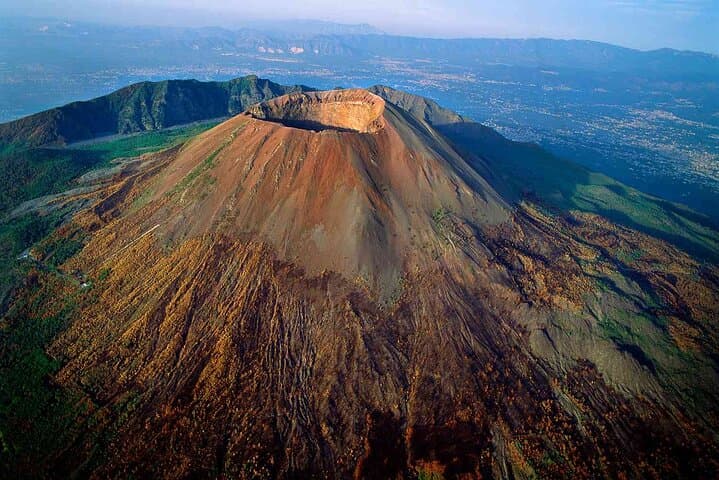
Vesuvius is a stratovolcano dominated by a younger cone framed by Monte Somma. Its notoriety comes from the 79 AD eruption that buried Pompeii and Herculaneum; later eruptions and fumarolic activity carved the cone you climb today. Local guides explain the layers of pumice, ash and lava, and how each eruption reshaped the landscape and local culture—from vineyards on volcanic soils to the archaeology of nearby ruins.
The V.I.P. format pairs this short, accessible hike (about 2 hours round-trip) with a volcanological guide who stops to interpret fumaroles, the crater morphology, and the 79 AD deposits. The summit offers a panoramic terrace at La Capannuccia where you can linger and photograph Pompeii, the Amalfi/Sorrento coastline and Capri.
Practical: expect loose scoria underfoot and a steady but not technical ascent of roughly 250–300 m elevation gain over 1–1.5 km one way. The route is suitable for most fitness levels but is exposed—bring sun protection, at least 1 L of water, sturdy shoes and a wind layer. Tours may be canceled in poor weather; check availability and health advisories (not recommended for pregnant travelers or those with serious heart conditions). Arrive early to avoid crowds and to catch the clearest views.
moderate.
2 hours.
Suitable for people with basic fitness who can walk uphill on loose volcanic rock for short intervals
The guided route is short (about 1–1.5 km one way) with roughly 250–300 m elevation gain; it’s non-technical but can be steep and on loose volcanic material—moderate exertion for most people.
The final ascent includes uneven, loose surfaces and steps; it’s not suitable for strollers or standard wheelchairs—contact the operator about mobility-access options.
Service animals are permitted; pets are generally not recommended due to heat, rough terrain and protective regulations around the crater.
Visitors reach the highest practicable rim for safe viewing; access into the inner crater is restricted for safety and environmental protection.
Vesuvius’s 79 AD eruption preserved Pompeii and Herculaneum under ash and pumice, creating one of the world’s most important archaeological records and altering regional settlement patterns for centuries.
The Vesuvius area is a protected park—stay on marked trails to prevent erosion of fragile volcanic soils and respect signage to limit impact on archaeological and natural features.
Gennaro Balzano operates guided outdoor trips and adventures with an emphasis on safety, stewardship, and memorable experiences.

You step onto black, granular earth that still holds heat from ages past. The trail begins high on Vesuvius’s northern flank—around 1,000 meters—winding up toward the crater rim. Fumaroles breathe steam at the volcano’s lips; the trail angles and narrows, and the Gulf of Naples opens like a dark bowl below, Capri and the Sorrento coast hovering on the horizon.
You step onto black, granular earth that still holds heat from ages past. The trail begins high on Vesuvius’s northern flank—around 1,000 meters—winding up toward the crater rim. Fumaroles breathe steam at the volcano’s lips; the trail angles and narrows, and the Gulf of Naples opens like a dark bowl below, Capri and the Sorrento coast hovering on the horizon.
Vesuvius is a stratovolcano dominated by a younger cone framed by Monte Somma. Its notoriety comes from the 79 AD eruption that buried Pompeii and Herculaneum; later eruptions and fumarolic activity carved the cone you climb today. Local guides explain the layers of pumice, ash and lava, and how each eruption reshaped the landscape and local culture—from vineyards on volcanic soils to the archaeology of nearby ruins.
The V.I.P. format pairs this short, accessible hike (about 2 hours round-trip) with a volcanological guide who stops to interpret fumaroles, the crater morphology, and the 79 AD deposits. The summit offers a panoramic terrace at La Capannuccia where you can linger and photograph Pompeii, the Amalfi/Sorrento coastline and Capri.
Practical: expect loose scoria underfoot and a steady but not technical ascent of roughly 250–300 m elevation gain over 1–1.5 km one way. The route is suitable for most fitness levels but is exposed—bring sun protection, at least 1 L of water, sturdy shoes and a wind layer. Tours may be canceled in poor weather; check availability and health advisories (not recommended for pregnant travelers or those with serious heart conditions). Arrive early to avoid crowds and to catch the clearest views.