THE ADVENTURE COLLECTIVE® · Independent discovery and booking for outdoor travel

Spend a day walking through Pompeii’s streets and climbing Vesuvius’s volcanic trail. This combined tour pairs guided ruins time with a short but gritty hike to the smoking crater rim and panoramic views over the Bay of Naples.
Spend a day walking through Pompeii’s streets and climbing Vesuvius’s volcanic trail. This combined tour pairs guided ruins time with a short but gritty hike to the smoking crater rim and panoramic views over the Bay of Naples.
A thin, salty wind carries the voice of the Bay of Naples as the bus eases out of the city and into volcanic slopes. You step off at the archaeological park and, between columns and frescoed houses, the past keeps its distance only by a layer of hardened ash; later, the trail up Vesuvius climbs through black pumice that crunches underfoot and fumaroles dare you to come closer to the rim.
Verified experiences and guided adventures in the surrounding area.
Operated by Around Vesuvio · Pompeii, Campania
A thin, salty wind carries the voice of the Bay of Naples as the bus eases out of the city and into volcanic slopes. You step off at the archaeological park and, between columns and frescoed houses, the past keeps its distance only by a layer of hardened ash; later, the trail up Vesuvius climbs through black pumice that crunches underfoot and fumaroles dare you to come closer to the rim.
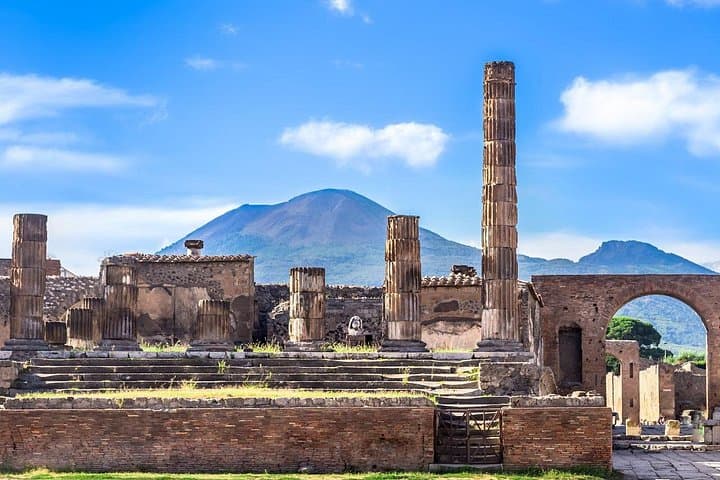
Pompeii is an urban fossil—amphitheater arches, thermopolia counters where Romans ate, and the mosaic floors of Casa del Fauno give shape to daily life frozen in 79 A.D. Archaeological architects and builders left a readable plan of Roman civic and domestic patterns that still informs the modern world.
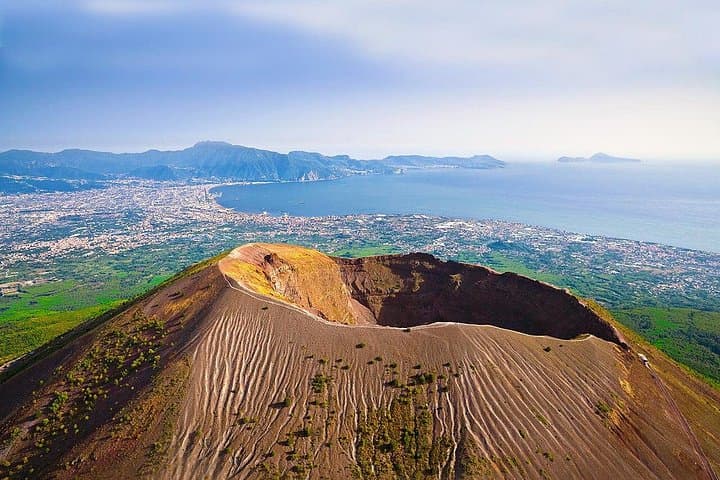
Geologically, Vesuvius is a stratovolcano whose eruptions shaped the Bay, throwing tephra and lava that created local soils and dramatic coastlines; culturally, the area blends Neapolitan fishing traditions, volcanic viticulture, and centuries of pilgrimage to ruins.
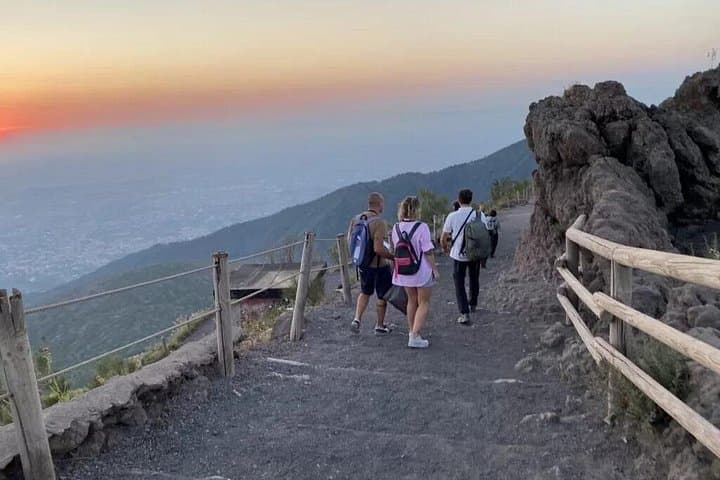
Practically, the combined excursion runs most of a day (about 6–7 hours). Expect roughly 90–120 minutes in Pompeii with an audio guide and map, then a coach transfer to the Vesuvius trailhead at ~1,000 m elevation. The climb to the crater rim takes about 20–30 minutes on uneven volcanic scree; allow an hour at the top to peer into the fumaroles and scan Capri, Ischia and the gulf.
Bring sturdy footwear, layered sun protection, and 1–2 liters of water; mobile tickets and a skip‑the‑line entry are commonly included. Moderate fitness and caution on loose rock will make the day safe and rewarding—history under your feet, a living volcano over your head.
moderate.
6–7 hours.
Moderate fitness—able to walk 2–4 miles over uneven terrain and handle short steep sections.
From the trailhead at about 1,000 m, the ascent to the rim takes roughly 20–30 minutes on a volcanic trail; allow extra time at the top for views and photos.
Yes—audio guide and skip‑the‑line entry for Pompeii are typically included in the combined tour.
The trail is short but uneven; the tour advises moderate fitness and it is not recommended for people with serious heart, back, or pregnancy-related restrictions.
Comfortable walking shoes, 1–2 liters of water, sun protection, a light jacket, and a valid ID for the audio guide rental.
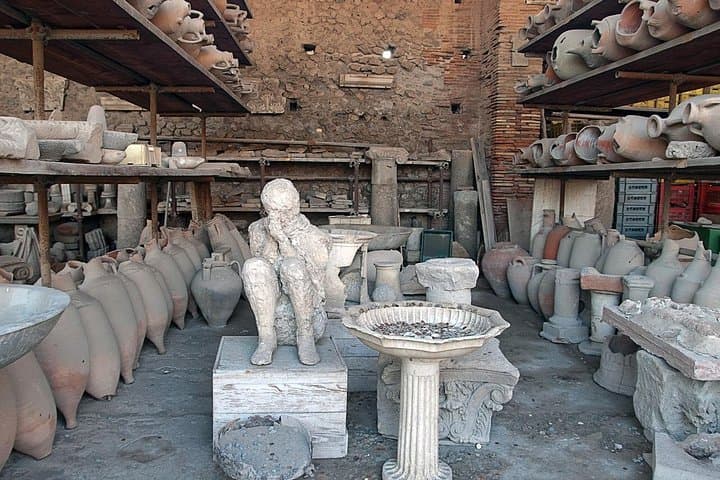
Pompeii was buried by Vesuvius’s Plinian eruption in 79 A.D., preserving buildings and daily objects that offer a rare, detailed view of Roman urban life.
Both the archaeological park and Vesuvius National Park are managed to balance visitor access with preservation—stay on marked paths and avoid touching frescoes or loose masonry to reduce wear.
Around Vesuvio operates guided outdoor trips and adventures with an emphasis on safety, stewardship, and memorable experiences.
A thin, salty wind carries the voice of the Bay of Naples as the bus eases out of the city and into volcanic slopes. You step off at the archaeological park and, between columns and frescoed houses, the past keeps its distance only by a layer of hardened ash; later, the trail up Vesuvius climbs through black pumice that crunches underfoot and fumaroles dare you to come closer to the rim.
A thin, salty wind carries the voice of the Bay of Naples as the bus eases out of the city and into volcanic slopes. You step off at the archaeological park and, between columns and frescoed houses, the past keeps its distance only by a layer of hardened ash; later, the trail up Vesuvius climbs through black pumice that crunches underfoot and fumaroles dare you to come closer to the rim.
Pompeii is an urban fossil—amphitheater arches, thermopolia counters where Romans ate, and the mosaic floors of Casa del Fauno give shape to daily life frozen in 79 A.D. Archaeological architects and builders left a readable plan of Roman civic and domestic patterns that still informs the modern world.
Geologically, Vesuvius is a stratovolcano whose eruptions shaped the Bay, throwing tephra and lava that created local soils and dramatic coastlines; culturally, the area blends Neapolitan fishing traditions, volcanic viticulture, and centuries of pilgrimage to ruins.
Practically, the combined excursion runs most of a day (about 6–7 hours). Expect roughly 90–120 minutes in Pompeii with an audio guide and map, then a coach transfer to the Vesuvius trailhead at ~1,000 m elevation. The climb to the crater rim takes about 20–30 minutes on uneven volcanic scree; allow an hour at the top to peer into the fumaroles and scan Capri, Ischia and the gulf.
Bring sturdy footwear, layered sun protection, and 1–2 liters of water; mobile tickets and a skip‑the‑line entry are commonly included. Moderate fitness and caution on loose rock will make the day safe and rewarding—history under your feet, a living volcano over your head.