THE ADVENTURE COLLECTIVE® · Independent discovery and booking for outdoor travel

Spend a long, lively day on Heimaey in the Westman Islands—watch puffins at Stórhöfði, scramble up Mt. Eldfell for lava-field panoramas, and explore the Eldheimar Museum’s 1973 eruption exhibits. This small-group tour packs dramatic geology and accessible hiking into an unforgettable day from Reykjavík.
Spend a long, lively day on Heimaey in the Westman Islands—watch puffins at Stórhöfði, scramble up Mt. Eldfell for lava-field panoramas, and explore the Eldheimar Museum’s 1973 eruption exhibits. This small-group tour packs dramatic geology and accessible hiking into an unforgettable day from Reykjavík.
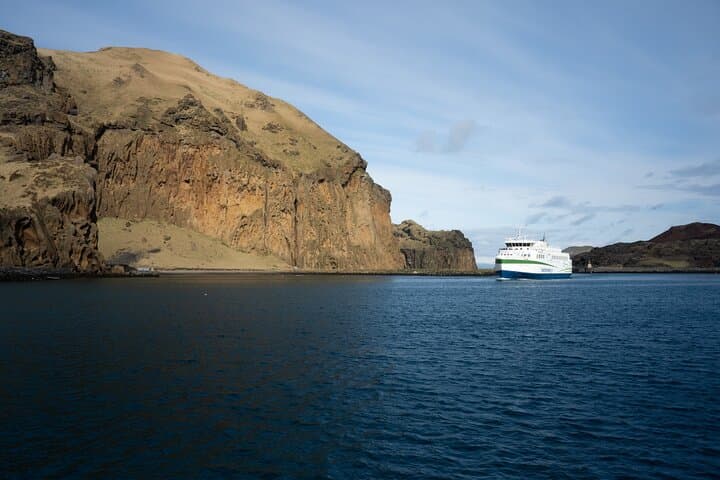
You step off the ferry and the island greets you like a place that kept its own weather. Sea-salt gusts push against your jacket, basalt cliffs cut clean into the ocean, and somewhere above the harbor a colony of puffins churns the air with wingbeats and bright beaks. For a day, Heimaey—main island of the Vestmannaeyjar (Westman Islands)—becomes a compact lesson in Iceland’s raw geology, seabird life, and modern resilience.
Verified experiences and guided adventures in the surrounding area.
Operated by Your Day Tours · Heimaey, Southern Region
You step off the ferry and the island greets you like a place that kept its own weather. Sea-salt gusts push against your jacket, basalt cliffs cut clean into the ocean, and somewhere above the harbor a colony of puffins churns the air with wingbeats and bright beaks. For a day, Heimaey—main island of the Vestmannaeyjar (Westman Islands)—becomes a compact lesson in Iceland’s raw geology, seabird life, and modern resilience.
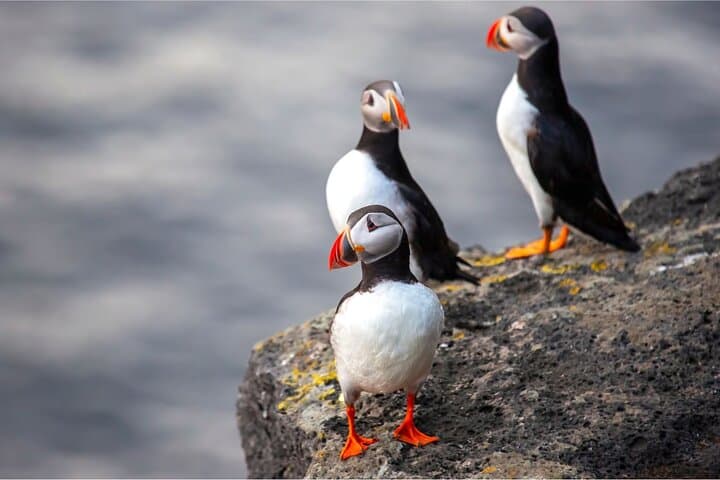
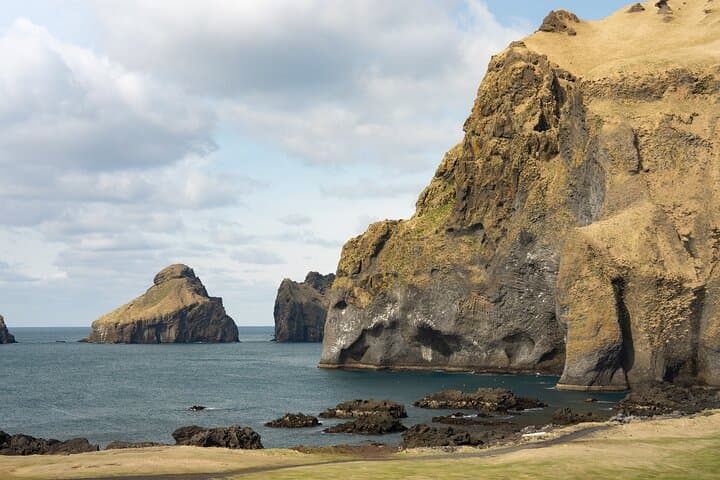
History sits visibly here. In 1973 Eldfell erupted overnight, burying parts of the town and rewriting the coastline with fresh lava; the Eldheimar Museum preserves that shock in photos, artifacts, and a recovered house frozen beneath ash. Geology narrates the rest: pillow basalts and columnar joints at Elephant Rock, black lava fields that look recent because, in geological terms, they are. Stórhöfði cape, one of Europe’s windiest places, doubles as prime puffin real estate during spring-summer breeding months; binoculars and patience reward you with close, comic portraits of these “sea parrots.”
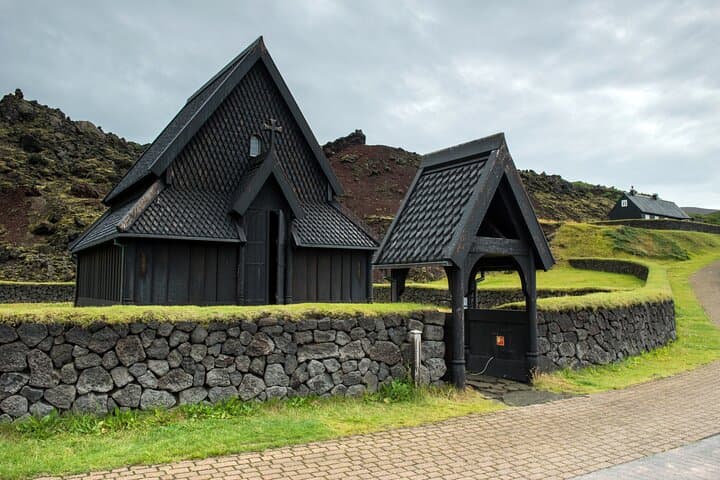
Culture here is pragmatic and generous—fishermen, ferry crews, and a community that rebuilt in the eruption’s wake. In town you’ll pass a wooden stave-style church painted deep black, fishermen mending nets, and small cafés serving fresh cod and langoustine soup that taste of the surrounding sea.
Practical guide: this is a long day—expect roughly 12–13 hours door-to-door from Reykjavík. The minibus ride to Landeyjahöfn takes about two hours, the ferry across is roughly 30 minutes, and island time is structured into guided stops. The Eldfell hike is the day’s physical highlight: plan on 40–60 minutes round trip with about 200 meters (650 ft) of elevation gain on uneven volcanic scree and gravel paths; sturdy footwear with grip is a must. Terrain varies from compacted trails to loose lava pebbles; trekking poles help if you’re prone to slipping. Puffin viewing at Stórhöfði is largely flat but exposed—bring windproof layers and a hat.
Timing matters: puffins are most active and visible mid-morning to early afternoon in breeding season (mid-April–August). Weather can change fast—aim for breathable layers and waterproofs. The tour includes ferry tickets and Eldheimar admission, but bring cash or card for lunch and souvenirs.
Why go? In a single day you’ll see volcanic scars, dramatic sea arches like Elephant Rock, bustling puffin colonies, and a town that wears its history plainly. It’s an intense, tidy slice of Iceland—accessible, educational, and undeniably elemental.
moderate.
12–13 hours.
Comfortable walking fitness; able to handle 200 m of elevation gain on unstable volcanic terrain and several short hikes during the day
The typical walk to the summit takes 40–60 minutes round trip with roughly 200 meters (≈650 ft) of elevation gain over rocky, volcanic terrain.
Puffin sightings are likely between mid-April and August when they nest on Stórhöfði, but wildlife is never guaranteed—timing, weather, and sea conditions influence visibility.
Lunch is not included; the itinerary allows time in town for a meal at local cafés and fish restaurants—plan to budget for food.
Tours may be canceled for severe weather; ferry schedules and road conditions can change—check notifications and the 24-hour cancellation policy.
The tour is marketed as suitable for all fitness levels, but the Eldfell hike involves uneven ground; families with young children or mobility issues should consider their comfort with short steep sections.
Pickup is from specified locations listed at booking; you must confirm your pickup point at least 48 hours before and be ready at the exact time—drivers may take up to 30 minutes to arrive.
Heimaey’s 1973 eruption altered the island’s geography and economy; the community’s evacuation and subsequent reclamation efforts are central to modern local identity.
Vestmannaeyjar’s bird colonies are sensitive to disturbance—stay on marked paths, keep distance from nesting sites, and follow guide instructions to protect habitats.
Your Day Tours operates guided outdoor trips and adventures with an emphasis on safety, stewardship, and memorable experiences.
You step off the ferry and the island greets you like a place that kept its own weather. Sea-salt gusts push against your jacket, basalt cliffs cut clean into the ocean, and somewhere above the harbor a colony of puffins churns the air with wingbeats and bright beaks. For a day, Heimaey—main island of the Vestmannaeyjar (Westman Islands)—becomes a compact lesson in Iceland’s raw geology, seabird life, and modern resilience.
You step off the ferry and the island greets you like a place that kept its own weather. Sea-salt gusts push against your jacket, basalt cliffs cut clean into the ocean, and somewhere above the harbor a colony of puffins churns the air with wingbeats and bright beaks. For a day, Heimaey—main island of the Vestmannaeyjar (Westman Islands)—becomes a compact lesson in Iceland’s raw geology, seabird life, and modern resilience.
History sits visibly here. In 1973 Eldfell erupted overnight, burying parts of the town and rewriting the coastline with fresh lava; the Eldheimar Museum preserves that shock in photos, artifacts, and a recovered house frozen beneath ash. Geology narrates the rest: pillow basalts and columnar joints at Elephant Rock, black lava fields that look recent because, in geological terms, they are. Stórhöfði cape, one of Europe’s windiest places, doubles as prime puffin real estate during spring-summer breeding months; binoculars and patience reward you with close, comic portraits of these “sea parrots.”
Culture here is pragmatic and generous—fishermen, ferry crews, and a community that rebuilt in the eruption’s wake. In town you’ll pass a wooden stave-style church painted deep black, fishermen mending nets, and small cafés serving fresh cod and langoustine soup that taste of the surrounding sea.
Practical guide: this is a long day—expect roughly 12–13 hours door-to-door from Reykjavík. The minibus ride to Landeyjahöfn takes about two hours, the ferry across is roughly 30 minutes, and island time is structured into guided stops. The Eldfell hike is the day’s physical highlight: plan on 40–60 minutes round trip with about 200 meters (650 ft) of elevation gain on uneven volcanic scree and gravel paths; sturdy footwear with grip is a must. Terrain varies from compacted trails to loose lava pebbles; trekking poles help if you’re prone to slipping. Puffin viewing at Stórhöfði is largely flat but exposed—bring windproof layers and a hat.
Timing matters: puffins are most active and visible mid-morning to early afternoon in breeding season (mid-April–August). Weather can change fast—aim for breathable layers and waterproofs. The tour includes ferry tickets and Eldheimar admission, but bring cash or card for lunch and souvenirs.
Why go? In a single day you’ll see volcanic scars, dramatic sea arches like Elephant Rock, bustling puffin colonies, and a town that wears its history plainly. It’s an intense, tidy slice of Iceland—accessible, educational, and undeniably elemental.