THE ADVENTURE COLLECTIVE® · Independent discovery and booking for outdoor travel

Sail between sheer basalt cliffs where puffins dive and seals watch, then step ashore at a sandy Faroese beach and a Viking-age village. This six-hour boat tour from Tórshavn pairs dramatic coastal geology with living island culture.
Sail between sheer basalt cliffs where puffins dive and seals watch, then step ashore at a sandy Faroese beach and a Viking-age village. This six-hour boat tour from Tórshavn pairs dramatic coastal geology with living island culture.
The motor hums and the ocean opens; basalt towers rise like a drafted wall, and the boat threads a corridor carved by wind and wave. Puffins bob like punctuation on the swell, guillemots cling to cold rock faces, and a lone seal follows the hull with deliberate curiosity. The guide leans in, pointing where the cliffs cleave to form caves the sea has hollowed over millennia.
Verified experiences and guided adventures in the surrounding area.
Operated by Experience Faroe Islands · Vestmanna, Streymoy
The motor hums and the ocean opens; basalt towers rise like a drafted wall, and the boat threads a corridor carved by wind and wave. Puffins bob like punctuation on the swell, guillemots cling to cold rock faces, and a lone seal follows the hull with deliberate curiosity. The guide leans in, pointing where the cliffs cleave to form caves the sea has hollowed over millennia.
Geologically, these cliffs are columnar basalt—cooled lava stacked into vertical columns that the North Atlantic continues to erode. Historically, Vestmanna served as both shelter and trap: a harbor for fishing boats and a place occasionally preyed upon by raiders. Kvívík’s low, turf-roofed archaeological remains date back to early Norse settlers; the village shows why Vikings chose this coastline—easy access to the sea and arable slopes.
Culture here moves at coastal cadence: weather-first decisions, afternoon tea, and stories of storms. Leynar’s white sand beach offers an unexpected bright counterpoint to the dark cliffs and is a seasonal stage for salmon runs in the river.
Practical guidance: expect six hours of mixed activity—boarding in Tórshavn, two hours close to the cliffs, and time ashore at Leynar and Kvívík. Dress in waterproof, windproof layers and sturdy shoes; sea spray and gusts are constant. Bring binoculars and a camera with a fast shutter for diving puffins. Motion-sickness remedies are smart; the captain will get as close to the rocks as safety and conditions allow. Tours run weather dependent—be flexible with timing and plan for sudden cancellations on rough days.
easy.
6 hours.
Light activity; able to stand and walk short distances ashore. Suitable for most fitness levels.
Most departures are from Tórshavn harbor; check your confirmation for the exact meeting point and arrival time.
Yes—especially during breeding season (late spring through summer) you can expect puffins, guillemots, razorbills and kittiwakes on the cliffs.
Yes—infant seats are available, and the itinerary is family-friendly, but children should be supervised on docks and near water.
Yes—operators will cancel or alter the route in poor conditions for passenger safety; check the cancellation policy noted on booking.
Kvívík contains remains of early Norse longhouses and is considered among the oldest continuous settlement sites in the Faroes; Vestmanna’s harbor historically sheltered small fishing fleets and occasional raiders.
Seabird colonies are sensitive during breeding season—keep distance, follow guide instructions, and avoid loud noises; coastal erosion and boat traffic are monitored to minimize disturbance.
Experience Faroe Islands operates guided outdoor trips and adventures with an emphasis on safety, stewardship, and memorable experiences.
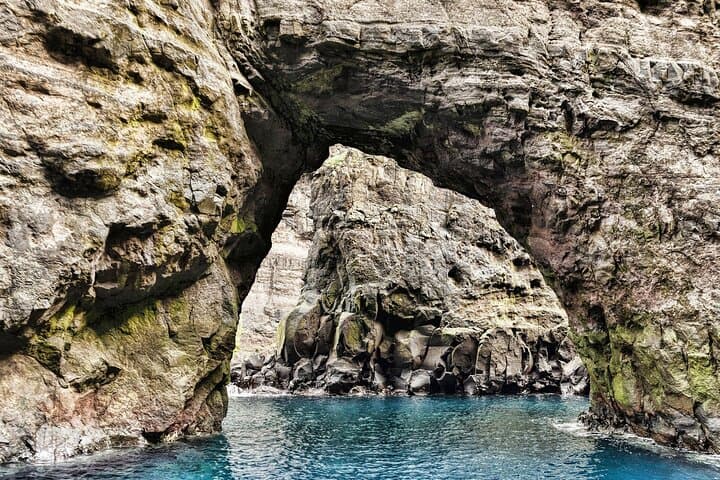


The motor hums and the ocean opens; basalt towers rise like a drafted wall, and the boat threads a corridor carved by wind and wave. Puffins bob like punctuation on the swell, guillemots cling to cold rock faces, and a lone seal follows the hull with deliberate curiosity. The guide leans in, pointing where the cliffs cleave to form caves the sea has hollowed over millennia.
The motor hums and the ocean opens; basalt towers rise like a drafted wall, and the boat threads a corridor carved by wind and wave. Puffins bob like punctuation on the swell, guillemots cling to cold rock faces, and a lone seal follows the hull with deliberate curiosity. The guide leans in, pointing where the cliffs cleave to form caves the sea has hollowed over millennia.
Geologically, these cliffs are columnar basalt—cooled lava stacked into vertical columns that the North Atlantic continues to erode. Historically, Vestmanna served as both shelter and trap: a harbor for fishing boats and a place occasionally preyed upon by raiders. Kvívík’s low, turf-roofed archaeological remains date back to early Norse settlers; the village shows why Vikings chose this coastline—easy access to the sea and arable slopes.
Culture here moves at coastal cadence: weather-first decisions, afternoon tea, and stories of storms. Leynar’s white sand beach offers an unexpected bright counterpoint to the dark cliffs and is a seasonal stage for salmon runs in the river.
Practical guidance: expect six hours of mixed activity—boarding in Tórshavn, two hours close to the cliffs, and time ashore at Leynar and Kvívík. Dress in waterproof, windproof layers and sturdy shoes; sea spray and gusts are constant. Bring binoculars and a camera with a fast shutter for diving puffins. Motion-sickness remedies are smart; the captain will get as close to the rocks as safety and conditions allow. Tours run weather dependent—be flexible with timing and plan for sudden cancellations on rough days.