THE ADVENTURE COLLECTIVE® · Independent discovery and booking for outdoor travel

Descend 414 historic steps from Vomero hill into Naples’ historic centre on a private urban trekking tour. Expect panoramic terraces, medieval stairways and guided stops through Spaccanapoli and artisan quarters.
Descend 414 historic steps from Vomero hill into Naples’ historic centre on a private urban trekking tour. Expect panoramic terraces, medieval stairways and guided stops through Spaccanapoli and artisan quarters.
You step out onto the terrace of the Certosa di San Martino and the Gulf of Naples opens ahead — blue water framed by the low curve of Posillipo and the cone of Vesuvius watching from the east. The walk begins here on Vomero hill and drops you through time: a string of narrow lanes, 14th-century stone steps and the Pedamentina’s 414 stairs that lead down into the beating heart of the city.
Verified experiences and guided adventures in the surrounding area.
Operated by NapolinVespa · Naples, Campania
You step out onto the terrace of the Certosa di San Martino and the Gulf of Naples opens ahead — blue water framed by the low curve of Posillipo and the cone of Vesuvius watching from the east. The walk begins here on Vomero hill and drops you through time: a string of narrow lanes, 14th-century stone steps and the Pedamentina’s 414 stairs that lead down into the beating heart of the city.
This vertical route traces Naples’ layered past. The Certosa, built as a monastery and now a museum, offers a formal, Baroque counterpoint to the rough-hewn stairways that grew from medieval foot traffic and quarrying on the tufa slopes. Geology shows itself in the city’s cliffs and volcanic soils; culture surfaces in artisan shops and the cadence of voices along Spaccanapoli, the straight line that slices the historic Decumano.
Expect varied terrain: paved terraces, long flights of stone steps and occasional uneven alleys. The guide points out architectural details, local legends and where to pause for espresso or street food. The descent is mostly downhill but requires steady feet and attention; the return is usually by public transport or a short climb back if you’re feeling energetic.
Practical edge: wear supportive shoes, carry water, and time the tour for morning or late afternoon light to avoid the hottest midday sun. The route is accessible to most walkers but be prepared for repeated steps and some cobbled surfaces. This is city trekking that rewards curiosity — and a readiness to move at Naples’ lively pace.
moderate.
3–4 hours.
Suitable for walkers in regular health; you should be comfortable on repeated stair sections and up to several miles of walking.
The route includes 414 steps and several stair sections; it’s classified as moderate but suitable for most walkers who can handle stairs and a few hours on foot.
Yes — children can join but must be accompanied by an adult and may need to be carried for some narrow or steep sections.
The walk typically starts at the Certosa di San Martino on Vomero hill and descends to the historic centre around Spaccanapoli; return options include public transport or walking back uphill.
The guide is authorized and some stops may include entrance to viewpoints or museums if specified; check the booking details for included admissions.
The Pedamentina steps date back to medieval times and were formalized over centuries to connect hillside neighborhoods to Naples’ urban core near the Decumano.
High foot traffic wears historic stonework; stick to established paths, avoid graffiti and take any trash with you to protect fragile urban heritage.
NapolinVespa operates guided outdoor trips and adventures with an emphasis on safety, stewardship, and memorable experiences.



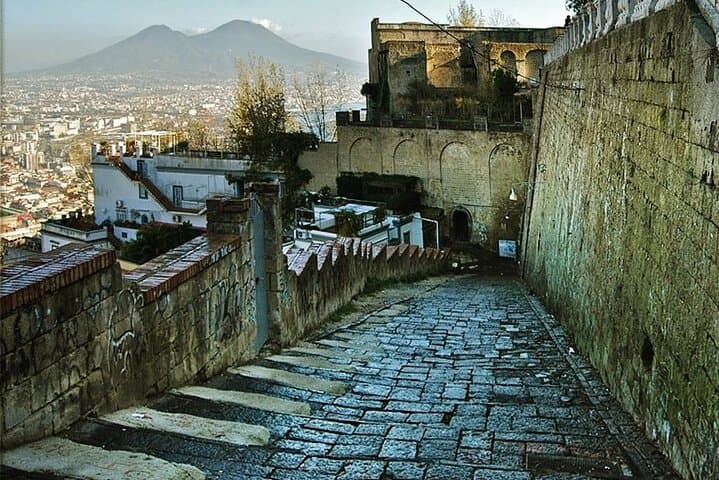
You step out onto the terrace of the Certosa di San Martino and the Gulf of Naples opens ahead — blue water framed by the low curve of Posillipo and the cone of Vesuvius watching from the east. The walk begins here on Vomero hill and drops you through time: a string of narrow lanes, 14th-century stone steps and the Pedamentina’s 414 stairs that lead down into the beating heart of the city.
You step out onto the terrace of the Certosa di San Martino and the Gulf of Naples opens ahead — blue water framed by the low curve of Posillipo and the cone of Vesuvius watching from the east. The walk begins here on Vomero hill and drops you through time: a string of narrow lanes, 14th-century stone steps and the Pedamentina’s 414 stairs that lead down into the beating heart of the city.
This vertical route traces Naples’ layered past. The Certosa, built as a monastery and now a museum, offers a formal, Baroque counterpoint to the rough-hewn stairways that grew from medieval foot traffic and quarrying on the tufa slopes. Geology shows itself in the city’s cliffs and volcanic soils; culture surfaces in artisan shops and the cadence of voices along Spaccanapoli, the straight line that slices the historic Decumano.
Expect varied terrain: paved terraces, long flights of stone steps and occasional uneven alleys. The guide points out architectural details, local legends and where to pause for espresso or street food. The descent is mostly downhill but requires steady feet and attention; the return is usually by public transport or a short climb back if you’re feeling energetic.
Practical edge: wear supportive shoes, carry water, and time the tour for morning or late afternoon light to avoid the hottest midday sun. The route is accessible to most walkers but be prepared for repeated steps and some cobbled surfaces. This is city trekking that rewards curiosity — and a readiness to move at Naples’ lively pace.