THE ADVENTURE COLLECTIVE® · Independent discovery and booking for outdoor travel

A two-hour guided walk from Ponte Pietra up to Castel San Pietro and Giardino Giusti, weaving Roman and medieval landmarks with sweeping city views. Ideal for travelers who want compact history, short climbs, and Renaissance gardens within reach of Verona’s center.
A two-hour guided walk from Ponte Pietra up to Castel San Pietro and Giardino Giusti, weaving Roman and medieval landmarks with sweeping city views. Ideal for travelers who want compact history, short climbs, and Renaissance gardens within reach of Verona’s center.
You step off Ponte Pietra with the Adige daring you across its copper-green current, and the city tilts upward. The guide leads a steady climb through cobbled lanes toward Castel San Pietro, where terraces open out and Verona’s red roofs fold away toward distant hills. Along the way the Roman Theatre peeks like an actor waiting in the wings; a 1939 funicular hums below; olive trees and grass fields punctuate ancient walls.
Verified experiences and guided adventures in the surrounding area.
Operated by Slow Travel Italia · Verona, Veneto
You step off Ponte Pietra with the Adige daring you across its copper-green current, and the city tilts upward. The guide leads a steady climb through cobbled lanes toward Castel San Pietro, where terraces open out and Verona’s red roofs fold away toward distant hills. Along the way the Roman Theatre peeks like an actor waiting in the wings; a 1939 funicular hums below; olive trees and grass fields punctuate ancient walls.
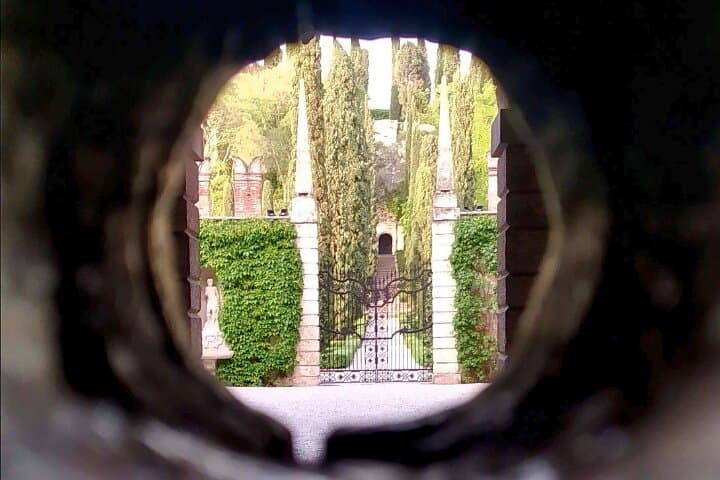
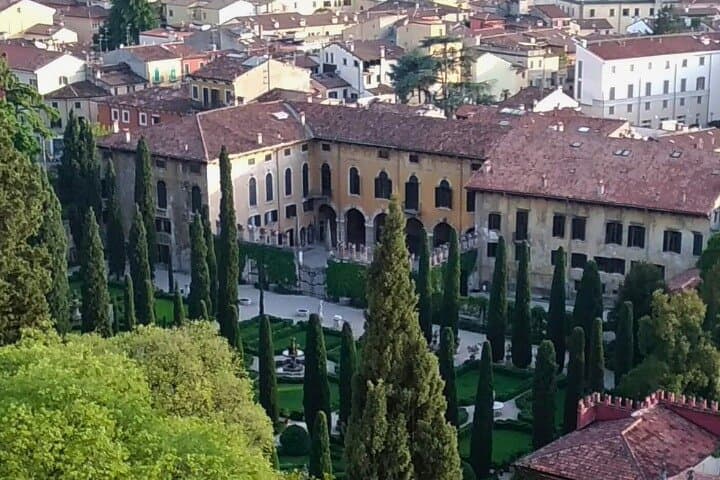
This route stitches together layers of history: Roman public life on the riverside, medieval fortifications and the rubble of Re Teodorico, and the Austrian-era military works that later shaped the skyline. Giardino Giusti arrives like a cultivated surprise — 16th-century terraces, statues and fountains cut into a hillside of Renaissance geometry.
Expect short steep sections, stone steps and narrow lanes rather than wilderness trails. The tour balances cultural narration with pauses for views and photos, and may include a rarely opened private garden entrance. The city’s limestone and alluvial soils explain the stepped terraces and scenic viewlines; the Adige has carved the valley that lets Verona perch where it does.
Practical guidance: wear grippy walking shoes for cobbles and steps, bring water and layered clothing for sudden shade changes, and plan for 90–120 minutes. Morning or late afternoon light is best for panoramas and cooler walking. Public transit reaches the starting area; keep in mind some private garden access is conditional and the tour requires moderate fitness. Respect quiet at convents and cultural sites and carry out any trash to help preserve these urban green spaces.
moderate.
2 hours.
Suitable for travelers with a basic to moderate fitness level who can manage short steep climbs and uneven cobbles.
Most tours begin at Ponte Pietra near the riverside and finish back in central Verona after the descent from Castel San Pietro; confirm exact meeting point on your voucher.
The itinerary may include passage by Giardino Giusti and views from outside; entry to private garden sections is conditional and may not be included.
The route has steep steps and uneven surfaces; it’s generally suitable for children who can handle short climbs but not recommended for pregnant travelers or those with serious back or heart conditions.
Full refund is available if you cancel at least 24 hours before the scheduled departure time according to the tour’s policy.
Verona’s hillside defenses reflect layers from Roman amphitheaters to medieval walls and later Austrian military works; the Giusti gardens are a 16th-century Renaissance creation.
Stay on marked paths, avoid entering private areas without permission, and carry out any waste to help preserve historic gardens and fragile urban green spaces.
Slow Travel Italia operates guided outdoor trips and adventures with an emphasis on safety, stewardship, and memorable experiences.
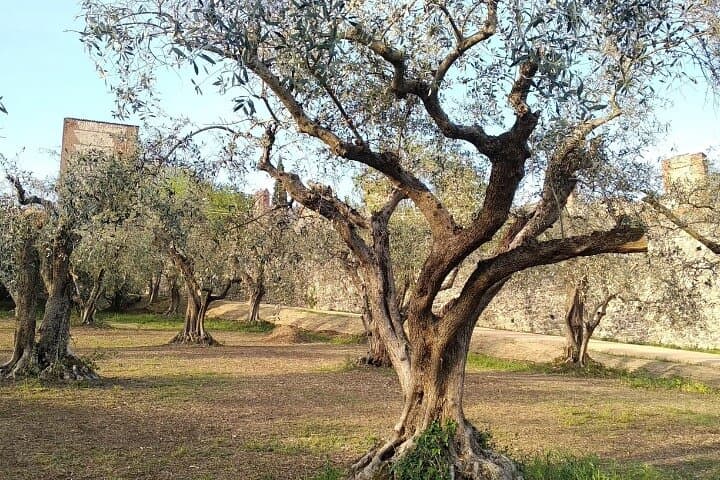
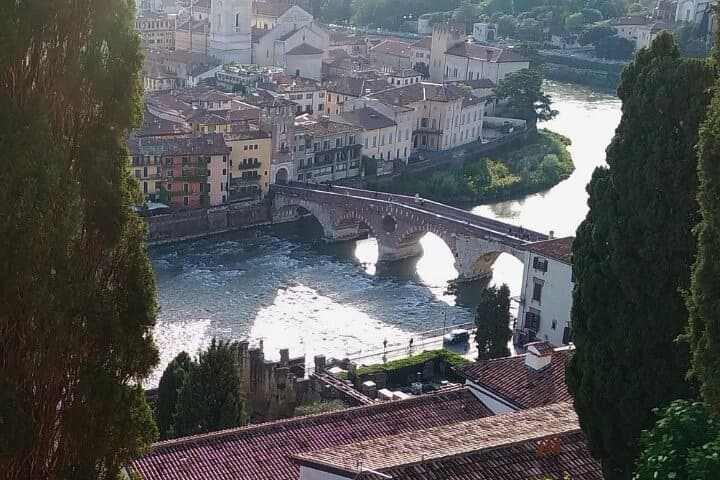
You step off Ponte Pietra with the Adige daring you across its copper-green current, and the city tilts upward. The guide leads a steady climb through cobbled lanes toward Castel San Pietro, where terraces open out and Verona’s red roofs fold away toward distant hills. Along the way the Roman Theatre peeks like an actor waiting in the wings; a 1939 funicular hums below; olive trees and grass fields punctuate ancient walls.
You step off Ponte Pietra with the Adige daring you across its copper-green current, and the city tilts upward. The guide leads a steady climb through cobbled lanes toward Castel San Pietro, where terraces open out and Verona’s red roofs fold away toward distant hills. Along the way the Roman Theatre peeks like an actor waiting in the wings; a 1939 funicular hums below; olive trees and grass fields punctuate ancient walls.
This route stitches together layers of history: Roman public life on the riverside, medieval fortifications and the rubble of Re Teodorico, and the Austrian-era military works that later shaped the skyline. Giardino Giusti arrives like a cultivated surprise — 16th-century terraces, statues and fountains cut into a hillside of Renaissance geometry.
Expect short steep sections, stone steps and narrow lanes rather than wilderness trails. The tour balances cultural narration with pauses for views and photos, and may include a rarely opened private garden entrance. The city’s limestone and alluvial soils explain the stepped terraces and scenic viewlines; the Adige has carved the valley that lets Verona perch where it does.
Practical guidance: wear grippy walking shoes for cobbles and steps, bring water and layered clothing for sudden shade changes, and plan for 90–120 minutes. Morning or late afternoon light is best for panoramas and cooler walking. Public transit reaches the starting area; keep in mind some private garden access is conditional and the tour requires moderate fitness. Respect quiet at convents and cultural sites and carry out any trash to help preserve these urban green spaces.