THE ADVENTURE COLLECTIVE® · Independent discovery and booking for outdoor travel

Walk Verona’s historic center with a local guide on a focused 2‑hour tour that visits the Arena, Juliet’s balcony, and hidden civic squares. Ideal for first-time visitors wanting context, photos, and practical local tips.
Walk Verona’s historic center with a local guide on a focused 2‑hour tour that visits the Arena, Juliet’s balcony, and hidden civic squares. Ideal for first-time visitors wanting context, photos, and practical local tips.
Morning light hits the cobbles of Piazza Bra and the Arena’s stone face warms under your palms—the city feels like a stage and you step onto it. On this two-hour guided walk, a local guide threads you through narrow lanes, past frescoed palazzi and the busy curve of the Adige River, which dares you to follow its bend toward quieter neighborhoods.
Verified experiences and guided adventures in the surrounding area.
Operated by Raphael Tours & Events · Verona, Veneto
Morning light hits the cobbles of Piazza Bra and the Arena’s stone face warms under your palms—the city feels like a stage and you step onto it. On this two-hour guided walk, a local guide threads you through narrow lanes, past frescoed palazzi and the busy curve of the Adige River, which dares you to follow its bend toward quieter neighborhoods.
Verona’s story is layered: a Roman amphitheater that once hosted gladiators now hosts operas; medieval towers sit beside Renaissance palaces. Shakespeare’s Romeo and Juliet gave the city a global myth—Juliet’s balcony draws sighs and selfies—but the deeper history lives in the Scaliger tombs and civic squares where merchants argued and statutes were raised. The geology beneath your feet—Verona’s river terraces of gravel and limestone—explains why the Romans built an arena here and why streets slope toward the Adige.
Expect steady walking on paved streets, frequent stops for explanation and photo-worthy vistas, and an English-speaking guide who highlights local customs, food tips, and shortcuts away from the crowds. The pace is easy but lively: bring comfortable shoes, a refillable water bottle, and a light layer for river breezes. Morning tours dodge the hottest hours and evening tours catch softer light on the Arena.
Practicalities: meet at Piazza Bra by the Vittorio Emanuele horse statue; tours accommodate strollers and most fitness levels; public transit links are nearby. This is a compact, sensory introduction to Verona—efficient, informative, and rooted in the city’s lived history.
easy.
2 hours.
Suitable for most fitness levels; requires standing and walking on paved and cobbled streets for ~2 hours.
Meet in Piazza Bra by the Vittorio Emanuele horse statue; guides wait near the Arena entrance.
The tour is conducted in English by a local English‑speaking guide as noted in the listing.
The route is stroller accessible and suitable for most mobility levels, though some cobbled sections are uneven; contact operator for specific wheelchair access needs.
Full refund available if canceled at least 24 hours before departure; tours may cancel for bad weather or low enrollment.
Verona grew from a Roman settlement; its Arena dates to the 1st century CE and the city later became a medieval trading hub under the Scaliger family.
Stick to marked paths and public spaces; avoid touching frescoes or inscriptions and use refillable bottles to reduce litter in historic districts.
Raphael Tours & Events operates guided outdoor trips and adventures with an emphasis on safety, stewardship, and memorable experiences.
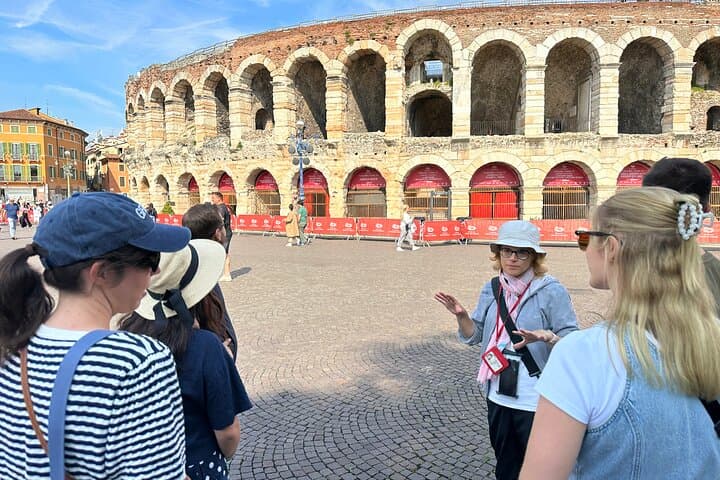
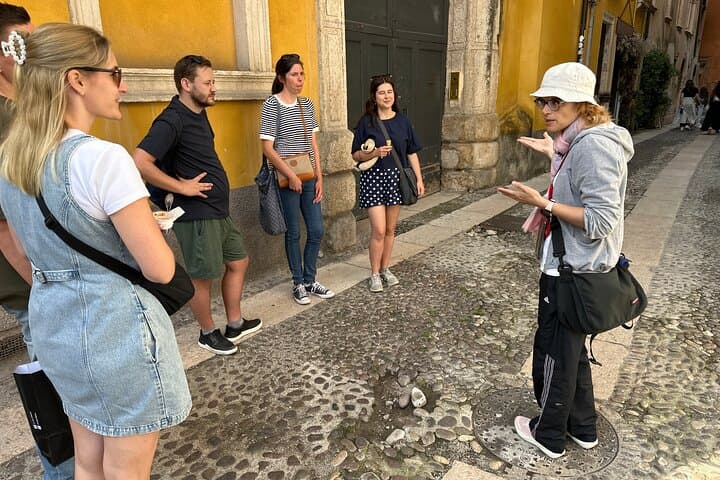
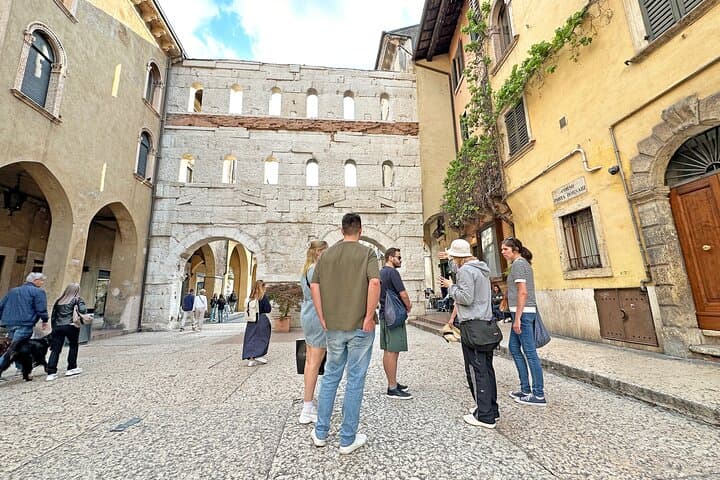
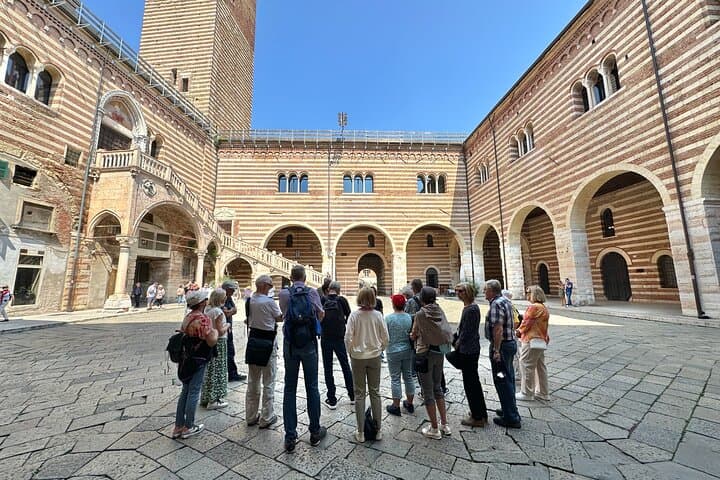
Morning light hits the cobbles of Piazza Bra and the Arena’s stone face warms under your palms—the city feels like a stage and you step onto it. On this two-hour guided walk, a local guide threads you through narrow lanes, past frescoed palazzi and the busy curve of the Adige River, which dares you to follow its bend toward quieter neighborhoods.
Morning light hits the cobbles of Piazza Bra and the Arena’s stone face warms under your palms—the city feels like a stage and you step onto it. On this two-hour guided walk, a local guide threads you through narrow lanes, past frescoed palazzi and the busy curve of the Adige River, which dares you to follow its bend toward quieter neighborhoods.
Verona’s story is layered: a Roman amphitheater that once hosted gladiators now hosts operas; medieval towers sit beside Renaissance palaces. Shakespeare’s Romeo and Juliet gave the city a global myth—Juliet’s balcony draws sighs and selfies—but the deeper history lives in the Scaliger tombs and civic squares where merchants argued and statutes were raised. The geology beneath your feet—Verona’s river terraces of gravel and limestone—explains why the Romans built an arena here and why streets slope toward the Adige.
Expect steady walking on paved streets, frequent stops for explanation and photo-worthy vistas, and an English-speaking guide who highlights local customs, food tips, and shortcuts away from the crowds. The pace is easy but lively: bring comfortable shoes, a refillable water bottle, and a light layer for river breezes. Morning tours dodge the hottest hours and evening tours catch softer light on the Arena.
Practicalities: meet at Piazza Bra by the Vittorio Emanuele horse statue; tours accommodate strollers and most fitness levels; public transit links are nearby. This is a compact, sensory introduction to Verona—efficient, informative, and rooted in the city’s lived history.