THE ADVENTURE COLLECTIVE® · Independent discovery and booking for outdoor travel

A rugged coastal walk on Madeira’s north shore, Vereda do Larano links Machico and Porto da Cruz across exposed cliffs, basalt terraces and sea-facing viewpoints. Expect dramatic views, a historic footpath, and variable wind—best tackled as a full-day hike with proper footwear and water.
A rugged coastal walk on Madeira’s north shore, Vereda do Larano links Machico and Porto da Cruz across exposed cliffs, basalt terraces and sea-facing viewpoints. Expect dramatic views, a historic footpath, and variable wind—best tackled as a full-day hike with proper footwear and water.
The path opens above an Atlantic edge where wind and wave have carved terraces into black volcanic rock; you step onto a narrow trail that clings to the north coast and gives way to raw views of sea and cliff.
Verified experiences and guided adventures in the surrounding area.
The path opens above an Atlantic edge where wind and wave have carved terraces into black volcanic rock; you step onto a narrow trail that clings to the north coast and gives way to raw views of sea and cliff.
This is Vereda do Larano, an old footpath once used by islanders to move goods and visit neighbors. The route follows ancient tracks and occasional levada cuttings, crossing basalt outcrops and cultivated plots that reflect Madeira’s history of small-scale agriculture and coastal trade.
Geologically, the northern rim here is young volcanic country—lava flows and pyroclastic deposits meet persistent marine erosion, producing dramatic cliffs, sea stacks, and pebble beaches below. Culturally, the walk threads through places shaped by subsistence farming and sugar and rum production; Porto da Cruz still retains a working distillery and a village beach that speaks to those trades.
Expect exposed coastal trail, short stair sections, and occasional loose scree. The sea often pushes up spray and wind that will test balance; seabirds wheel in thermals and the occasional passerby greets you with a local nod. Photographic highlights include the Boca do Risco lookout and the descent into Porto da Cruz with its dark sand strip.
Practical guidance: start in Machico early to avoid midday wind and buy water in town—services are sparse on the trail. Wear grippy shoes and layers for sudden gusts; treat the trail as exposed single-track with limited bailout points. Allow about six hours for a steady full-day pace, and check local weather for strong northerly winds before heading out.
moderate.
6 hours.
Good aerobic fitness for sustained walking on uneven, exposed coastal terrain; steady leg strength and balance help.
Expect roughly 5–7 hours depending on pace and stops; the tour lists a six-hour duration as a practical estimate.
Experienced beginners who are comfortable on uneven terrain and exposure can attempt it, but basic fitness and good footwear are required.
There are bus connections between Porto da Cruz and Machico, but schedules are limited—verify times in advance or arrange a taxi.
Calm days with light wind are best; strong northerlies and sea spray make exposed sections slippery and uncomfortable.
The route follows an old inter-village footpath used for trade and social visits; traces of levada irrigation and small farmland parcels record generations of coastal cultivation.
Coastal vegetation and loose volcanic scree are vulnerable to erosion—stick to the trail, pack out waste, and avoid trampling fragile plants.
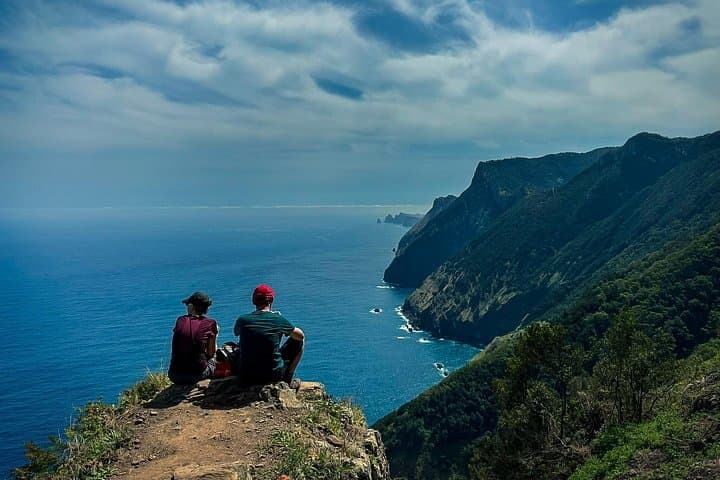
The path opens above an Atlantic edge where wind and wave have carved terraces into black volcanic rock; you step onto a narrow trail that clings to the north coast and gives way to raw views of sea and cliff.
The path opens above an Atlantic edge where wind and wave have carved terraces into black volcanic rock; you step onto a narrow trail that clings to the north coast and gives way to raw views of sea and cliff.
This is Vereda do Larano, an old footpath once used by islanders to move goods and visit neighbors. The route follows ancient tracks and occasional levada cuttings, crossing basalt outcrops and cultivated plots that reflect Madeira’s history of small-scale agriculture and coastal trade.
Geologically, the northern rim here is young volcanic country—lava flows and pyroclastic deposits meet persistent marine erosion, producing dramatic cliffs, sea stacks, and pebble beaches below. Culturally, the walk threads through places shaped by subsistence farming and sugar and rum production; Porto da Cruz still retains a working distillery and a village beach that speaks to those trades.
Expect exposed coastal trail, short stair sections, and occasional loose scree. The sea often pushes up spray and wind that will test balance; seabirds wheel in thermals and the occasional passerby greets you with a local nod. Photographic highlights include the Boca do Risco lookout and the descent into Porto da Cruz with its dark sand strip.
Practical guidance: start in Machico early to avoid midday wind and buy water in town—services are sparse on the trail. Wear grippy shoes and layers for sudden gusts; treat the trail as exposed single-track with limited bailout points. Allow about six hours for a steady full-day pace, and check local weather for strong northerly winds before heading out.