THE ADVENTURE COLLECTIVE® · Independent discovery and booking for outdoor travel

Walk through Venice’s historic heart in 90 minutes: St. Mark’s Square, Doge’s Palace façades, the Bell Tower, and the Mercerie. This guided stroll blends architecture, local anecdotes, and practical orientation for first-time visitors.
Walk through Venice’s historic heart in 90 minutes: St. Mark’s Square, Doge’s Palace façades, the Bell Tower, and the Mercerie. This guided stroll blends architecture, local anecdotes, and practical orientation for first-time visitors.
The call of the bell tower slices through the air as your guide leads a small group out of the TURIVE kiosk and into the noise of Venice — a city built on tides and trade where every alley ends in a story. For 90 minutes the tour moves like the city itself: deliberate, pedestrian, and occasionally halted by a sudden inlet that dares you to imagine life before motorboats.
Verified experiences and guided adventures in the surrounding area.
Operated by Destination Venice · Venice, Veneto
The call of the bell tower slices through the air as your guide leads a small group out of the TURIVE kiosk and into the noise of Venice — a city built on tides and trade where every alley ends in a story. For 90 minutes the tour moves like the city itself: deliberate, pedestrian, and occasionally halted by a sudden inlet that dares you to imagine life before motorboats.
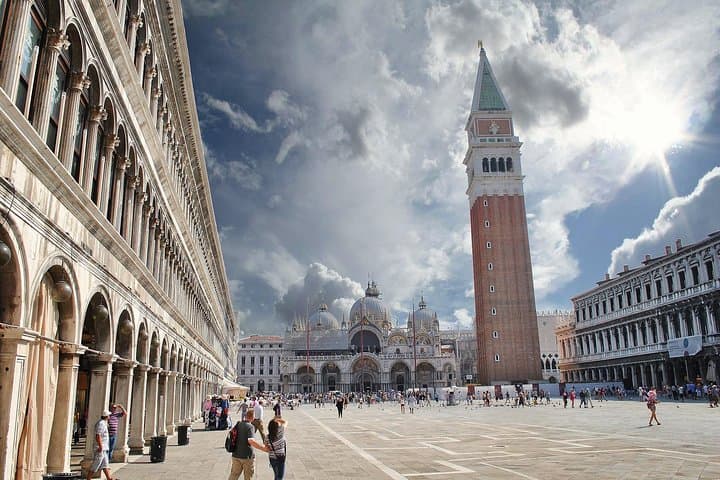
You start in the open amphitheater of St. Mark’s Square, where the basilica’s Byzantine mosaics stare patiently down at pigeons and granite. From the outside, your guide sketches the arc of Venice’s history: how salt and shipwright skill turned a lagoon into a maritime republic that governed trade between East and West. The Doge’s Palace and its ornate façade give that past a physical voice — carved stone that names power and ritual.
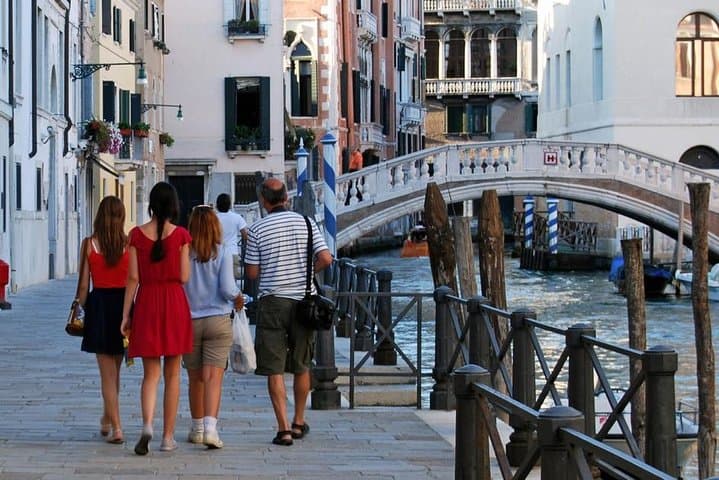
Geology here is subtle; Venice rises on timber piles driven into alluvial clay. The ground feels firm but irregular beneath cobblestones, and bridges are the town’s small elevators, lifting you over the city’s arteries. Culture surfaces in courtyard shrines, faded theater facades like the Malibran, and shop windows on the Mercerie — the artery between Rialto and San Marco that still pulses with commerce.
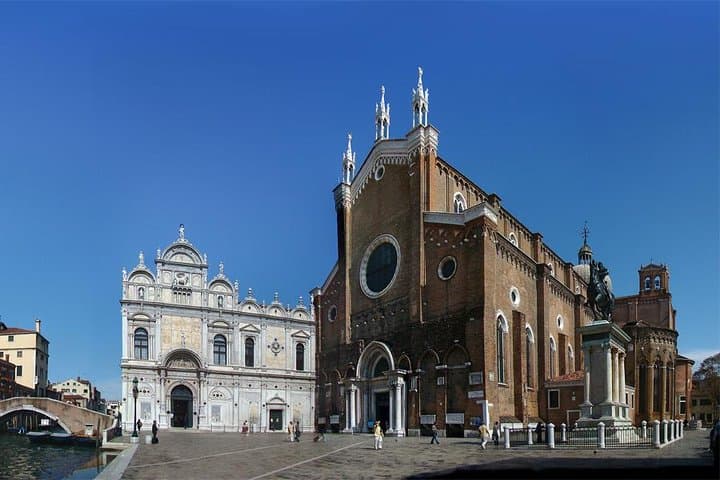
Your route includes Campo SS. Giovanni e Paolo, where the city’s civic memory is stored in funerary monuments and weathered façades, and a glance at Marco Polo’s house, the kind of plaque that makes legend feel domestic. The guide folds in anecdotes: conspiracies in the Doge’s corridors, the clock tower’s astronomical face, and how a single high tide can rewrite a morning’s plans.
Practical notes are as steady as the guide’s cadence. Expect 1.5 hours of mostly flat walking over stone and occasional cobbles; bridges require stepping but no climbing gear. There are no included admissions — you’ll see the façades and plazas, not interiors. Wear comfortable, grippy shoes and a light layer against canal winds. Public transit and vaporetto stops sit a short walk from the meeting point, and arrivals should be 15 minutes early.
If you want to linger for photos, aim for early morning light when the square clears and the mosaics glow; return along the Mercerie to watch shopfronts wake and the city shift from tourist pulse to local rhythm. This walk is less about monuments locked behind doors and more about reading Venice as you move through it: a living city of water, stone, and stories.
easy.
1–1.5 hours.
Suitable for most fitness levels; includes steady walking and short stair steps on bridges
Meet at the TURIVE kiosk in the St. Mark’s area; arrive 15 minutes early to check in.
No—this tour provides exterior commentary only; if you want interior access, purchase museum or basilica tickets separately.
Venice’s cobbles and bridges make full wheelchair access difficult; contact the operator for accessibility options or private assistance.
The listed tour includes a professional guide; check the booking page for language options and availability.
The tour is not guaranteed in severe weather; you may be offered rescheduling or a refund if canceled at least 24 hours prior per the policy.
Yes, but expect several bridge steps and crowded squares—consider a baby carrier for easier movement.
Venice grew from lagoon settlements into a maritime republic that dominated Mediterranean trade; many public buildings articulate civic power from the 12th–15th centuries.
The Venetian Lagoon is vulnerable to sea-level rise and overtourism; stick to marked walkways, avoid feeding wildlife, and support local businesses that follow sustainable practices.
Destination Venice operates guided outdoor trips and adventures with an emphasis on safety, stewardship, and memorable experiences.
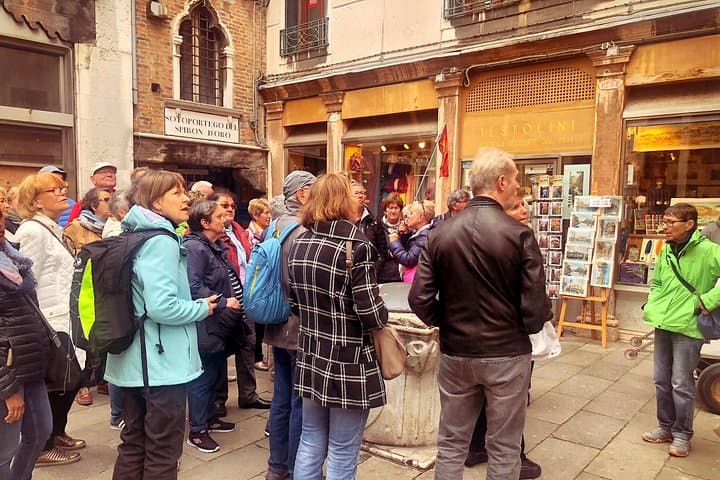
The call of the bell tower slices through the air as your guide leads a small group out of the TURIVE kiosk and into the noise of Venice — a city built on tides and trade where every alley ends in a story. For 90 minutes the tour moves like the city itself: deliberate, pedestrian, and occasionally halted by a sudden inlet that dares you to imagine life before motorboats.
The call of the bell tower slices through the air as your guide leads a small group out of the TURIVE kiosk and into the noise of Venice — a city built on tides and trade where every alley ends in a story. For 90 minutes the tour moves like the city itself: deliberate, pedestrian, and occasionally halted by a sudden inlet that dares you to imagine life before motorboats.
You start in the open amphitheater of St. Mark’s Square, where the basilica’s Byzantine mosaics stare patiently down at pigeons and granite. From the outside, your guide sketches the arc of Venice’s history: how salt and shipwright skill turned a lagoon into a maritime republic that governed trade between East and West. The Doge’s Palace and its ornate façade give that past a physical voice — carved stone that names power and ritual.
Geology here is subtle; Venice rises on timber piles driven into alluvial clay. The ground feels firm but irregular beneath cobblestones, and bridges are the town’s small elevators, lifting you over the city’s arteries. Culture surfaces in courtyard shrines, faded theater facades like the Malibran, and shop windows on the Mercerie — the artery between Rialto and San Marco that still pulses with commerce.
Your route includes Campo SS. Giovanni e Paolo, where the city’s civic memory is stored in funerary monuments and weathered façades, and a glance at Marco Polo’s house, the kind of plaque that makes legend feel domestic. The guide folds in anecdotes: conspiracies in the Doge’s corridors, the clock tower’s astronomical face, and how a single high tide can rewrite a morning’s plans.
Practical notes are as steady as the guide’s cadence. Expect 1.5 hours of mostly flat walking over stone and occasional cobbles; bridges require stepping but no climbing gear. There are no included admissions — you’ll see the façades and plazas, not interiors. Wear comfortable, grippy shoes and a light layer against canal winds. Public transit and vaporetto stops sit a short walk from the meeting point, and arrivals should be 15 minutes early.
If you want to linger for photos, aim for early morning light when the square clears and the mosaics glow; return along the Mercerie to watch shopfronts wake and the city shift from tourist pulse to local rhythm. This walk is less about monuments locked behind doors and more about reading Venice as you move through it: a living city of water, stone, and stories.