THE ADVENTURE COLLECTIVE® · Independent discovery and booking for outdoor travel

Walk Venice beyond the postcards: a two-hour private tour that threads hidden churches, Marco Polo’s early home, and legends of witches and libertines into a single, revealing route. Expect art, unexpected stories, and practical local insight to make the city feel newly yours.
Walk Venice beyond the postcards: a two-hour private tour that threads hidden churches, Marco Polo’s early home, and legends of witches and libertines into a single, revealing route. Expect art, unexpected stories, and practical local insight to make the city feel newly yours.
A bell tinkles over damp stone as you step into Campo San Bartolomeo. The guide waits by the bronze of Carlo Goldoni, voice low enough that the city seems to lean in. Venice moves differently here: the canals nudge you forward, alleys fold into one another, and façades keep their own private stories. In two hours you’ll cross bridges that flirt with rumor, slip into churches that guard lost frescoes, and stand where Marco Polo’s childhood footsteps once echoed.
Verified experiences and guided adventures in the surrounding area.
Operated by Venezia e' Guida con Alessandro · Venice, Veneto
A bell tinkles over damp stone as you step into Campo San Bartolomeo. The guide waits by the bronze of Carlo Goldoni, voice low enough that the city seems to lean in. Venice moves differently here: the canals nudge you forward, alleys fold into one another, and façades keep their own private stories. In two hours you’ll cross bridges that flirt with rumor, slip into churches that guard lost frescoes, and stand where Marco Polo’s childhood footsteps once echoed.
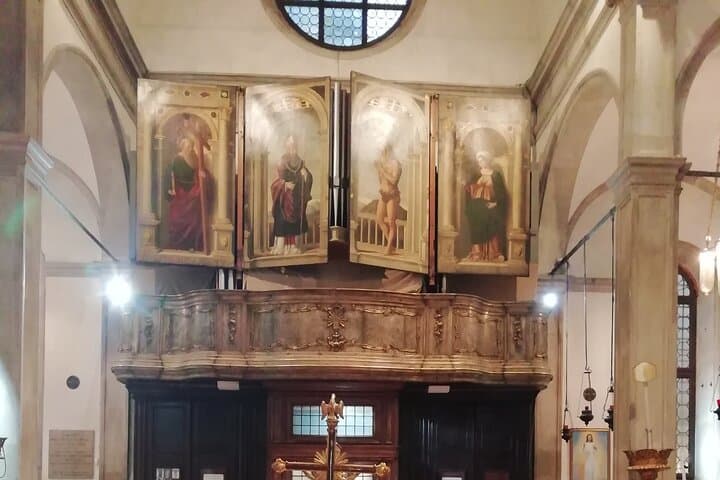
The route stitches together Venice’s layered past. Built on lagoon silt and timber piles, the city’s architecture is a negotiation with water—Romanesque arches giving way to Gothic lace and Renaissance proportion. You’ll enter a church financed by the Polo family and see Giovanni Bellini’s brushwork warm a gold sacristy; you’ll visit the modest home where a boy bound for Katai learned that maps could become myths. Between facts come the city’s stranger histories: witch tales, libertine courts, and the voting rights of Venetian women around 1000 AD — small, stubborn revolutions that shaped civic life.
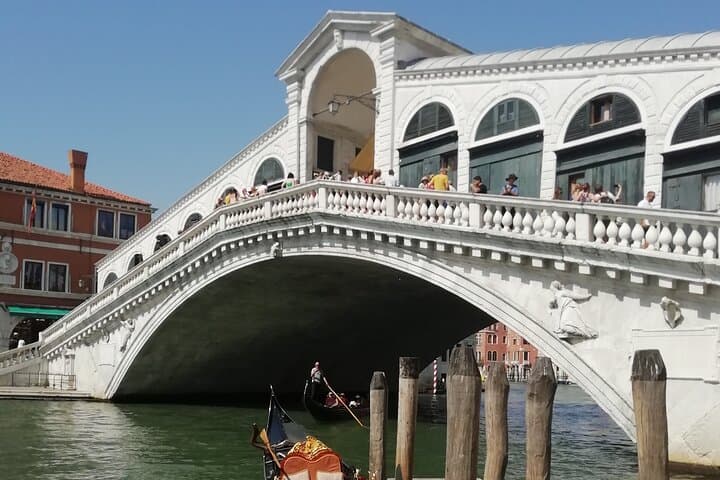
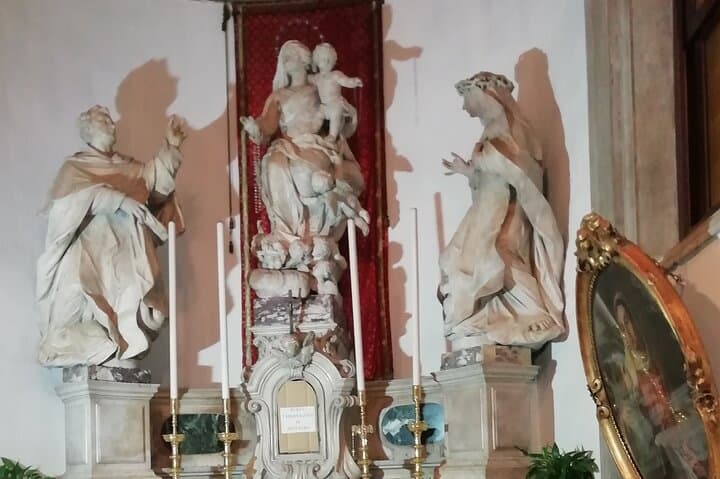
Art and ritual live cheek by jowl here. In the Marian Sanctuary of San Giovanni Crisostomo the altarpieces hold the light like secrets; in a small campo you may hear a cello—an instrument with Venetian origins—responding to a passerby. The guide peels back civic history: how trading wealth built churches, how guilds and families negotiated power, and why a bridge’s legend claims infernal help as a medieval PR campaign.
Practical cadence matters. Expect cobbles, short stairways, and narrow alleys—not hiking, but steady walking on uneven surfaces. Bring footwear that grips, and keep a reusable water bottle on hand; Venice’s shade is patchy, the sun can bake stone in summer, and sudden showers are part of the day’s personality.
Timing changes everything. Early morning means light slanting through colonnades and fewer tour groups; late afternoon brings warmer tones and the thrum of vaporettos across the lagoon. Ask the guide about the access fee for day-trippers from the mainland and about how conservation efforts limit pressure on fragile interiors. This private tour promises small discoveries: the house where Marco Polo grew up, a bell-ringing church with unexpected masters, a field that once decided wars, and finally St. Mark’s plaza—where the city offers its grandest view and its most complicated history.
Leave room for surprise. Venice is a living archive whose best pages show up when you slow down, listen to stone, and let the canals dare you to follow.
easy.
2 hours.
Light walking ability with the ability to stand and ascend short stairways; suitable for most fitness levels
The private tour lasts about two hours and begins at Campo San Bartolomeo by the Carlo Goldoni monument.
Yes; the itinerary lists admission included for several churches and the Marco Polo house, as noted in the tour details.
Infants and small children can ride in a stroller on most streets, but expect short staircases and narrow passages; infants must sit on laps in some interiors.
Day visitors from outside Venice may be subject to a local access fee (around €5 on certain dates); check local guidelines for exemptions and dates.
This is a private tour, so guides typically adjust emphasis—art, history, or legends—if you request it in advance.
Language availability varies; check the booking page for offered languages or request your preference during booking.
Venice grew from salt marshes into a mercantile republic; women in Venice had notable civic roles by the year 1000 AD, including participation in some public decisions.
Venice faces overtourism and fragile building fabric; minimize impact by staying on paths, using refillable bottles, and supporting restoration fees when applicable.
Venezia e' Guida con Alessandro operates guided outdoor trips and adventures with an emphasis on safety, stewardship, and memorable experiences.
A bell tinkles over damp stone as you step into Campo San Bartolomeo. The guide waits by the bronze of Carlo Goldoni, voice low enough that the city seems to lean in. Venice moves differently here: the canals nudge you forward, alleys fold into one another, and façades keep their own private stories. In two hours you’ll cross bridges that flirt with rumor, slip into churches that guard lost frescoes, and stand where Marco Polo’s childhood footsteps once echoed.
A bell tinkles over damp stone as you step into Campo San Bartolomeo. The guide waits by the bronze of Carlo Goldoni, voice low enough that the city seems to lean in. Venice moves differently here: the canals nudge you forward, alleys fold into one another, and façades keep their own private stories. In two hours you’ll cross bridges that flirt with rumor, slip into churches that guard lost frescoes, and stand where Marco Polo’s childhood footsteps once echoed.
The route stitches together Venice’s layered past. Built on lagoon silt and timber piles, the city’s architecture is a negotiation with water—Romanesque arches giving way to Gothic lace and Renaissance proportion. You’ll enter a church financed by the Polo family and see Giovanni Bellini’s brushwork warm a gold sacristy; you’ll visit the modest home where a boy bound for Katai learned that maps could become myths. Between facts come the city’s stranger histories: witch tales, libertine courts, and the voting rights of Venetian women around 1000 AD — small, stubborn revolutions that shaped civic life.
Art and ritual live cheek by jowl here. In the Marian Sanctuary of San Giovanni Crisostomo the altarpieces hold the light like secrets; in a small campo you may hear a cello—an instrument with Venetian origins—responding to a passerby. The guide peels back civic history: how trading wealth built churches, how guilds and families negotiated power, and why a bridge’s legend claims infernal help as a medieval PR campaign.
Practical cadence matters. Expect cobbles, short stairways, and narrow alleys—not hiking, but steady walking on uneven surfaces. Bring footwear that grips, and keep a reusable water bottle on hand; Venice’s shade is patchy, the sun can bake stone in summer, and sudden showers are part of the day’s personality.
Timing changes everything. Early morning means light slanting through colonnades and fewer tour groups; late afternoon brings warmer tones and the thrum of vaporettos across the lagoon. Ask the guide about the access fee for day-trippers from the mainland and about how conservation efforts limit pressure on fragile interiors. This private tour promises small discoveries: the house where Marco Polo grew up, a bell-ringing church with unexpected masters, a field that once decided wars, and finally St. Mark’s plaza—where the city offers its grandest view and its most complicated history.
Leave room for surprise. Venice is a living archive whose best pages show up when you slow down, listen to stone, and let the canals dare you to follow.