THE ADVENTURE COLLECTIVE® · Independent discovery and booking for outdoor travel

Trace the lives of Vivaldi, Marco Polo and Giacomo Casanova across Venice’s narrow streets on a private 2.5-hour walking tour. Hear music, maritime stories and scandal while a local guide leads you through churches, markets and hidden corners.
Trace the lives of Vivaldi, Marco Polo and Giacomo Casanova across Venice’s narrow streets on a private 2.5-hour walking tour. Hear music, maritime stories and scandal while a local guide leads you through churches, markets and hidden corners.
You meet your guide fifteen minutes before the bell of the Church of the Pietà finishes tolling, the Riva degli Schiavoni damp with morning light and the lagoon breathing cold air across the quay. The guide lifts a small sign with your name; behind them the city begins to move—boats slicing reflections, shopkeepers rolling shutters, a few early commuters threading narrow calli. For the next two and a half hours Venice becomes a pocketed biography: music in one sestiere, adventure in another, and scandal folded into the plazas of San Marco.
Verified experiences and guided adventures in the surrounding area.
Operated by Venice Events srl · Venice, Veneto
You meet your guide fifteen minutes before the bell of the Church of the Pietà finishes tolling, the Riva degli Schiavoni damp with morning light and the lagoon breathing cold air across the quay. The guide lifts a small sign with your name; behind them the city begins to move—boats slicing reflections, shopkeepers rolling shutters, a few early commuters threading narrow calli. For the next two and a half hours Venice becomes a pocketed biography: music in one sestiere, adventure in another, and scandal folded into the plazas of San Marco.
Start at the Pietà, where Antonio Vivaldi taught, composed and shaped the sound of the Baroque. The guide points out the auditorium-like nave, frescoes by Tiepolo and an altar that still hums with the faint afterimage of music. From there you walk through the Castello district past the ruota degli esposti—an eerie revolving hatch once used by the orphanage—and into Cannaregio where the Polo family house marks Marco Polo’s origin story. On narrow streets that have not changed much since the 13th century, you’ll hear how a Venetian boy crossed oceans and returned with a book that supplied Europe its first detailed portrait of Asia.
The route threads over dozens of bridges, across markets and past small theatres where a young Giacomo Casanova learned the arts of seduction and showmanship. In San Marco the guide stops at the theatrical spaces and gambling salons that fueled his legend; you’ll see the Ridotto’s former entrance and imagine the hush of candlelight and dice.
Geology and urban engineering are part of the tale here: Venice stands on subsiding lagoon mud and timber piles, which shapes every story of preservation, flooding and repair. That physical fragility underpins local culture—residents and guides alike are stewards of centuries-old wood, stone and song.
Practicalities are clear and simple. The tour is private and paced for easy walkers—expect roughly 2–3 kilometers of walking with intermittent stops totaling 150 minutes. Wear sturdy, flexible shoes (the city’s stone flagstones and bridge steps are unforgiving), bring a refillable water bottle, and plan for weather: sudden rain and acqua alta (high water) can change routes. The tour runs in English and other major languages on request; confirm the day before and arrive at the Pietà 15 minutes early. Public transport options (vaporetto lines) bring you close to Riva degli Schiavoni, and the tour finishes near Campo Santo Stefano in the San Marco area—convenient for cafés, museums, or another stroll through piazzas.
This walk is a compact cross-section of Venice’s cultural atlas—music, maritime trade, and libertine mischief—delivered by a local who knows which calle hold secrets, and when to let you pause and listen to the city itself.
easy.
2–3 hours.
Suitable for most fitness levels; requires walking on uneven stone and climbing many short bridge steps.
The private tour lasts about 2.5 hours and covers approximately 2–3 kilometers with frequent stops—expect steady walking punctuated by seated or standing explanations.
No—this tour visits exteriors and public interiors where available; any paid admissions (special church rooms or museums) are arranged and paid for separately if desired.
Guides commonly offer English and Italian; German and French are available on request—confirm language when booking or via the operator’s reconfirmation email the day before.
Venice has many bridges and steps; the route is not fully accessible for wheelchairs or standard strollers—contact the operator for adapted routes and assistance options.
The guide will reroute away from flooded low-lying calli; bring waterproof footwear and a light raincoat during autumn and winter when acqua alta is more common.
Yes—the tour is family-friendly and suitable for older children who can walk for the duration; mention ages when booking so the guide can adjust pace and stories.
Venice rose as a maritime republic built on lagoon islands; Vivaldi worked at the Ospedale della Pietà, Marco Polo left from Venetian merchant routes, and Casanova moved through the city’s theaters and gambling houses during the 18th century.
Rising tides and tourist wear threaten Venice’s fabric; small-group private tours help reduce pressure while supporting local guides and cultural preservation.
Venice Events srl operates guided outdoor trips and adventures with an emphasis on safety, stewardship, and memorable experiences.

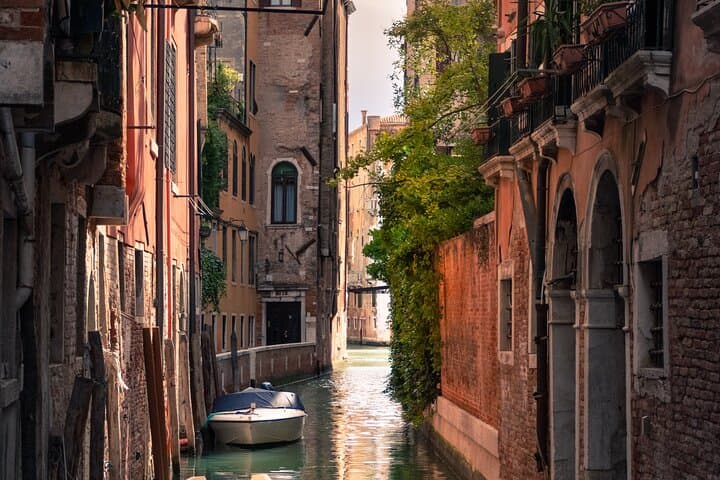
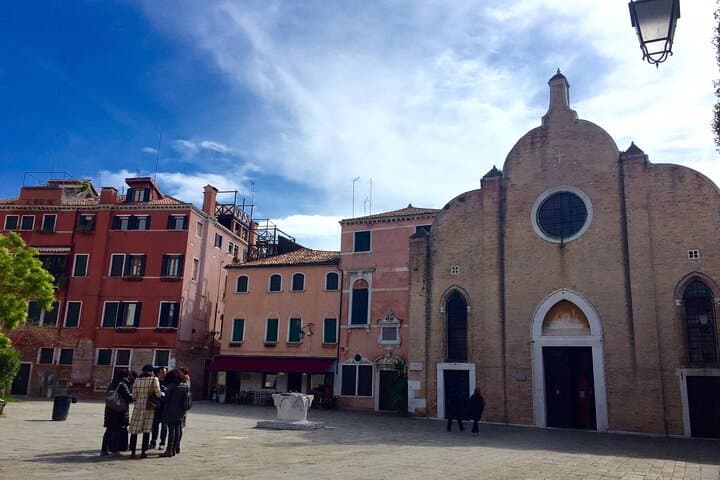

You meet your guide fifteen minutes before the bell of the Church of the Pietà finishes tolling, the Riva degli Schiavoni damp with morning light and the lagoon breathing cold air across the quay. The guide lifts a small sign with your name; behind them the city begins to move—boats slicing reflections, shopkeepers rolling shutters, a few early commuters threading narrow calli. For the next two and a half hours Venice becomes a pocketed biography: music in one sestiere, adventure in another, and scandal folded into the plazas of San Marco.
You meet your guide fifteen minutes before the bell of the Church of the Pietà finishes tolling, the Riva degli Schiavoni damp with morning light and the lagoon breathing cold air across the quay. The guide lifts a small sign with your name; behind them the city begins to move—boats slicing reflections, shopkeepers rolling shutters, a few early commuters threading narrow calli. For the next two and a half hours Venice becomes a pocketed biography: music in one sestiere, adventure in another, and scandal folded into the plazas of San Marco.
Start at the Pietà, where Antonio Vivaldi taught, composed and shaped the sound of the Baroque. The guide points out the auditorium-like nave, frescoes by Tiepolo and an altar that still hums with the faint afterimage of music. From there you walk through the Castello district past the ruota degli esposti—an eerie revolving hatch once used by the orphanage—and into Cannaregio where the Polo family house marks Marco Polo’s origin story. On narrow streets that have not changed much since the 13th century, you’ll hear how a Venetian boy crossed oceans and returned with a book that supplied Europe its first detailed portrait of Asia.
The route threads over dozens of bridges, across markets and past small theatres where a young Giacomo Casanova learned the arts of seduction and showmanship. In San Marco the guide stops at the theatrical spaces and gambling salons that fueled his legend; you’ll see the Ridotto’s former entrance and imagine the hush of candlelight and dice.
Geology and urban engineering are part of the tale here: Venice stands on subsiding lagoon mud and timber piles, which shapes every story of preservation, flooding and repair. That physical fragility underpins local culture—residents and guides alike are stewards of centuries-old wood, stone and song.
Practicalities are clear and simple. The tour is private and paced for easy walkers—expect roughly 2–3 kilometers of walking with intermittent stops totaling 150 minutes. Wear sturdy, flexible shoes (the city’s stone flagstones and bridge steps are unforgiving), bring a refillable water bottle, and plan for weather: sudden rain and acqua alta (high water) can change routes. The tour runs in English and other major languages on request; confirm the day before and arrive at the Pietà 15 minutes early. Public transport options (vaporetto lines) bring you close to Riva degli Schiavoni, and the tour finishes near Campo Santo Stefano in the San Marco area—convenient for cafés, museums, or another stroll through piazzas.
This walk is a compact cross-section of Venice’s cultural atlas—music, maritime trade, and libertine mischief—delivered by a local who knows which calle hold secrets, and when to let you pause and listen to the city itself.