THE ADVENTURE COLLECTIVE® · Independent discovery and booking for outdoor travel

Start your time in Venice with a two‑hour private introduction that explains the lagoon, Acqua Alta, and the city’s survival strategies. A licensed local guide makes complex tides and history easy to understand while pointing you to the best local routes and practical tips.
Start your time in Venice with a two‑hour private introduction that explains the lagoon, Acqua Alta, and the city’s survival strategies. A licensed local guide makes complex tides and history easy to understand while pointing you to the best local routes and practical tips.
You step off a vaporetto into a city that still runs on water: stone alleys damp with the scent of salt, wooden poles creaking at the edge of the canal, and gulls tracing the skyline above narrow bridges. In two hours a local, licensed guide will lead a compact loop that makes Venice legible — its urban grid, its relationship with the Adriatic, and the human choices that have shaped the lagoon.
Verified experiences and guided adventures in the surrounding area.
Operated by deTourist Venice Valerio Coppo · Venice, Veneto
You step off a vaporetto into a city that still runs on water: stone alleys damp with the scent of salt, wooden poles creaking at the edge of the canal, and gulls tracing the skyline above narrow bridges. In two hours a local, licensed guide will lead a compact loop that makes Venice legible — its urban grid, its relationship with the Adriatic, and the human choices that have shaped the lagoon.
The story of Venice is engineering: rivers diverted, islands joined, and layered defenses built by the Republic to exploit the lagoon’s protection and maritime reach. Geology and tides play the other role — three inlets connect the lagoon to the sea and the rhythm of astronomical tides, winds, and pressure determine when water presses into the city. Guides on this tour explain why 80 cm usually leaves streets passable, why 140 cm becomes disruptive, and how events like the 1966 “acqua granda” and the more recent 2019 floods changed infrastructure and public life.
Culturally, the walk touches on how Venetians adapt daily routines to tide forecasts, and how tourism and conservation debates shape access today. You’ll hear about mitigation efforts — including barrier projects and local planning — without technical overload.
Practical side: this is an easy, flat, wheelchair‑accessible private walk that starts at your hotel or nearby meeting point. Wear comfortable shoes, carry a lightweight rain layer during shoulder seasons, and check tide forecasts if you’re visiting in autumn or winter. Expect an informative, paced introduction that leaves you confident to explore further on your own.
easy.
2 hours.
Suitable for all fitness levels; involves up to two hours of mostly flat walking and some standing.
Yes. The tour notes wheelchair accessibility for routes used; contact the operator in advance to confirm specific meeting points and any itinerary adjustments.
Yes. The interpretive guide explains tidal mechanics, historic floods like 1966, recent events, and mitigation efforts in a non‑technical way.
Possibly. On some dates, visitors staying outside Venice may be charged a municipal access fee (around €5); check local rules and exemptions before travel.
This private tour offers flexible pickup—guides can meet you at your hotel or a nearby agreed point and typically end in a central area allowing you to continue exploring independently.
Venice grew from island settlements that harnessed lagoon conditions for defense and trade; the Republic engineered rivers and barriers to preserve navigable waterways and salt marshes.
Rising tides and tourism pressure have driven investments in flood barriers and stricter visitor management; follow local guidance, avoid throwing waste in canals, and stick to marked walkways.
deTourist Venice Valerio Coppo operates guided outdoor trips and adventures with an emphasis on safety, stewardship, and memorable experiences.
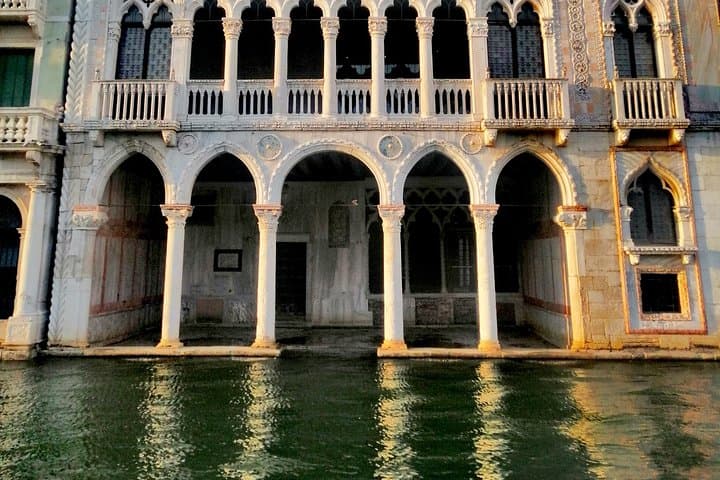


You step off a vaporetto into a city that still runs on water: stone alleys damp with the scent of salt, wooden poles creaking at the edge of the canal, and gulls tracing the skyline above narrow bridges. In two hours a local, licensed guide will lead a compact loop that makes Venice legible — its urban grid, its relationship with the Adriatic, and the human choices that have shaped the lagoon.
You step off a vaporetto into a city that still runs on water: stone alleys damp with the scent of salt, wooden poles creaking at the edge of the canal, and gulls tracing the skyline above narrow bridges. In two hours a local, licensed guide will lead a compact loop that makes Venice legible — its urban grid, its relationship with the Adriatic, and the human choices that have shaped the lagoon.
The story of Venice is engineering: rivers diverted, islands joined, and layered defenses built by the Republic to exploit the lagoon’s protection and maritime reach. Geology and tides play the other role — three inlets connect the lagoon to the sea and the rhythm of astronomical tides, winds, and pressure determine when water presses into the city. Guides on this tour explain why 80 cm usually leaves streets passable, why 140 cm becomes disruptive, and how events like the 1966 “acqua granda” and the more recent 2019 floods changed infrastructure and public life.
Culturally, the walk touches on how Venetians adapt daily routines to tide forecasts, and how tourism and conservation debates shape access today. You’ll hear about mitigation efforts — including barrier projects and local planning — without technical overload.
Practical side: this is an easy, flat, wheelchair‑accessible private walk that starts at your hotel or nearby meeting point. Wear comfortable shoes, carry a lightweight rain layer during shoulder seasons, and check tide forecasts if you’re visiting in autumn or winter. Expect an informative, paced introduction that leaves you confident to explore further on your own.