THE ADVENTURE COLLECTIVE® · Independent discovery and booking for outdoor travel

Board a panoramic boat from St. Mark’s and spend six hours crossing the Venetian Lagoon to discover Murano’s glassblowers, Burano’s painted alleys and—optionally—Torcello’s ancient basilica mosaics. This tour blends short on-foot exploration with scenic boat time and multilingual commentary.
Board a panoramic boat from St. Mark’s and spend six hours crossing the Venetian Lagoon to discover Murano’s glassblowers, Burano’s painted alleys and—optionally—Torcello’s ancient basilica mosaics. This tour blends short on-foot exploration with scenic boat time and multilingual commentary.
A salt-bright breeze lifts off the lagoon as your boat eases away from Riva degli Schiavoni, the domes of St. Mark’s receding into a frame of water and sky. The motor’s low thrum becomes the soundtrack for a six‑hour circuit through the northern Venetian Lagoon, where glass smoke, lace threads and Byzantine mosaics mark islands that shaped Venice itself.
Verified experiences and guided adventures in the surrounding area.
Operated by Venice Events srl · Venice, Veneto
A salt-bright breeze lifts off the lagoon as your boat eases away from Riva degli Schiavoni, the domes of St. Mark’s receding into a frame of water and sky. The motor’s low thrum becomes the soundtrack for a six‑hour circuit through the northern Venetian Lagoon, where glass smoke, lace threads and Byzantine mosaics mark islands that shaped Venice itself.
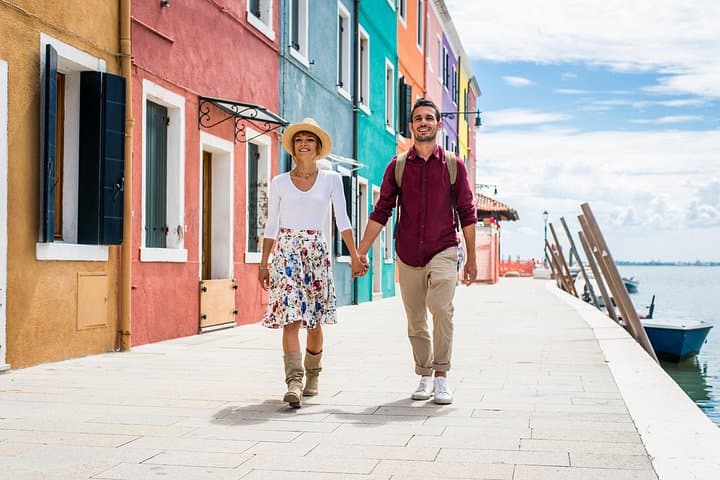
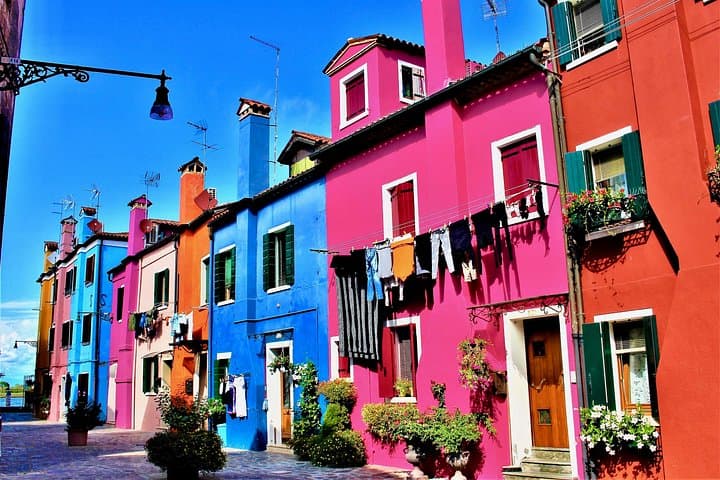
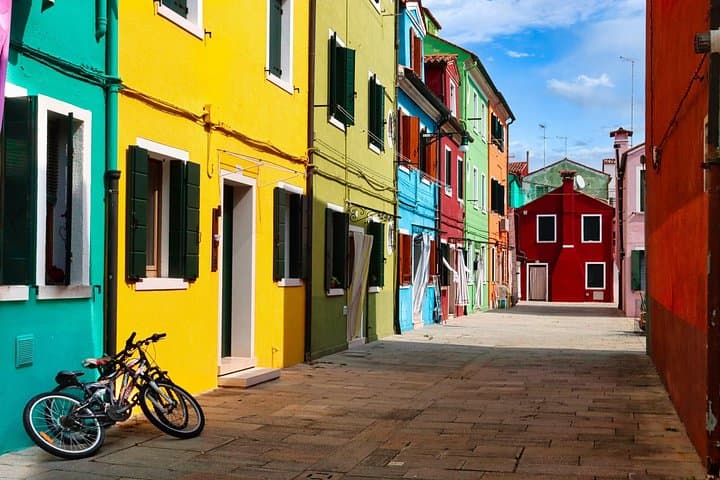
Murano’s kilns once smoked to protect Venetian workshops; today glassblowers still shape molten bubbles into filigree and goblets, a craft moved there in the 13th century by decree. Burano, a few miles farther, is a riot of painted façades and narrow canals where lace-making kept households fed for generations. Torcello, when included, feels like a pause in time—the basilica’s mosaics and bare earth recall the lagoon’s paleo-geology, a place of reclaimed silt, salt marsh and slow-changing tides that forced Venetians to adapt their architecture and lives.
Expect short walks on cobbles, several boat hops, and guided commentary in multiple languages between islands. The landscape is low and exposed—sun and wind are constant players—while gulls and herons stake claim to every jetty.
Practical edge: check in 30 minutes early at the Serenissima Boat yellow desk by the Ponte della Paglia, bring comfortable shoes for uneven surfaces, a lightweight waterproof layer, and small cash for local purchases. Note there may be a municipal access fee for day visitors and that free time on Burano is yours to explore. Plan travel back to Venice with tide and vaporetto schedules in mind to avoid a rushed return.
easy.
6 hours.
Light walking on uneven cobbles and short stair climbs at docks; suitable for most fitness levels
Torcello is optional—confirm when booking; if selected, you’ll have time to visit the Basilica and museum or wander the island.
Yes—this tour includes a guided visit to a glass factory where an artisan demonstrates glassblowing and explains the process.
The operator lists wheelchair accessibility, but boarding boats and moving around narrow docks may require assistance—notify the operator of specific needs ahead of time.
Meals are not included; you’ll have free time on Burano (and Torcello if chosen) to buy food at cafés and trattorie.
Murano was designated for glassmaking in the 13th century to isolate furnaces from Venice; Torcello predates Venice as an early lagoon settlement with Byzantine influence.
The Venetian Lagoon is sensitive—stick to marked piers, avoid feeding birds, and consider offsetting travel impacts; be aware of occasional municipal access fees intended to manage visitor numbers.
Venice Events srl operates guided outdoor trips and adventures with an emphasis on safety, stewardship, and memorable experiences.

A salt-bright breeze lifts off the lagoon as your boat eases away from Riva degli Schiavoni, the domes of St. Mark’s receding into a frame of water and sky. The motor’s low thrum becomes the soundtrack for a six‑hour circuit through the northern Venetian Lagoon, where glass smoke, lace threads and Byzantine mosaics mark islands that shaped Venice itself.
A salt-bright breeze lifts off the lagoon as your boat eases away from Riva degli Schiavoni, the domes of St. Mark’s receding into a frame of water and sky. The motor’s low thrum becomes the soundtrack for a six‑hour circuit through the northern Venetian Lagoon, where glass smoke, lace threads and Byzantine mosaics mark islands that shaped Venice itself.
Murano’s kilns once smoked to protect Venetian workshops; today glassblowers still shape molten bubbles into filigree and goblets, a craft moved there in the 13th century by decree. Burano, a few miles farther, is a riot of painted façades and narrow canals where lace-making kept households fed for generations. Torcello, when included, feels like a pause in time—the basilica’s mosaics and bare earth recall the lagoon’s paleo-geology, a place of reclaimed silt, salt marsh and slow-changing tides that forced Venetians to adapt their architecture and lives.
Expect short walks on cobbles, several boat hops, and guided commentary in multiple languages between islands. The landscape is low and exposed—sun and wind are constant players—while gulls and herons stake claim to every jetty.
Practical edge: check in 30 minutes early at the Serenissima Boat yellow desk by the Ponte della Paglia, bring comfortable shoes for uneven surfaces, a lightweight waterproof layer, and small cash for local purchases. Note there may be a municipal access fee for day visitors and that free time on Burano is yours to explore. Plan travel back to Venice with tide and vaporetto schedules in mind to avoid a rushed return.