THE ADVENTURE COLLECTIVE® · Independent discovery and booking for outdoor travel

Walk Vauban’s old fortifications and solve locked‑box puzzles across Freiburg’s castle hill. This three‑hour outdoor escape blends hands‑on history with active urban exploration — no app, just clues, stone walls and teamwork.
Walk Vauban’s old fortifications and solve locked‑box puzzles across Freiburg’s castle hill. This three‑hour outdoor escape blends hands‑on history with active urban exploration — no app, just clues, stone walls and teamwork.
A crisp morning light slides over the low stone walls of Freiburg’s castle hill as your group shoulders a heavy canvas backpack of keys, maps and locked boxes. The city smells of damp stone and baking bread; the remains of 17th‑century ramparts run like a quiet spine above cobbled lanes. You follow routes that once framed Vauban’s artillery lines, reading his ledger and testing riddles that force teams to look at walls, alleys and river channels differently.
Verified experiences and guided adventures in the surrounding area.
Operated by Berggeheimnis · Freiburg im Breisgau, Baden-Württemberg
A crisp morning light slides over the low stone walls of Freiburg’s castle hill as your group shoulders a heavy canvas backpack of keys, maps and locked boxes. The city smells of damp stone and baking bread; the remains of 17th‑century ramparts run like a quiet spine above cobbled lanes. You follow routes that once framed Vauban’s artillery lines, reading his ledger and testing riddles that force teams to look at walls, alleys and river channels differently.
This experience layers history and hands‑on problem solving. In 1679 Sébastien Le Prestre de Vauban redesigned Freiburg as a French frontier fortress—remnants of his bastions and glacis still shape the hill and its sightlines. Geologically, the Schlossberg is sandstone and limestone, scoured into exposed faces and terraced gardens; culturally the route threads past market squares, Catholic and Protestant traces, and the local dialect that colors street names.
Expect a physically active urban game: walking on uneven stone, short stair climbs and light scrambling between walls. The puzzles reference period records and require observation, teamwork and patience rather than athletic feats. Bring layered clothing for changing weather and footwear with good grip; the backpack contains all puzzle mechanics, but your timing and route choice determine the flow.
Practical: the tour lasts about three hours, runs in most weather, and suits families, corporate teams and curious travelers with moderate fitness. Plan for public‑transport access, end the route at a café on the Schlossberg or descend into the Münster market to compare what you’ve found with the city’s living history.
moderate.
3 hours.
Moderate — comfortable walking, stairs and short climbs; suitable for most active adults and teens
The activity runs about three hours and covers walking between historic points on the Schlossberg and nearby streets.
Yes — families with older children (10+) who can focus on puzzles and handle stairs will enjoy it; younger children may need extra supervision.
No electronic device is required — the game is analog and the operator supplies the puzzle materials.
The experience runs in light rain; heavy storms may prompt rescheduling—check the operator’s cancellation policy and bring rain protection.
Freiburg was briefly French-occupied in 1679 and Vauban’s fortification plans reshaped the Schlossberg; traces of bastions and defensive earthworks remain visible today.
Tours use existing urban paths with minimal impact; stick to marked routes, avoid climbing on fragile masonry and support local businesses to keep historic districts vibrant.
Berggeheimnis operates guided outdoor trips and adventures with an emphasis on safety, stewardship, and memorable experiences.
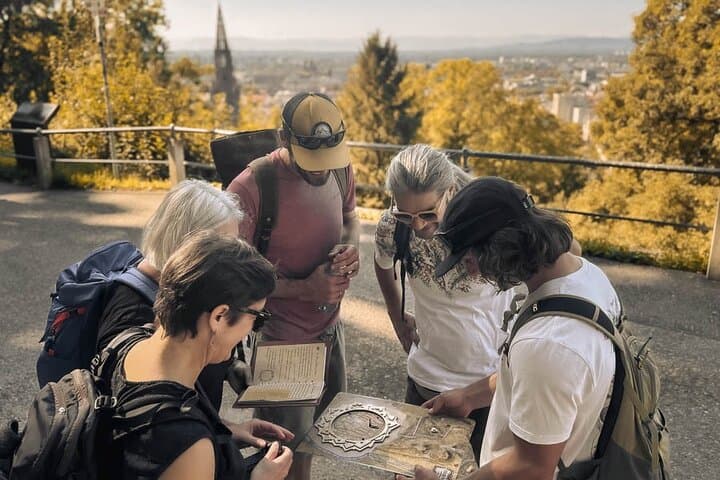
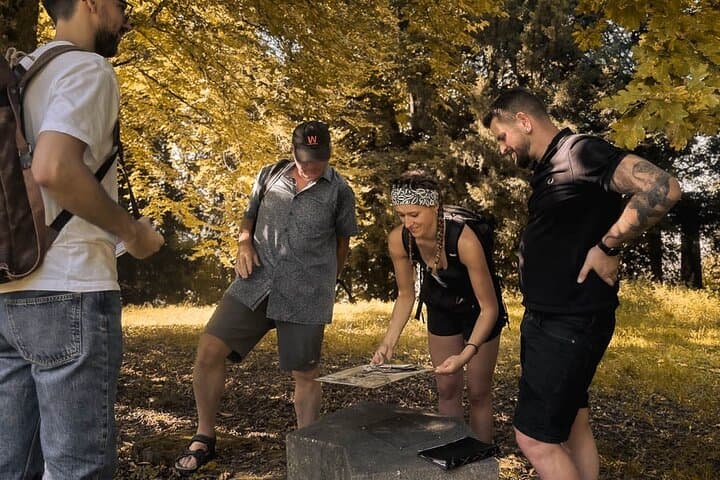
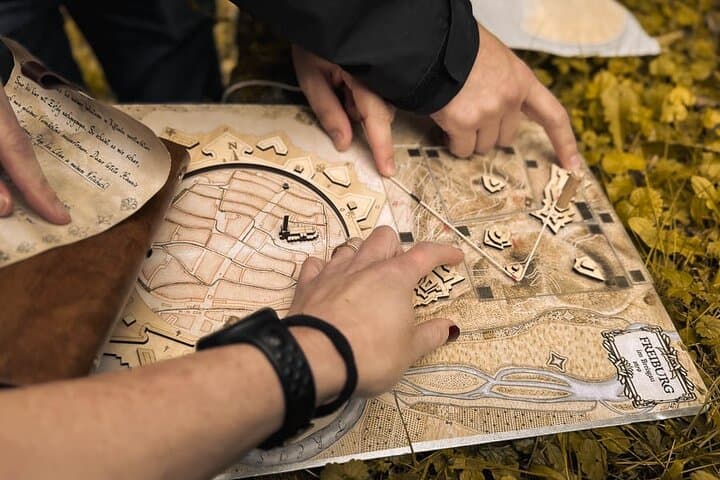
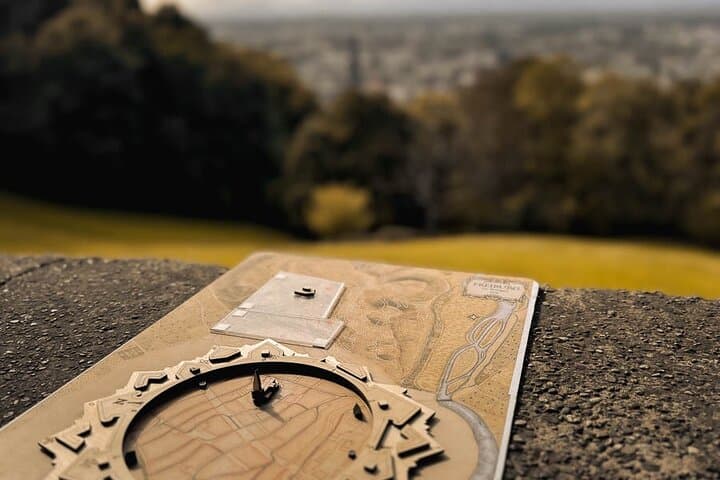
A crisp morning light slides over the low stone walls of Freiburg’s castle hill as your group shoulders a heavy canvas backpack of keys, maps and locked boxes. The city smells of damp stone and baking bread; the remains of 17th‑century ramparts run like a quiet spine above cobbled lanes. You follow routes that once framed Vauban’s artillery lines, reading his ledger and testing riddles that force teams to look at walls, alleys and river channels differently.
A crisp morning light slides over the low stone walls of Freiburg’s castle hill as your group shoulders a heavy canvas backpack of keys, maps and locked boxes. The city smells of damp stone and baking bread; the remains of 17th‑century ramparts run like a quiet spine above cobbled lanes. You follow routes that once framed Vauban’s artillery lines, reading his ledger and testing riddles that force teams to look at walls, alleys and river channels differently.
This experience layers history and hands‑on problem solving. In 1679 Sébastien Le Prestre de Vauban redesigned Freiburg as a French frontier fortress—remnants of his bastions and glacis still shape the hill and its sightlines. Geologically, the Schlossberg is sandstone and limestone, scoured into exposed faces and terraced gardens; culturally the route threads past market squares, Catholic and Protestant traces, and the local dialect that colors street names.
Expect a physically active urban game: walking on uneven stone, short stair climbs and light scrambling between walls. The puzzles reference period records and require observation, teamwork and patience rather than athletic feats. Bring layered clothing for changing weather and footwear with good grip; the backpack contains all puzzle mechanics, but your timing and route choice determine the flow.
Practical: the tour lasts about three hours, runs in most weather, and suits families, corporate teams and curious travelers with moderate fitness. Plan for public‑transport access, end the route at a café on the Schlossberg or descend into the Münster market to compare what you’ve found with the city’s living history.