THE ADVENTURE COLLECTIVE® · Independent discovery and booking for outdoor travel

Walk across Breiðamerkurjökull with a local guide from Hali and experience the raw mechanics of Vatnajökull up close. This half-day tour blends super-jeep access, guided crampon time and ice-safety instruction—ideal for families and first-time glacier walkers.
Walk across Breiðamerkurjökull with a local guide from Hali and experience the raw mechanics of Vatnajökull up close. This half-day tour blends super-jeep access, guided crampon time and ice-safety instruction—ideal for families and first-time glacier walkers.
You step out of the super jeep onto a white expanse that seems to breathe. Wind scours the surface in parallel ridges; every inhale tastes clean and metallic. The guide tightens crampons, clicks an ice axe into place and points to a ribbon of blue where meltwater has hollowed the glacier into a small cave. For the next hour you walk across Breiðamerkurjökull, an outlet tongue of Vatnajökull, learning to read the ice as the guide explains where the glacier has pushed, cracked and reformed.
Verified experiences and guided adventures in the surrounding area.
Operated by Glacier Adventure · Höfn, Austurland
You step out of the super jeep onto a white expanse that seems to breathe. Wind scours the surface in parallel ridges; every inhale tastes clean and metallic. The guide tightens crampons, clicks an ice axe into place and points to a ribbon of blue where meltwater has hollowed the glacier into a small cave. For the next hour you walk across Breiðamerkurjökull, an outlet tongue of Vatnajökull, learning to read the ice as the guide explains where the glacier has pushed, cracked and reformed.
Vatnajökull is the largest ice cap in Europe and its outlets like Breiðamerkurjökull have carved much of southeast Iceland’s coastline. The landscape here is young in geological terms—layers of ash, moraines and sudden crevasses telling a recent, violent history of eruptions, advances and retreats. Local communities around Hali and Höfn grew up balancing fishing and sheep farming against a restless ice; today, guides combine that island knowledge with technical glacier skills.
On the ice, the glacier feels alive: pressure ridges groan, meltwater runs in thin veins that glitter like veins of glass, and the blue tones deepen as you step into compacted ice. The guide directs you around fragile seracs and demonstrates safe rope techniques. Part adventure, part field lesson, the walk makes tangible how glaciers both sculpt and sustain this coast—feeding lagoons where seals haul out and leaving a black sand plain that the Atlantic chisels into dramatic shorelines.
Practical details are straightforward. The half-day tour runs about 3.5–4 hours total with 1–1.5 hours on the glacier; maximum group size is 12. Meeting is at Glacier Adventure base camp in Hali where boots, helmets, crampons, harnesses and ice axes are supplied—boots and rain gear can be rented on site for a small fee. The route is moderated and suitable for most children 10 and older, though it isn’t recommended for pregnant people or those with serious back or heart conditions. Weather can cancel trips; Icelandic conditions change fast, so expect wind, sun, sleet or clear blue air in a single outing.
To get the most from the experience, layer for wind and cold, bring a small daypack for water and snacks, and keep your camera batteries warm—the cold drains power. Listen to the guide’s safety briefing; stepping with purpose and watching for thin ice near moulins keeps the mood exploratory rather than risky. End the afternoon with a short drive to the lagoon or the black-sand outwash to see where the glacier meets the sea—a reminder that this landscape is always in motion.
moderate.
3.5–4 hours.
Moderate fitness; able to hike on uneven icy terrain for up to 1.5 hours and climb short steeps.
Minimum age is 10; children must be accompanied by an adult and able to follow guide instructions.
Yes—helmets, harnesses, crampons and ice axes are provided; hiking boots and rain gear are available to rent for a small fee.
Expect about 1 to 1.5 hours of walking on the glacier within a 3.5–4 hour total tour, including transfers from Hali.
Trips are cancelled for unsafe conditions; guides will reschedule or cancel if wind, visibility or ice conditions are hazardous.
It’s rated moderate: basic mobility and balance are needed, but no prior glacier experience is required; guides teach crampon technique.
Yes—bring a compact camera or phone, but protect batteries from cold and avoid dropping equipment near crevasses.
Vatnajökull’s outlet glaciers have sculpted southeast Iceland since the last glacial advances; communities here have long adapted livelihoods to a landscape shaped by ice and fire.
Glaciers are retreating rapidly; stick to guided routes, avoid taking ice samples and support local operators that follow Leave No Trace and responsible access practices.
Glacier Adventure operates guided outdoor trips and adventures with an emphasis on safety, stewardship, and memorable experiences.
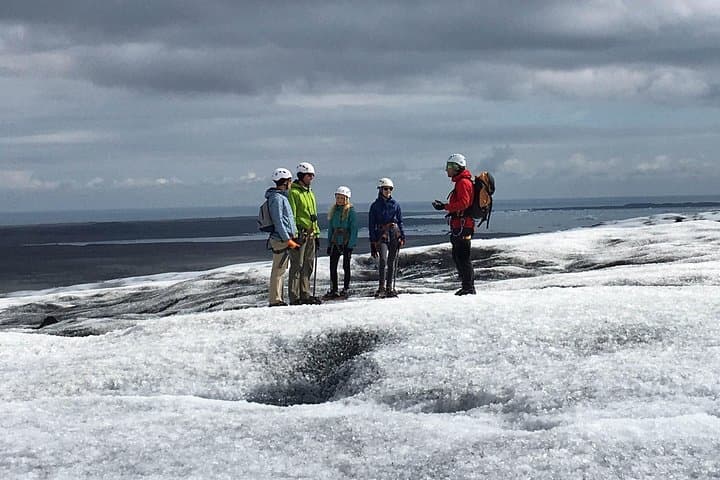
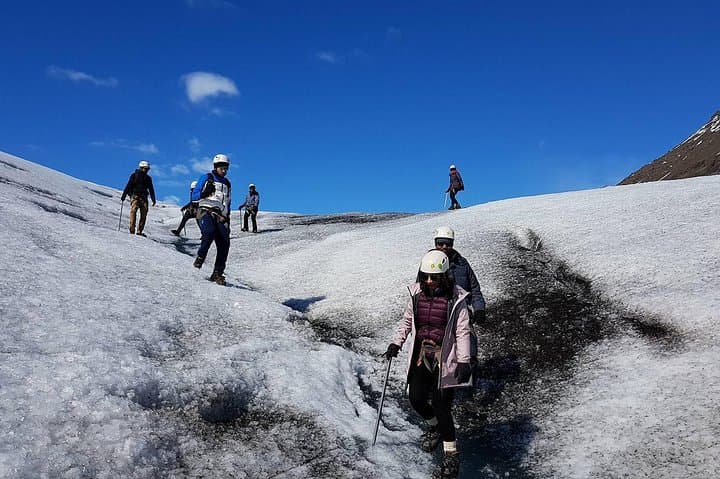
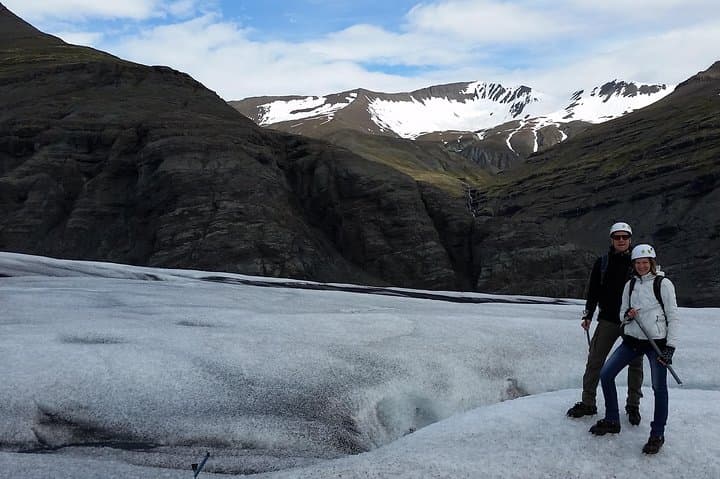
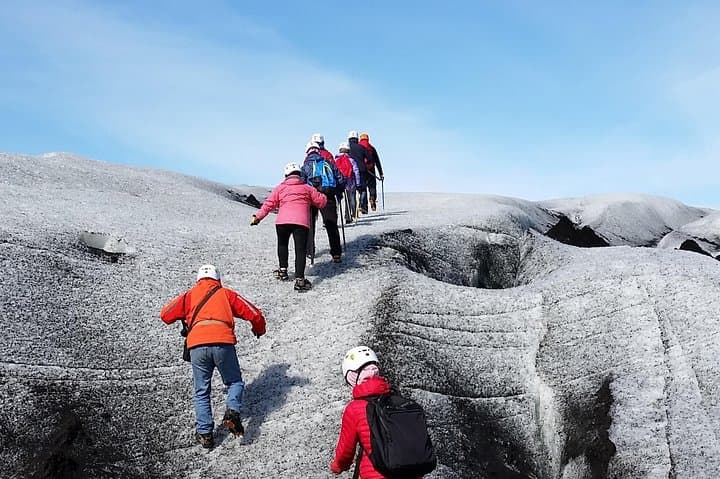
You step out of the super jeep onto a white expanse that seems to breathe. Wind scours the surface in parallel ridges; every inhale tastes clean and metallic. The guide tightens crampons, clicks an ice axe into place and points to a ribbon of blue where meltwater has hollowed the glacier into a small cave. For the next hour you walk across Breiðamerkurjökull, an outlet tongue of Vatnajökull, learning to read the ice as the guide explains where the glacier has pushed, cracked and reformed.
You step out of the super jeep onto a white expanse that seems to breathe. Wind scours the surface in parallel ridges; every inhale tastes clean and metallic. The guide tightens crampons, clicks an ice axe into place and points to a ribbon of blue where meltwater has hollowed the glacier into a small cave. For the next hour you walk across Breiðamerkurjökull, an outlet tongue of Vatnajökull, learning to read the ice as the guide explains where the glacier has pushed, cracked and reformed.
Vatnajökull is the largest ice cap in Europe and its outlets like Breiðamerkurjökull have carved much of southeast Iceland’s coastline. The landscape here is young in geological terms—layers of ash, moraines and sudden crevasses telling a recent, violent history of eruptions, advances and retreats. Local communities around Hali and Höfn grew up balancing fishing and sheep farming against a restless ice; today, guides combine that island knowledge with technical glacier skills.
On the ice, the glacier feels alive: pressure ridges groan, meltwater runs in thin veins that glitter like veins of glass, and the blue tones deepen as you step into compacted ice. The guide directs you around fragile seracs and demonstrates safe rope techniques. Part adventure, part field lesson, the walk makes tangible how glaciers both sculpt and sustain this coast—feeding lagoons where seals haul out and leaving a black sand plain that the Atlantic chisels into dramatic shorelines.
Practical details are straightforward. The half-day tour runs about 3.5–4 hours total with 1–1.5 hours on the glacier; maximum group size is 12. Meeting is at Glacier Adventure base camp in Hali where boots, helmets, crampons, harnesses and ice axes are supplied—boots and rain gear can be rented on site for a small fee. The route is moderated and suitable for most children 10 and older, though it isn’t recommended for pregnant people or those with serious back or heart conditions. Weather can cancel trips; Icelandic conditions change fast, so expect wind, sun, sleet or clear blue air in a single outing.
To get the most from the experience, layer for wind and cold, bring a small daypack for water and snacks, and keep your camera batteries warm—the cold drains power. Listen to the guide’s safety briefing; stepping with purpose and watching for thin ice near moulins keeps the mood exploratory rather than risky. End the afternoon with a short drive to the lagoon or the black-sand outwash to see where the glacier meets the sea—a reminder that this landscape is always in motion.