THE ADVENTURE COLLECTIVE® · Independent discovery and booking for outdoor travel

Stand on Europe’s largest glacier and walk across dramatic blue ice ridges and crevasses on this 5-hour, guide-led Skaftafell hike. Small groups, full safety briefing, and all technical gear provided make this an accessible yet demanding glacier experience.
Stand on Europe’s largest glacier and walk across dramatic blue ice ridges and crevasses on this 5-hour, guide-led Skaftafell hike. Small groups, full safety briefing, and all technical gear provided make this an accessible yet demanding glacier experience.
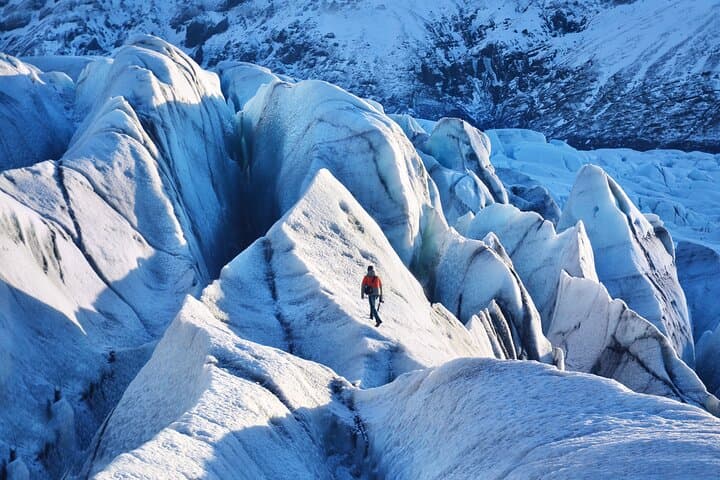
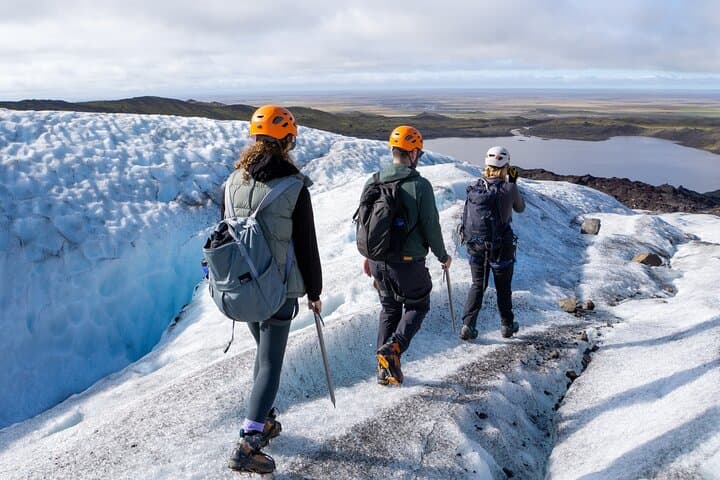
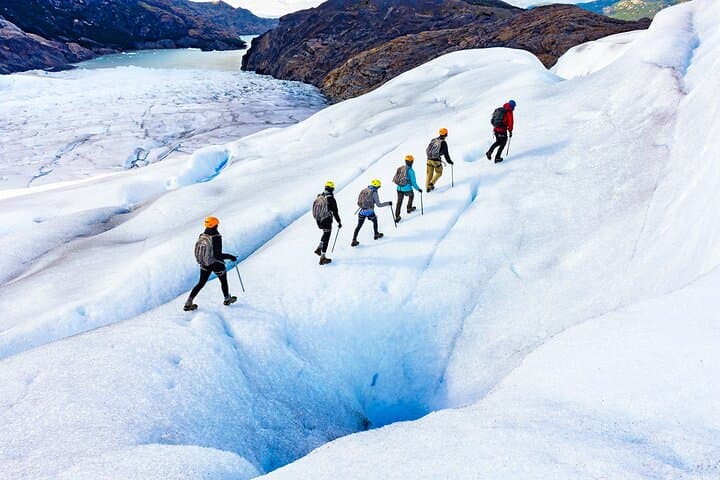
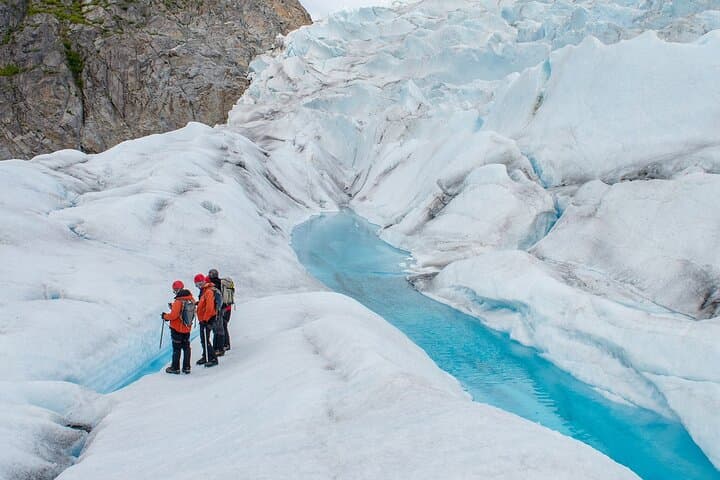
A low, salt-tinged wind pushes across the moraine as the group clips into harnesses; underfoot the glacier settles and sings — a compressed, crystalline murmur that grows as the crampons bite. On this 5-hour Skaftafell glacier hike, the ice is both landscape and companion: bright blue ribs of compressed snow, narrow crevasses yawning like dark doors, and the scabbed white ridges where volcanic ash once mixed with snowfall. The guide checks ropes and voices, and then the line moves, steady and deliberate, across Falljökull’s icefall.
Verified experiences and guided adventures in the surrounding area.
Operated by Guide to Iceland · Skaftafell, South Iceland
A low, salt-tinged wind pushes across the moraine as the group clips into harnesses; underfoot the glacier settles and sings — a compressed, crystalline murmur that grows as the crampons bite. On this 5-hour Skaftafell glacier hike, the ice is both landscape and companion: bright blue ribs of compressed snow, narrow crevasses yawning like dark doors, and the scabbed white ridges where volcanic ash once mixed with snowfall. The guide checks ropes and voices, and then the line moves, steady and deliberate, across Falljökull’s icefall.
Vatnajökull is not only Europe’s largest ice cap but a landscape shaped by a volatile conversation between fire and ice. From the geothermal heat of subglacial volcanoes to the slow, relentless flow of the glacier itself, the region’s geology reads like a field notebook of extremes. Skaftafell, at the glacier’s edge, has long been a waypoint for shepherds and later for scientists mapping retreating ice. Today, small guided groups trace routes that change seasonally as the glacier breathes and shifts.
Culturally, the area folds into Iceland’s sagas — practical stories of survival in a high-latitude world — and into contemporary debates about climate; Falljökull is watched closely by researchers documenting thinning and retreat. Guides on the tour blend practical instruction with these larger narratives, explaining how crevasses form, why the ice flashes blue, and how past eruptions left ash layers permanently recorded in the glacier’s strata.
Practically, the tour is straightforward but demanding: five hours total with roughly 3.5 hours spent moving on the ice. Groups are intentionally small for safety and instruction; certified glacier guides provide crampons, helmets, harnesses, and ice axes and lead a full safety briefing before stepping onto the ice. Walks cross uneven, often slippery terrain — expect steady footing, short roped sections, and occasional use of ice tools for balance.
When planning, prioritize sturdy, waterproof hiking boots that work with crampons, layered clothing for rapidly changing conditions, and eye protection for reflected glare. Hydrate well before the hike; the cold masks exertion. Photography is rewarding but logistically tricky: keep cameras accessible but secure, and follow the guide’s directions near crevasses.
The experience balances spectacle with discipline: it asks for attention, a reasonable level of fitness, and respect for a dynamic environment. For travelers who want to stand on Europe’s largest glacier and learn its language — the cracks, pressures, and colors that tell its recent history — this Skaftafell icefall hike is an invitation to move slowly, look closely, and leave with a clearer sense of a glacier that is as much a record as it is a place to walk.
moderate.
5 hours.
Moderately fit: comfortable walking on uneven, icy terrain for 3–4 hours and able to stand while clipped into ropes.
Expect about 3.5 hours on the ice within a 5-hour total tour including briefing and gearing up.
No — guides teach crampon and ice-axe basics during the safety briefing; reasonable fitness is required.
Guides meet participants at the designated start point near the Skaftafell visitor area; check your booking confirmation for exact instructions.
Age and fitness limits vary by operator; the booking asks for ages and will confirm suitability — expect minimum age requirements for safety reasons.
Tours may be canceled for safety in poor conditions; the operator’s policy allows refunds if canceled at least 24 hours in advance or due to weather.
Yes — crampons, helmets, harnesses, and ice axes are supplied by the guiding company; bring your own boots and layers.
Vatnajökull has been shaped by repeated volcanic eruptions beneath the ice and centuries of climatic shifts; local place names reflect centuries of human travel around these ice margins.
Guided access concentrates foot traffic and reduces impact; follow Leave No Trace principles and respect seasonal research areas tracking glacial retreat.
Guide to Iceland operates guided outdoor trips and adventures with an emphasis on safety, stewardship, and memorable experiences.
A low, salt-tinged wind pushes across the moraine as the group clips into harnesses; underfoot the glacier settles and sings — a compressed, crystalline murmur that grows as the crampons bite. On this 5-hour Skaftafell glacier hike, the ice is both landscape and companion: bright blue ribs of compressed snow, narrow crevasses yawning like dark doors, and the scabbed white ridges where volcanic ash once mixed with snowfall. The guide checks ropes and voices, and then the line moves, steady and deliberate, across Falljökull’s icefall.
A low, salt-tinged wind pushes across the moraine as the group clips into harnesses; underfoot the glacier settles and sings — a compressed, crystalline murmur that grows as the crampons bite. On this 5-hour Skaftafell glacier hike, the ice is both landscape and companion: bright blue ribs of compressed snow, narrow crevasses yawning like dark doors, and the scabbed white ridges where volcanic ash once mixed with snowfall. The guide checks ropes and voices, and then the line moves, steady and deliberate, across Falljökull’s icefall.
Vatnajökull is not only Europe’s largest ice cap but a landscape shaped by a volatile conversation between fire and ice. From the geothermal heat of subglacial volcanoes to the slow, relentless flow of the glacier itself, the region’s geology reads like a field notebook of extremes. Skaftafell, at the glacier’s edge, has long been a waypoint for shepherds and later for scientists mapping retreating ice. Today, small guided groups trace routes that change seasonally as the glacier breathes and shifts.
Culturally, the area folds into Iceland’s sagas — practical stories of survival in a high-latitude world — and into contemporary debates about climate; Falljökull is watched closely by researchers documenting thinning and retreat. Guides on the tour blend practical instruction with these larger narratives, explaining how crevasses form, why the ice flashes blue, and how past eruptions left ash layers permanently recorded in the glacier’s strata.
Practically, the tour is straightforward but demanding: five hours total with roughly 3.5 hours spent moving on the ice. Groups are intentionally small for safety and instruction; certified glacier guides provide crampons, helmets, harnesses, and ice axes and lead a full safety briefing before stepping onto the ice. Walks cross uneven, often slippery terrain — expect steady footing, short roped sections, and occasional use of ice tools for balance.
When planning, prioritize sturdy, waterproof hiking boots that work with crampons, layered clothing for rapidly changing conditions, and eye protection for reflected glare. Hydrate well before the hike; the cold masks exertion. Photography is rewarding but logistically tricky: keep cameras accessible but secure, and follow the guide’s directions near crevasses.
The experience balances spectacle with discipline: it asks for attention, a reasonable level of fitness, and respect for a dynamic environment. For travelers who want to stand on Europe’s largest glacier and learn its language — the cracks, pressures, and colors that tell its recent history — this Skaftafell icefall hike is an invitation to move slowly, look closely, and leave with a clearer sense of a glacier that is as much a record as it is a place to walk.