THE ADVENTURE COLLECTIVE® · Independent discovery and booking for outdoor travel

Leave the crowded glacier edges behind on a full-day Vatnajökull exploration that climbs into steeper, less visited ice. Expect hands-on instruction, exposed blue ice, and in-depth guides who explain the glacier’s geology and changing future.
Leave the crowded glacier edges behind on a full-day Vatnajökull exploration that climbs into steeper, less visited ice. Expect hands-on instruction, exposed blue ice, and in-depth guides who explain the glacier’s geology and changing future.
A cold wind moves across the ice field like a living thing, tugging at hoods and forcing breath into small white clouds. You meet your guide at the black-and-pink Freysnes gas station before dawn, then drive to a car park where a glacier waits: a vast, ribbed surface of blue and white that seems to shift when you blink. The small group of four tightens boots, clips on harnesses and steps onto crampons; the first scrape of metal on ice is a clear, steady note that sets the day's tempo.
Verified experiences and guided adventures in the surrounding area.
Operated by Ice Guardians Iceland · Skaftafell, Suðurland
A cold wind moves across the ice field like a living thing, tugging at hoods and forcing breath into small white clouds. You meet your guide at the black-and-pink Freysnes gas station before dawn, then drive to a car park where a glacier waits: a vast, ribbed surface of blue and white that seems to shift when you blink. The small group of four tightens boots, clips on harnesses and steps onto crampons; the first scrape of metal on ice is a clear, steady note that sets the day's tempo.
Vatnajökull is not a single mountain but a living ice cap—Europe’s largest—feeding dozens of outlet glaciers. This route pushes beyond the crowded fronts of more touristy walks to climb into crevassed shoulders and steeper ice walls where guides fix anchors and cut steps. The guides—often mountaineers who read the ice like a page—talk geology and glaciology as you move: how ash layers from past eruptions mark seasons in the ice, how meltwater carves tunnels underneath, and how the glacier’s snout has retreated in recent decades.
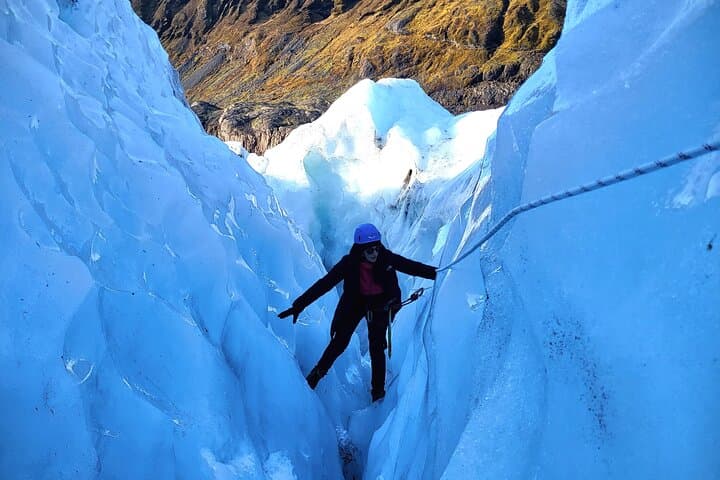
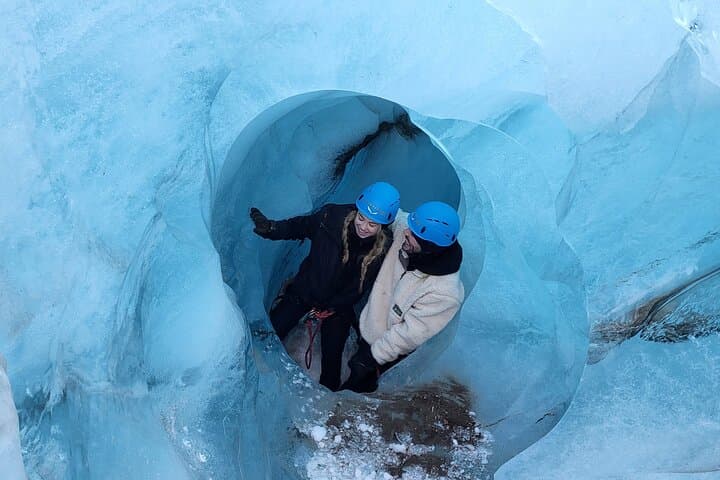
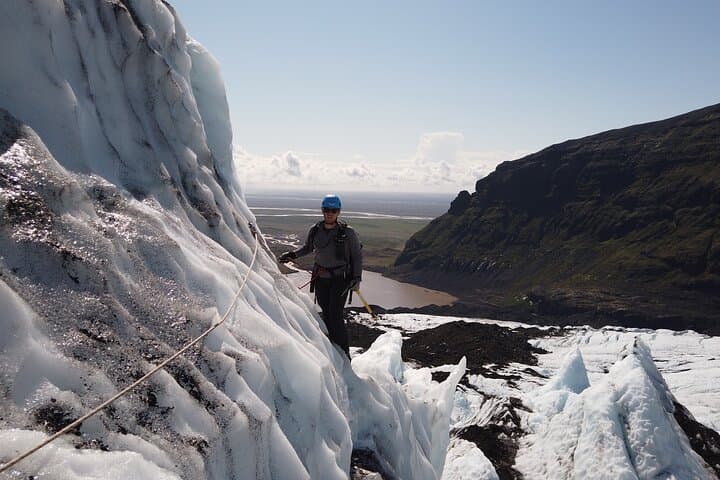
The landscape is raw and elemental. Blue ice holds trapped air that glows underfoot; moulins yawn like throat-holes where meltwater dares to disappear. From higher pitches you look back down a ragged spine of seracs to black sand outwash plains and distant peaks. Cultural detail threads through the day: Icelandic names for features, farmers’ tales of outwash floods, and the modern science projects monitoring ice loss.
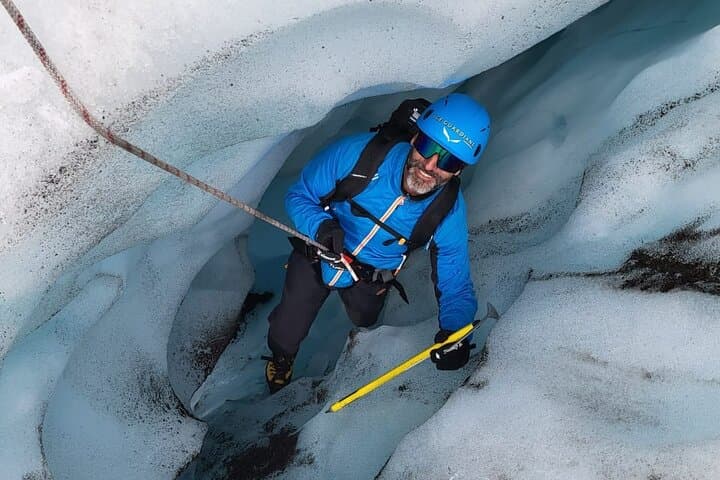
Expect a serious day of movement: roughly 6–10 km of glacier travel with up to 200–400 m of ascent depending on route choice. Terrain changes quickly—firm, hummocked ice to steep, technical pitches—so the company keeps a 4:1 guest-to-guide ratio and provides helmets, harnesses, crampons, ice axes and rope systems.
Practical pointers: arrive at the meeting point with layered, waterproof outerwear and sturdy, ankle-supporting boots. Guides will teach crampon technique and basic ropework, but you should be comfortable on uneven terrain and able to handle sustained physical effort over 8–10 hours. Bring snacks, a camera with spare batteries (cold drains power), and protect your face from wind and reflected sun.
On a full-day exploration you’ll get many photo stops, hands-on instruction, and conversations about the future of Vatnajökull in a warming world—this trip is as much about reading the landscape as it is about walking it. If you want to go where larger groups can’t, and to watch a guide stitch safety into shifting ice, this is a day that rewards curiosity and preparation.
challenging.
8–10 hours.
Be in good aerobic shape and used to long days of walking; you should be comfortable on uneven, icy terrain and able to handle repeated climbs.
This is a full-day, physically demanding glacier hike; participants should have good fitness for 8–10 hours of continuous movement and short steep sections.
No prior glacier experience is required—guides teach crampon and ice-axe techniques and manage rope systems for safety.
Tours operate with a maximum of four guests per guide to access more technical lines and provide hands-on instruction.
You can use facilities at the meeting point (Freysnes gas station) and there will be time for snacks; bring your own lunch and extra water.
Trips may be canceled for safety in bad weather; the operator contacts guests with an updated conditions report 1–2 days before the trip.
Not recommended for those with serious heart, back, or pregnancy concerns; travelers should disclose medical issues during booking.
Vatnajökull has shaped local settlement and folklore for centuries; ash layers within the ice record Iceland’s volcanic history and past climate shifts.
Glacier retreat is visible year-to-year; operators emphasize Leave No Trace practices and participate in local monitoring efforts to minimize impact.
Ice Guardians Iceland operates guided outdoor trips and adventures with an emphasis on safety, stewardship, and memorable experiences.
A cold wind moves across the ice field like a living thing, tugging at hoods and forcing breath into small white clouds. You meet your guide at the black-and-pink Freysnes gas station before dawn, then drive to a car park where a glacier waits: a vast, ribbed surface of blue and white that seems to shift when you blink. The small group of four tightens boots, clips on harnesses and steps onto crampons; the first scrape of metal on ice is a clear, steady note that sets the day's tempo.
A cold wind moves across the ice field like a living thing, tugging at hoods and forcing breath into small white clouds. You meet your guide at the black-and-pink Freysnes gas station before dawn, then drive to a car park where a glacier waits: a vast, ribbed surface of blue and white that seems to shift when you blink. The small group of four tightens boots, clips on harnesses and steps onto crampons; the first scrape of metal on ice is a clear, steady note that sets the day's tempo.
Vatnajökull is not a single mountain but a living ice cap—Europe’s largest—feeding dozens of outlet glaciers. This route pushes beyond the crowded fronts of more touristy walks to climb into crevassed shoulders and steeper ice walls where guides fix anchors and cut steps. The guides—often mountaineers who read the ice like a page—talk geology and glaciology as you move: how ash layers from past eruptions mark seasons in the ice, how meltwater carves tunnels underneath, and how the glacier’s snout has retreated in recent decades.
The landscape is raw and elemental. Blue ice holds trapped air that glows underfoot; moulins yawn like throat-holes where meltwater dares to disappear. From higher pitches you look back down a ragged spine of seracs to black sand outwash plains and distant peaks. Cultural detail threads through the day: Icelandic names for features, farmers’ tales of outwash floods, and the modern science projects monitoring ice loss.
Expect a serious day of movement: roughly 6–10 km of glacier travel with up to 200–400 m of ascent depending on route choice. Terrain changes quickly—firm, hummocked ice to steep, technical pitches—so the company keeps a 4:1 guest-to-guide ratio and provides helmets, harnesses, crampons, ice axes and rope systems.
Practical pointers: arrive at the meeting point with layered, waterproof outerwear and sturdy, ankle-supporting boots. Guides will teach crampon technique and basic ropework, but you should be comfortable on uneven terrain and able to handle sustained physical effort over 8–10 hours. Bring snacks, a camera with spare batteries (cold drains power), and protect your face from wind and reflected sun.
On a full-day exploration you’ll get many photo stops, hands-on instruction, and conversations about the future of Vatnajökull in a warming world—this trip is as much about reading the landscape as it is about walking it. If you want to go where larger groups can’t, and to watch a guide stitch safety into shifting ice, this is a day that rewards curiosity and preparation.