THE ADVENTURE COLLECTIVE® · Independent discovery and booking for outdoor travel

Explore cliff-cut monasteries, a rebuilt medieval fortress, and the mineral springs of Borjomi on a private full-day tour from Tbilisi. This route pairs dramatic geology with layered cultural history and easy walking suited to most travelers.
Explore cliff-cut monasteries, a rebuilt medieval fortress, and the mineral springs of Borjomi on a private full-day tour from Tbilisi. This route pairs dramatic geology with layered cultural history and easy walking suited to most travelers.
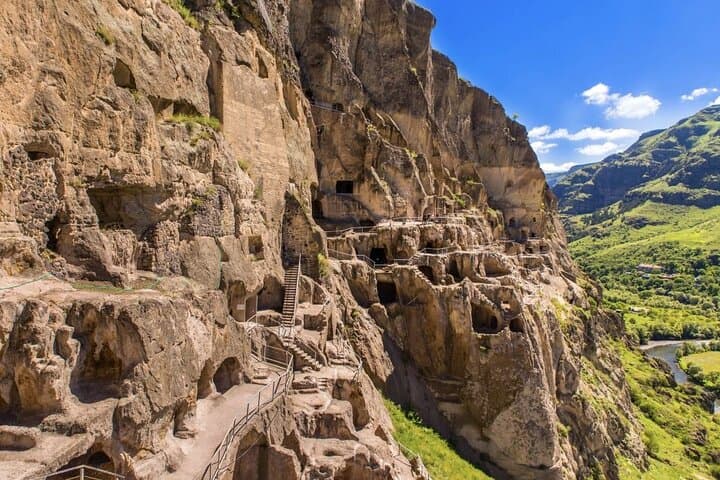
A winding mountain road opens onto a wall of honeycombed rock: dozens of cave openings stare back at the visitor as wind carries the faint scent of pine and mineral springs. On a full-day private tour from Tbilisi, travelers move from this cliff-side cave city to a medieval fortress and then into a valley famed for its effervescent water and parkland—the itinerary stitches together Georgia’s human history and the raw geology that shaped it.
Verified experiences and guided adventures in the surrounding area.
Operated by Imperial Tours · Aspindza, Samtskhe-Javakheti
A winding mountain road opens onto a wall of honeycombed rock: dozens of cave openings stare back at the visitor as wind carries the faint scent of pine and mineral springs. On a full-day private tour from Tbilisi, travelers move from this cliff-side cave city to a medieval fortress and then into a valley famed for its effervescent water and parkland—the itinerary stitches together Georgia’s human history and the raw geology that shaped it.
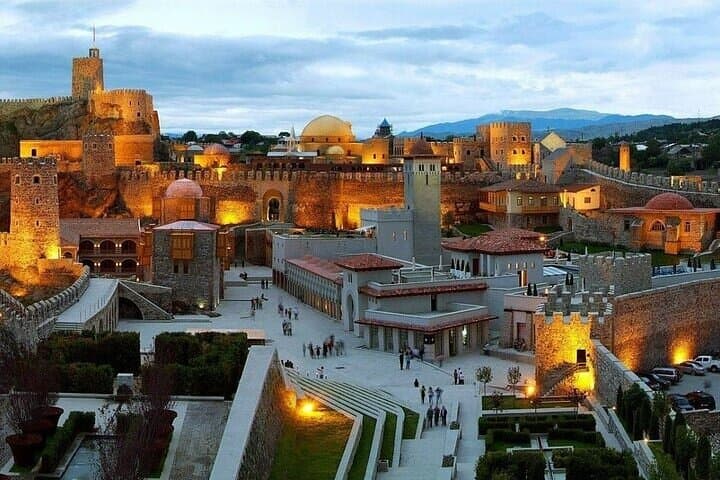
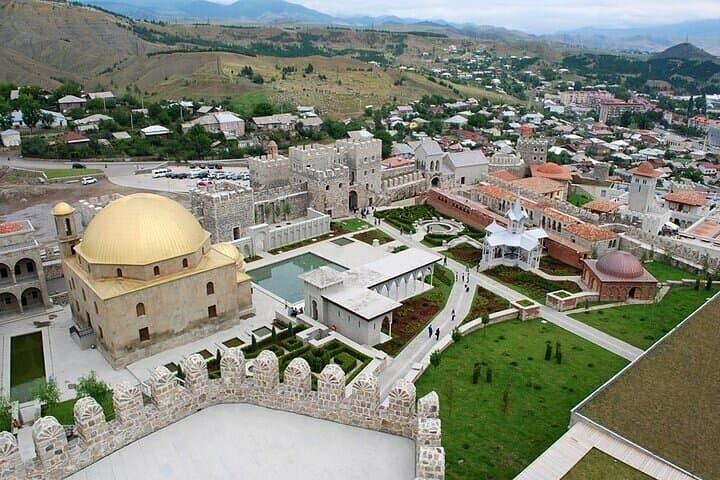
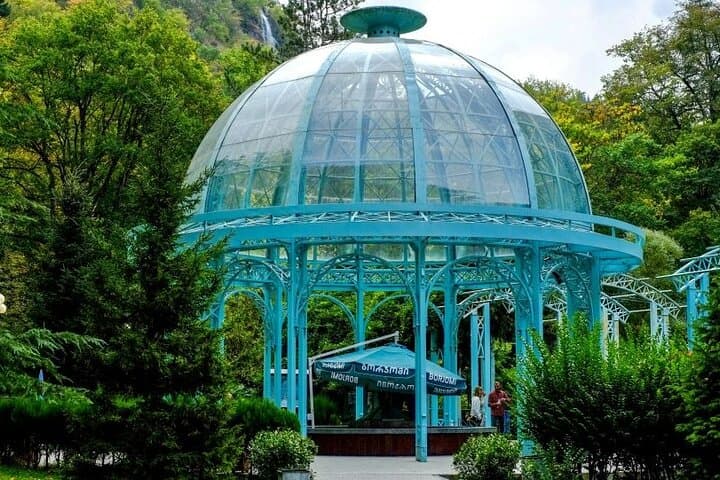
Vardzia began as a 12th-century monastic stronghold carved into tuff by craftsmen under Queen Tamar. Its stacked cells, chapels and tunnels reveal how people adapted faith and defense to volcanic cliffs. Rabati (Akhaltsikhe) shows later chapters: Ottoman, Georgian Orthodox and Russian layers rebuilt a strategic hilltop fortress into a multi-faith complex with a bazaar and mosque beside a Christian church. Borjomi sits in a deep, forested valley within Borjomi-Kharagauli National Park, where mineral springs made the town a 19th-century spa retreat.
Practicalities govern the day: expect 9–10 hours including road time, guided walking on uneven stone steps and short hikes through pine groves, and multiple photo stops. Bring sturdy shoes for tunneled passages, a lightweight rain layer, and cash for small purchases and entrance fees where not included. Pace your visit—Vardzia’s upper terraces reward slow exploration, Rabati’s courtyards suit a relaxed stroll, and Borjomi’s park trails are ideal for a late-afternoon walk before returning to Tbilisi. With an informed guide, this route turns geology and architecture into a coherent story of survival, faith and fresh water.
easy.
9–10 hours.
Suitable for most fitness levels; requires ability to climb stairs and walk short uneven trails.
Most site admissions are not included by default; check with the operator and carry local currency for tickets.
The tour runs about 9–10 hours and typically departs from Tbilisi with flexible pickup options.
Walking is moderate—expect stairs, uneven rock surfaces at Vardzia, and short flat trails at Borjomi; it’s suitable for travelers in average health.
Yes—this private tour accommodates families, but parents should supervise children on steep terraces and narrow tunnels.
Vardzia was carved into volcanic tuff in the 12th century under Queen Tamar; Rabati’s fortress reflects Ottoman and Russian-era rebuilding, while Borjomi rose to fame as a Tsarist-era spa town.
Borjomi-Kharagauli National Park works on reforestation and sustainable trail management; visitors should stay on marked paths, avoid collecting artifacts, and limit single-use plastics.
Imperial Tours operates guided outdoor trips and adventures with an emphasis on safety, stewardship, and memorable experiences.
A winding mountain road opens onto a wall of honeycombed rock: dozens of cave openings stare back at the visitor as wind carries the faint scent of pine and mineral springs. On a full-day private tour from Tbilisi, travelers move from this cliff-side cave city to a medieval fortress and then into a valley famed for its effervescent water and parkland—the itinerary stitches together Georgia’s human history and the raw geology that shaped it.
A winding mountain road opens onto a wall of honeycombed rock: dozens of cave openings stare back at the visitor as wind carries the faint scent of pine and mineral springs. On a full-day private tour from Tbilisi, travelers move from this cliff-side cave city to a medieval fortress and then into a valley famed for its effervescent water and parkland—the itinerary stitches together Georgia’s human history and the raw geology that shaped it.
Vardzia began as a 12th-century monastic stronghold carved into tuff by craftsmen under Queen Tamar. Its stacked cells, chapels and tunnels reveal how people adapted faith and defense to volcanic cliffs. Rabati (Akhaltsikhe) shows later chapters: Ottoman, Georgian Orthodox and Russian layers rebuilt a strategic hilltop fortress into a multi-faith complex with a bazaar and mosque beside a Christian church. Borjomi sits in a deep, forested valley within Borjomi-Kharagauli National Park, where mineral springs made the town a 19th-century spa retreat.
Practicalities govern the day: expect 9–10 hours including road time, guided walking on uneven stone steps and short hikes through pine groves, and multiple photo stops. Bring sturdy shoes for tunneled passages, a lightweight rain layer, and cash for small purchases and entrance fees where not included. Pace your visit—Vardzia’s upper terraces reward slow exploration, Rabati’s courtyards suit a relaxed stroll, and Borjomi’s park trails are ideal for a late-afternoon walk before returning to Tbilisi. With an informed guide, this route turns geology and architecture into a coherent story of survival, faith and fresh water.