THE ADVENTURE COLLECTIVE® · Independent discovery and booking for outdoor travel

Walk the shaded trails of Vallee de Mai, a UNESCO palm forest on Praslin that protects the rare coco de mer and the Seychelles Black Parrot. This guided tour combines natural history, easy hiking, and practical conservation insights.
Walk the shaded trails of Vallee de Mai, a UNESCO palm forest on Praslin that protects the rare coco de mer and the Seychelles Black Parrot. This guided tour combines natural history, easy hiking, and practical conservation insights.
You step off the minibus and into a cool green vault: trunks of palms rise like columns, their crowns knitting a roof that filters tropic light into strips. The path hums with insects and the occasional metallic call of the Seychelles Black Parrot — the valley feels as if it’s watching you back.
Verified experiences and guided adventures in the surrounding area.
Operated by Creole Travel Seychelles · Baie Sainte Anne, Praslin
You step off the minibus and into a cool green vault: trunks of palms rise like columns, their crowns knitting a roof that filters tropic light into strips. The path hums with insects and the occasional metallic call of the Seychelles Black Parrot — the valley feels as if it’s watching you back.
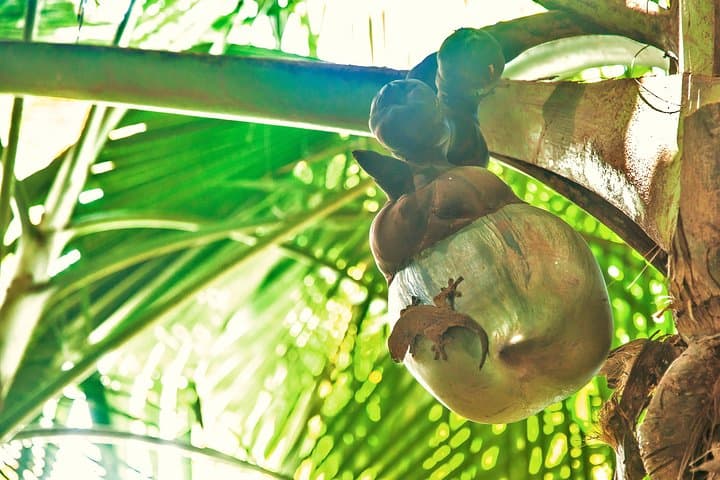
Vallee de Mai on Praslin is a remnant of an ancient palm forest and a UNESCO World Heritage Site. Its geology is granitic island core, producing shallow soils that favored a unique palm community led by the coco de mer, the world’s largest seed and a local cultural emblem long linked to myths and export protection. Guides here explain how endemic species evolved in isolation: small frogs, insular insects and a parrot found almost nowhere else.
Culturally, the coco de mer has shaped local craft and folklore; the reserve’s interpretation panels cover past harvesting pressures and the conservation measures that protect the grove today.
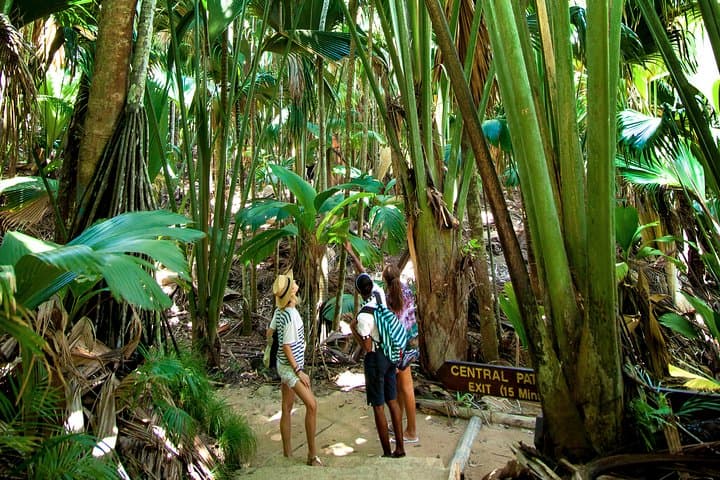
Practical guidance: the walk is a firm-surface, waymarked loop of roughly 1–2 km taking about 90–150 minutes with stops. Wear closed-toe shoes for uneven roots, bring sun protection for short open sections, and carry reusable water (a bottle is often provided). Follow the guide, don’t touch or collect seeds, and keep voices low to improve wildlife sightings. The reserve can be humid and, during the wetter months, slick — a lightweight rain jacket and insect repellent are sensible. Expect gentle gradients, informative stops about flora and fauna, and excellent photo ops of the iconic double-lobed coco de mer.
easy.
2–3 hours.
Suitable for people with light walking fitness; comfortable on uneven, mostly flat forest paths.
The tour lasts about 90–150 minutes on a loop through the reserve, including interpretive stops.
Yes—return transfer and the Vallee de Mai entrance fee are typically included, and a bottle of water is provided.
The route is generally easy but not recommended for infants under two or travelers with serious spinal or mobility problems; check with the operator for accessibility needs.
No—coco de mer seeds and plants are protected; removing them is illegal and harms conservation efforts.
Vallee de Mai preserves a fragment of granitic-island palm forest once more widespread across the inner Seychelles; its coco de mer has long been culturally significant and legally protected.
Strict visitor routes and seed protections limit impact; stay on paths, avoid touching palms, and support local guides to help fund ongoing conservation.
Creole Travel Seychelles operates guided outdoor trips and adventures with an emphasis on safety, stewardship, and memorable experiences.
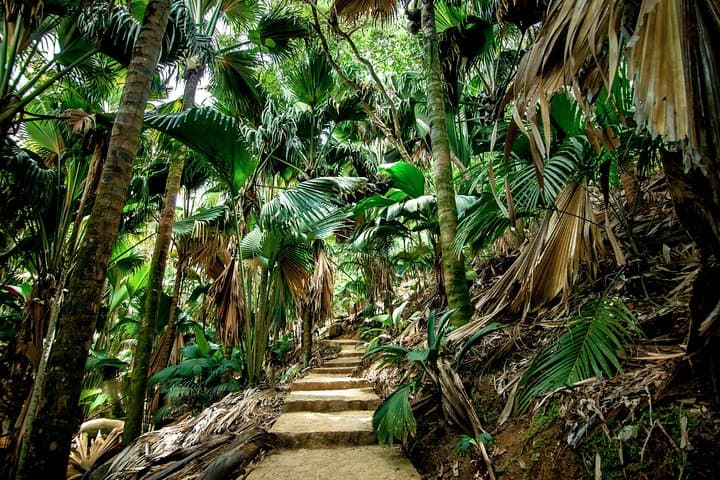
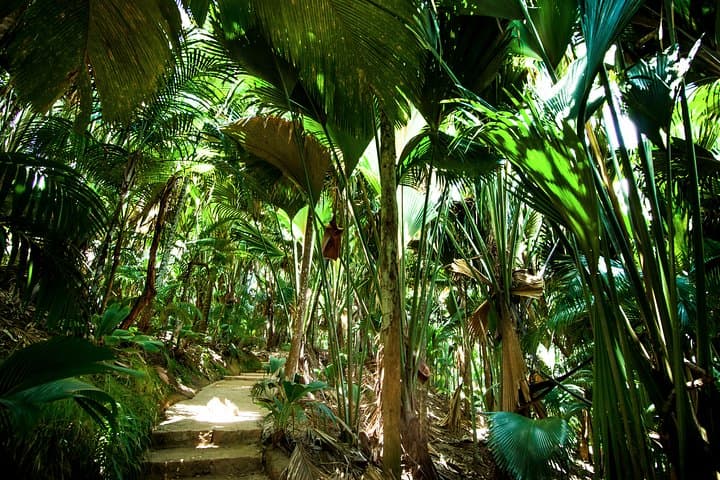
You step off the minibus and into a cool green vault: trunks of palms rise like columns, their crowns knitting a roof that filters tropic light into strips. The path hums with insects and the occasional metallic call of the Seychelles Black Parrot — the valley feels as if it’s watching you back.
You step off the minibus and into a cool green vault: trunks of palms rise like columns, their crowns knitting a roof that filters tropic light into strips. The path hums with insects and the occasional metallic call of the Seychelles Black Parrot — the valley feels as if it’s watching you back.
Vallee de Mai on Praslin is a remnant of an ancient palm forest and a UNESCO World Heritage Site. Its geology is granitic island core, producing shallow soils that favored a unique palm community led by the coco de mer, the world’s largest seed and a local cultural emblem long linked to myths and export protection. Guides here explain how endemic species evolved in isolation: small frogs, insular insects and a parrot found almost nowhere else.
Culturally, the coco de mer has shaped local craft and folklore; the reserve’s interpretation panels cover past harvesting pressures and the conservation measures that protect the grove today.
Practical guidance: the walk is a firm-surface, waymarked loop of roughly 1–2 km taking about 90–150 minutes with stops. Wear closed-toe shoes for uneven roots, bring sun protection for short open sections, and carry reusable water (a bottle is often provided). Follow the guide, don’t touch or collect seeds, and keep voices low to improve wildlife sightings. The reserve can be humid and, during the wetter months, slick — a lightweight rain jacket and insect repellent are sensible. Expect gentle gradients, informative stops about flora and fauna, and excellent photo ops of the iconic double-lobed coco de mer.