THE ADVENTURE COLLECTIVE® · Independent discovery and booking for outdoor travel

Spend a day moving from the purple sweep of Valensole’s lavender fields to the sheer limestone walls and turquoise waters of the Gorges du Verdon. This private, guided tour pairs slow, sunlit photography on the plateau with village lunch and optional boating at Lake Sainte‑Croix.
Spend a day moving from the purple sweep of Valensole’s lavender fields to the sheer limestone walls and turquoise waters of the Gorges du Verdon. This private, guided tour pairs slow, sunlit photography on the plateau with village lunch and optional boating at Lake Sainte‑Croix.
The driver slips the van out of Marseille before dawn and the Provençal light begins to outline low hills like a pale sketch. By mid-morning the plateau of Valensole opens—rows of lavender hold their breath under a wide blue sky, a geometry of purple that seems designed for cameras and long, slow breaths. Guests step into fields at the guide’s chosen vantage, the scent of essential oils rising with each warm gust as bees work the blooms.
Verified experiences and guided adventures in the surrounding area.
Operated by Discover Provence on a private tour · Moustiers-Sainte-Marie, Provence-Alpes-Côte d'Azur
The driver slips the van out of Marseille before dawn and the Provençal light begins to outline low hills like a pale sketch. By mid-morning the plateau of Valensole opens—rows of lavender hold their breath under a wide blue sky, a geometry of purple that seems designed for cameras and long, slow breaths. Guests step into fields at the guide’s chosen vantage, the scent of essential oils rising with each warm gust as bees work the blooms.
This is rural Provence in the rhythm of seasons: lavender has been cultivated here since the 18th century, a crop that shaped roads, roofs and markets across the plateau. The day moves on from cultivated fields to the terraced alleys of Moustiers-Sainte-Marie, a village carved into limestone with a Romanesque church and cascading fountains. The village has been a pottery center since the 17th century; its narrow lanes and cliffside chapel reveal a community built around water and stone.
Geology takes over in the afternoon. The Verdon River, over millennia, has bitten a canyon through Jurassic limestone—sheer cliffs drop hundreds of meters to water so blue it reads as improbably painted. Drivers follow hairpin roads to viewpoints where the gorge’s scale becomes tangible: rock faces worn into ledges and chimneys, the river daring you to imagine tracing it by kayak.
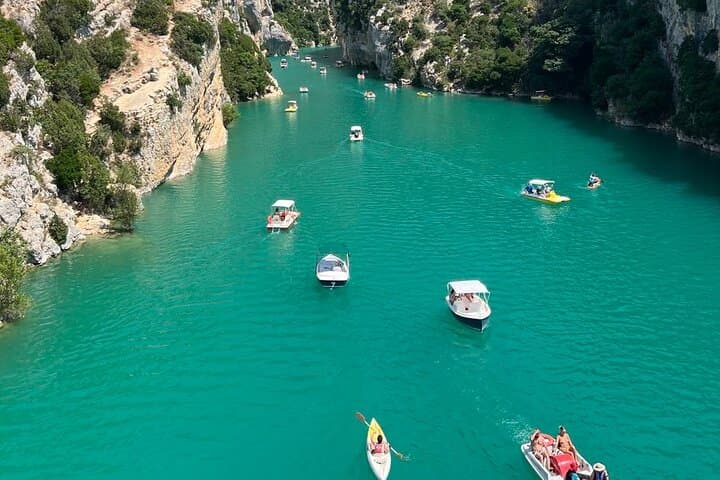
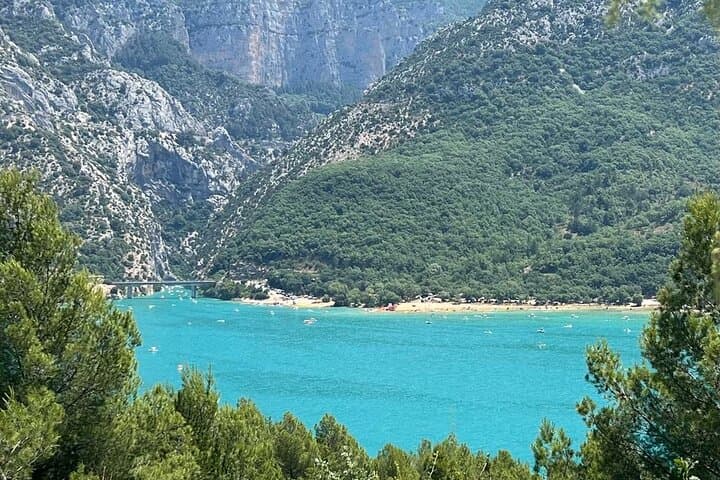
Practical rhythm matters. Lavender peaks in June–July; outside that window the operator shifts the day toward longer time in the Gorges and on Lake Sainte‑Croix—whose turquoise water invites a cooling swim or an optional electric-boat ride to the gorge mouth. Lunch in Moustiers is flexible: local bistros serve Provençal plates of olive oil, anchovies, and lamb—good food to settle the travel day.
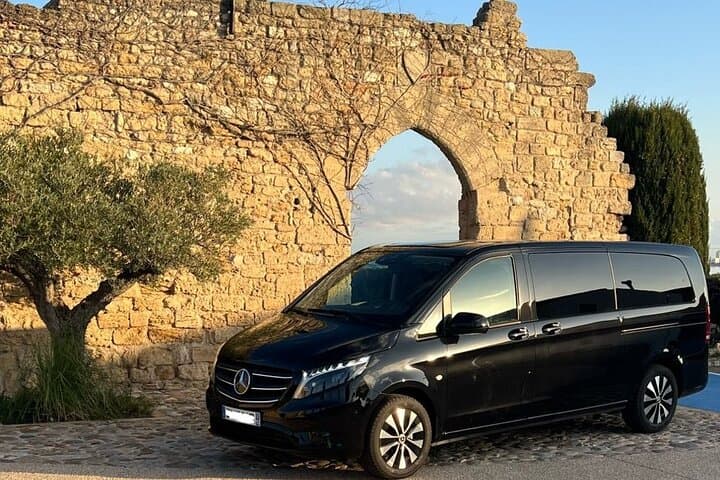
The tour is tailored and private, run in a Mercedes van with air conditioning and pickup options across Marseille and nearby towns. Bring sun protection, a camera with a wide-angle option, and comfortable shoes for village cobbles and short field paths. Expect a full 7–8 hour day with periods of walking interspersed with relaxing viewpoints. If you want the quintessential photos, aim for early morning on the plateau or the soft light of late afternoon in the gorge.
Conservation is part of the story: respect the lavender rows—don’t walk down the plant beds—and follow local guidelines at swimming spots. The region balances agriculture, tourism and fragile waterways; small choices—carry in, carry out, stay on paths—help keep the views viable for the next visitor.
easy.
7–8 hours.
Requires basic mobility for short walks, village cobbles and field paths; suitable for most fitness levels.
Lavender typically blooms from late June through July on the Valensole plateau; exact timing depends on spring temperatures and rainfall.
No—electric boats and pedalos are optional and paid locally; the tour stops at launch points and can suggest operators.
Lunch is not included; the itinerary stops in Moustiers-Sainte-Marie where guests can choose from several cafés and restaurants.
Yes—infant seats and stroller access are available and the tour is family-friendly; note walking over cobbles and short, uneven paths.
Full refund is available if you cancel at least 24 hours before departure; no refund within 24 hours.
The tour involves minimal walking but village streets and viewpoints can be uneven; contact the supplier in advance to discuss specific accessibility needs.
Lavender farming on the Valensole plateau expanded in the 18th–19th centuries and shaped local markets; Moustiers has pottery traditions dating to the 17th century.
Tour operators encourage staying on paths and avoiding trampling lavender; water management and responsible boating help protect the Verdon’s turquoise clarity.
Discover Provence on a private tour operates guided outdoor trips and adventures with an emphasis on safety, stewardship, and memorable experiences.
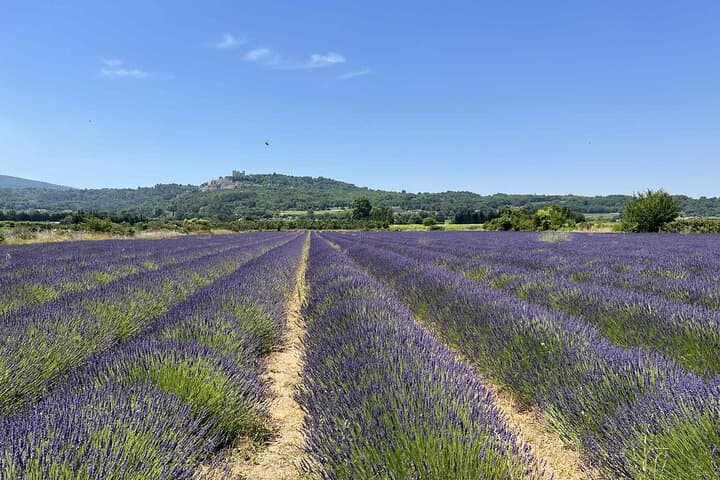
The driver slips the van out of Marseille before dawn and the Provençal light begins to outline low hills like a pale sketch. By mid-morning the plateau of Valensole opens—rows of lavender hold their breath under a wide blue sky, a geometry of purple that seems designed for cameras and long, slow breaths. Guests step into fields at the guide’s chosen vantage, the scent of essential oils rising with each warm gust as bees work the blooms.
The driver slips the van out of Marseille before dawn and the Provençal light begins to outline low hills like a pale sketch. By mid-morning the plateau of Valensole opens—rows of lavender hold their breath under a wide blue sky, a geometry of purple that seems designed for cameras and long, slow breaths. Guests step into fields at the guide’s chosen vantage, the scent of essential oils rising with each warm gust as bees work the blooms.
This is rural Provence in the rhythm of seasons: lavender has been cultivated here since the 18th century, a crop that shaped roads, roofs and markets across the plateau. The day moves on from cultivated fields to the terraced alleys of Moustiers-Sainte-Marie, a village carved into limestone with a Romanesque church and cascading fountains. The village has been a pottery center since the 17th century; its narrow lanes and cliffside chapel reveal a community built around water and stone.
Geology takes over in the afternoon. The Verdon River, over millennia, has bitten a canyon through Jurassic limestone—sheer cliffs drop hundreds of meters to water so blue it reads as improbably painted. Drivers follow hairpin roads to viewpoints where the gorge’s scale becomes tangible: rock faces worn into ledges and chimneys, the river daring you to imagine tracing it by kayak.
Practical rhythm matters. Lavender peaks in June–July; outside that window the operator shifts the day toward longer time in the Gorges and on Lake Sainte‑Croix—whose turquoise water invites a cooling swim or an optional electric-boat ride to the gorge mouth. Lunch in Moustiers is flexible: local bistros serve Provençal plates of olive oil, anchovies, and lamb—good food to settle the travel day.
The tour is tailored and private, run in a Mercedes van with air conditioning and pickup options across Marseille and nearby towns. Bring sun protection, a camera with a wide-angle option, and comfortable shoes for village cobbles and short field paths. Expect a full 7–8 hour day with periods of walking interspersed with relaxing viewpoints. If you want the quintessential photos, aim for early morning on the plateau or the soft light of late afternoon in the gorge.
Conservation is part of the story: respect the lavender rows—don’t walk down the plant beds—and follow local guidelines at swimming spots. The region balances agriculture, tourism and fragile waterways; small choices—carry in, carry out, stay on paths—help keep the views viable for the next visitor.