THE ADVENTURE COLLECTIVE® · Independent discovery and booking for outdoor travel

Walk the salt-carved ridges of the Cordillera de la Sal at sunset, visit ancient petroglyph panels at Yerbas Buenas, and watch the Atacama’s colors shift from rust to violet at the Licarantay viewpoint.
Walk the salt-carved ridges of the Cordillera de la Sal at sunset, visit ancient petroglyph panels at Yerbas Buenas, and watch the Atacama’s colors shift from rust to violet at the Licarantay viewpoint.
A late-afternoon wind hits the salt-crusted ridges of the Cordillera de la Sal and the valley exhales color: rust, ochre, pale green and a powdery white that looks almost lunar. From San Pedro de Atacama you drive west across stark desert to Yerbas Buenas, where weathered rock panels hold petroglyphs — llamas, birds and caravan scenes that mark ancient Andean trade routes — then onward through the mineral-striped arches of Rainbow Valley.
Verified experiences and guided adventures in the surrounding area.
Operated by Viajando Comigo · San Pedro de Atacama, Antofagasta
A late-afternoon wind hits the salt-crusted ridges of the Cordillera de la Sal and the valley exhales color: rust, ochre, pale green and a powdery white that looks almost lunar. From San Pedro de Atacama you drive west across stark desert to Yerbas Buenas, where weathered rock panels hold petroglyphs — llamas, birds and caravan scenes that mark ancient Andean trade routes — then onward through the mineral-striped arches of Rainbow Valley.
Geology here is a lesson in concentration: evaporites, clays and oxidized minerals paint slopes that change with the angle of light. The Valley of the Moon is carved by wind and intermittent water into ridges, caverns and sculpted towers — the Três Marias, the Cano and the Amphitheater are the principal formations, with the Duna Mayor offering one of the region’s cleanest sunsets. Cultural threads run alongside geology; caravans moved salt and goods between the Altiplano and the coast, leaving both markings and oral memory in the region.
Practical notes: this is an easy, mostly walking tour of uneven, rocky terrain best timed for late afternoon light and sunset views from the Licarantay viewpoint. Expect high desert sun and large temperature swings — daytime heat softens quickly after dusk. Carry at least 1–2 liters of water, sun protection and a warm layer for the walk back. Guides usually provide context on petroglyphs, mineralogy and local ecology, and transport from San Pedro is typically by air-conditioned vehicle.
easy.
5 hours.
Suitable for most fitness levels; involves short walks on uneven ground and low-altitude hiking ability at ~2,400–2,600 m.
The standard excursion lasts about five hours, with drives from San Pedro and time to walk key viewpoints and formations.
Yes — the route is rated easy, but infants must sit on an adult’s lap during transport and guardians should watch children on unstable terrain.
Tours include a bilingual guide and transport; the protected areas are managed and organized tours are the easiest way to visit responsibly.
Expect strong sun and dry air during the day and a pronounced temperature drop after sunset; bring layers and sun protection.
Yerbas Buenas and nearby trails were part of pre-Hispanic caravan routes connecting the Bolivian Altiplano and Argentine puna to the Pacific; petroglyphs mark animal species and travel narratives.
The area is within managed reserve land where visitors are encouraged to stay on marked paths to protect fragile salt crusts, fossil beds and petroglyph panels.
Viajando Comigo operates guided outdoor trips and adventures with an emphasis on safety, stewardship, and memorable experiences.
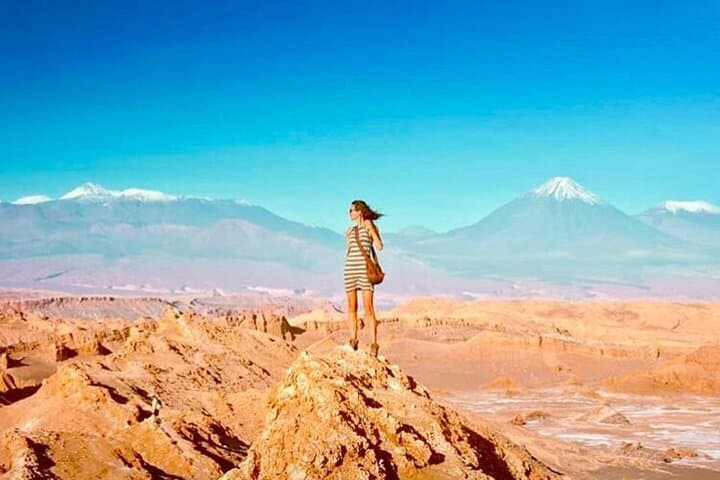

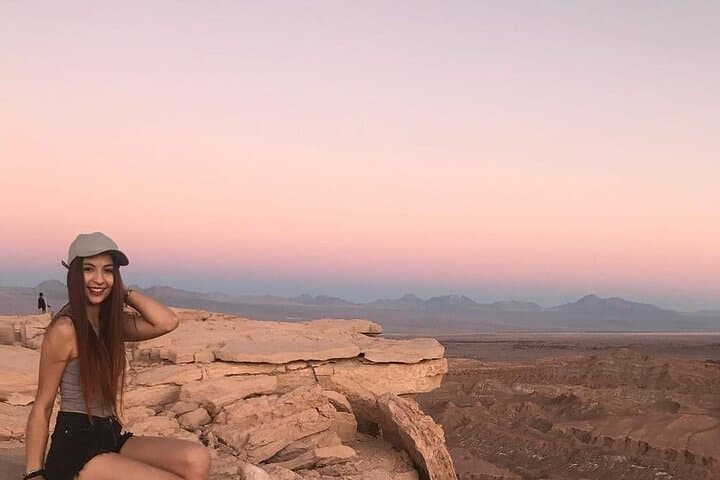
A late-afternoon wind hits the salt-crusted ridges of the Cordillera de la Sal and the valley exhales color: rust, ochre, pale green and a powdery white that looks almost lunar. From San Pedro de Atacama you drive west across stark desert to Yerbas Buenas, where weathered rock panels hold petroglyphs — llamas, birds and caravan scenes that mark ancient Andean trade routes — then onward through the mineral-striped arches of Rainbow Valley.
A late-afternoon wind hits the salt-crusted ridges of the Cordillera de la Sal and the valley exhales color: rust, ochre, pale green and a powdery white that looks almost lunar. From San Pedro de Atacama you drive west across stark desert to Yerbas Buenas, where weathered rock panels hold petroglyphs — llamas, birds and caravan scenes that mark ancient Andean trade routes — then onward through the mineral-striped arches of Rainbow Valley.
Geology here is a lesson in concentration: evaporites, clays and oxidized minerals paint slopes that change with the angle of light. The Valley of the Moon is carved by wind and intermittent water into ridges, caverns and sculpted towers — the Três Marias, the Cano and the Amphitheater are the principal formations, with the Duna Mayor offering one of the region’s cleanest sunsets. Cultural threads run alongside geology; caravans moved salt and goods between the Altiplano and the coast, leaving both markings and oral memory in the region.
Practical notes: this is an easy, mostly walking tour of uneven, rocky terrain best timed for late afternoon light and sunset views from the Licarantay viewpoint. Expect high desert sun and large temperature swings — daytime heat softens quickly after dusk. Carry at least 1–2 liters of water, sun protection and a warm layer for the walk back. Guides usually provide context on petroglyphs, mineralogy and local ecology, and transport from San Pedro is typically by air-conditioned vehicle.