THE ADVENTURE COLLECTIVE® · Independent discovery and booking for outdoor travel

Drive east from Ierapetra for a full-day blend of Cretan culture, coastal geology and beach time. Visit traditional Lithines, stroll Sitia's harbor promenade, tour Toplou Monastery, then relax and swim at the rare palm-fringed Vai Beach.
Drive east from Ierapetra for a full-day blend of Cretan culture, coastal geology and beach time. Visit traditional Lithines, stroll Sitia's harbor promenade, tour Toplou Monastery, then relax and swim at the rare palm-fringed Vai Beach.
A morning on eastern Crete begins in the small port roads of Ierapetra and unfolds into a day where olive terraces give way to a fringe of palms and wind-buffeted cliffs. The road to Vai runs along sun-bleached scrub and limestone folds; when the bus arrives, Vai's rare Phoenix theophrasti palms frame an impossibly blue bay and the sea seems to dare you to jump in.
Verified experiences and guided adventures in the surrounding area.
Operated by South Crete Tours · Vai (Palm Beach), Crete
A morning on eastern Crete begins in the small port roads of Ierapetra and unfolds into a day where olive terraces give way to a fringe of palms and wind-buffeted cliffs. The road to Vai runs along sun-bleached scrub and limestone folds; when the bus arrives, Vai's rare Phoenix theophrasti palms frame an impossibly blue bay and the sea seems to dare you to jump in.
This route stitches together living culture and island geology. Lithines offers narrow streets and coffeehouse rituals that have changed little over a century; Sitia's harbor records centuries of Venetian and Ottoman trade in its stone warehouses. Toplou Monastery, standing like a small fortress on a rocky spur, has produced wine and olive oil for generations and played a quiet role in local resistance during Ottoman and 20th-century conflicts.
Geologically the area is folded Mesozoic limestone interrupted by alluvial fans at the coast—hence sandy beaches tucked beneath arid hills. Culturally you’ll taste local raki and hear Crete’s direct hospitality: a walk in town feels like joining, briefly, a community ritual.
Practical notes: expect a full 8-hour day with multiple short stops, some easy walking on uneven village streets and steps at the monastery, and a 90–150 minute beach window for swimming and lunch. Bring reef-safe sunscreen, a hat, and freshwater—shade at Vai is limited. Photography is excellent mid-morning and late afternoon when light skims the palms. Respect marked paths in the palm forest and keep valuables out of sight on the beach; currents can shift quickly if you swim offshore.
easy.
8 hours.
Suitable for most fitness levels; requires ability to walk short distances on uneven surfaces and climb steps.
Yes—this tour includes hotel pickup and drop-off; you’ll specify your pickup point when booking.
Yes—there’s typically 90–150 minutes at Vai for swimming and eating; bring cash if you prefer small beach tavernas.
Toplou often charges a small admission for museum areas or special exhibits; the tour description notes admission is not included, so carry a few euros just in case.
The tour is rated easy and suitable for most ages, but there are steps at the monastery and uneven village streets; infants must sit on laps per provider policy.
Toplou Monastery dates to the post-Byzantine period and served as a fortified religious center; the monastery is also known for centuries-old vineyards and wine production.
Vai’s native Phoenix theophrasti palm forest is protected; visitors should stay on designated paths, avoid removing plant material and use reef-safe products to limit marine impact.
South Crete Tours operates guided outdoor trips and adventures with an emphasis on safety, stewardship, and memorable experiences.
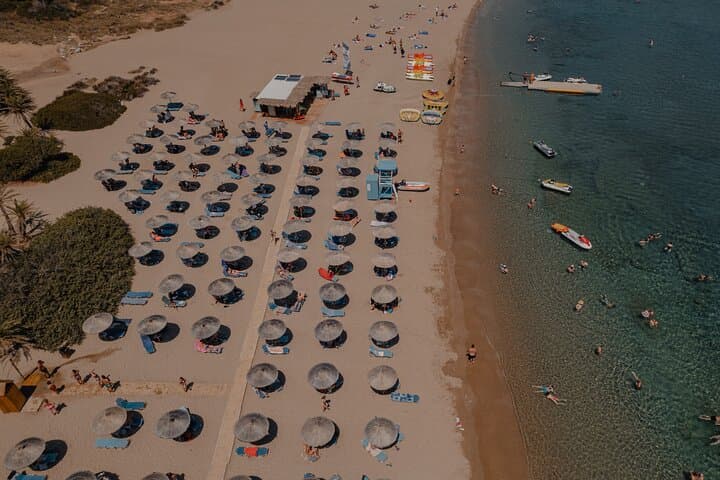


A morning on eastern Crete begins in the small port roads of Ierapetra and unfolds into a day where olive terraces give way to a fringe of palms and wind-buffeted cliffs. The road to Vai runs along sun-bleached scrub and limestone folds; when the bus arrives, Vai's rare Phoenix theophrasti palms frame an impossibly blue bay and the sea seems to dare you to jump in.
A morning on eastern Crete begins in the small port roads of Ierapetra and unfolds into a day where olive terraces give way to a fringe of palms and wind-buffeted cliffs. The road to Vai runs along sun-bleached scrub and limestone folds; when the bus arrives, Vai's rare Phoenix theophrasti palms frame an impossibly blue bay and the sea seems to dare you to jump in.
This route stitches together living culture and island geology. Lithines offers narrow streets and coffeehouse rituals that have changed little over a century; Sitia's harbor records centuries of Venetian and Ottoman trade in its stone warehouses. Toplou Monastery, standing like a small fortress on a rocky spur, has produced wine and olive oil for generations and played a quiet role in local resistance during Ottoman and 20th-century conflicts.
Geologically the area is folded Mesozoic limestone interrupted by alluvial fans at the coast—hence sandy beaches tucked beneath arid hills. Culturally you’ll taste local raki and hear Crete’s direct hospitality: a walk in town feels like joining, briefly, a community ritual.
Practical notes: expect a full 8-hour day with multiple short stops, some easy walking on uneven village streets and steps at the monastery, and a 90–150 minute beach window for swimming and lunch. Bring reef-safe sunscreen, a hat, and freshwater—shade at Vai is limited. Photography is excellent mid-morning and late afternoon when light skims the palms. Respect marked paths in the palm forest and keep valuables out of sight on the beach; currents can shift quickly if you swim offshore.