THE ADVENTURE COLLECTIVE® · Independent discovery and booking for outdoor travel

Drive across the world's largest salt flat on a full-day guided trip from Uyuni. See the Train Cemetery, Colchani's salt works, and climb Isla Incahuasi—plan for altitude, wind, and brilliant light.
Drive across the world's largest salt flat on a full-day guided trip from Uyuni. See the Train Cemetery, Colchani's salt works, and climb Isla Incahuasi—plan for altitude, wind, and brilliant light.
A low, hard sun glares off an endless white plain as the vehicle eases onto the salt crust; wind presses itself against your jacket like a questioning hand. The Salar de Uyuni unfolds — geometric salt tiles marching to the horizon, islands of cactus rising like watchtowers, and, in the distance, the rusted ribs of century-old locomotives at the Train Cemetery.
Verified experiences and guided adventures in the surrounding area.
Operated by Skyline Traveller · Uyuni, Potosí
A low, hard sun glares off an endless white plain as the vehicle eases onto the salt crust; wind presses itself against your jacket like a questioning hand. The Salar de Uyuni unfolds — geometric salt tiles marching to the horizon, islands of cactus rising like watchtowers, and, in the distance, the rusted ribs of century-old locomotives at the Train Cemetery.
This landscape sits on the Altiplano, a remnant of prehistoric lakes that evaporated millennia ago to leave behind a thick salt sheet atop volcanic geology and lithium-rich brine. Indigenous communities around Colchani have harvested and processed salt here for generations; today the flats also feed a global demand for lithium while attracting photographers, scientists, and road-trippers.
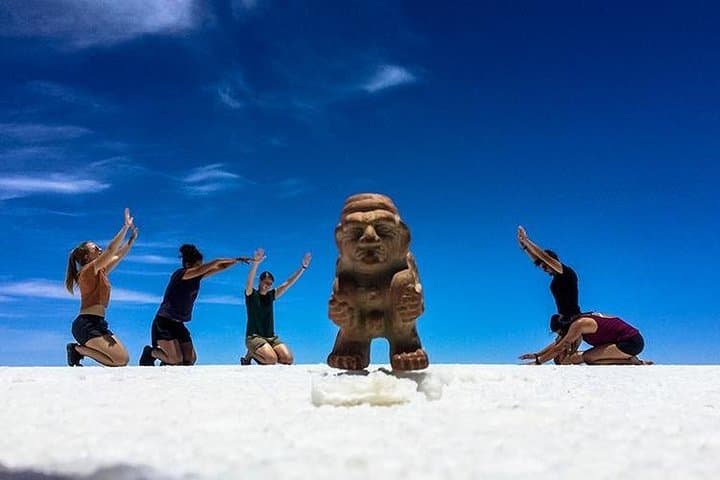
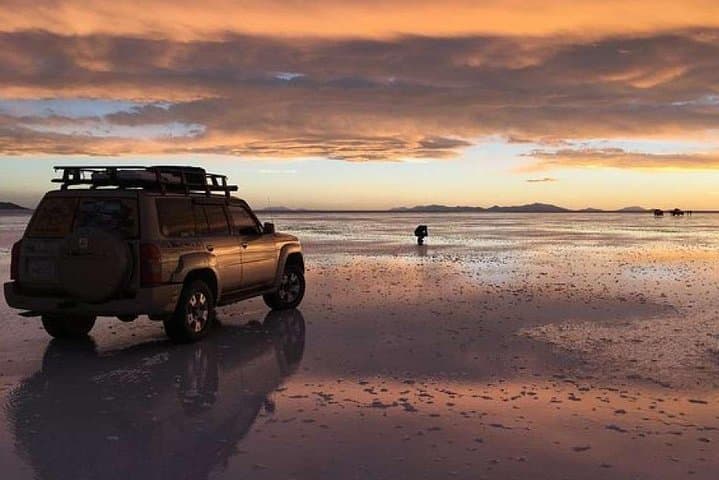
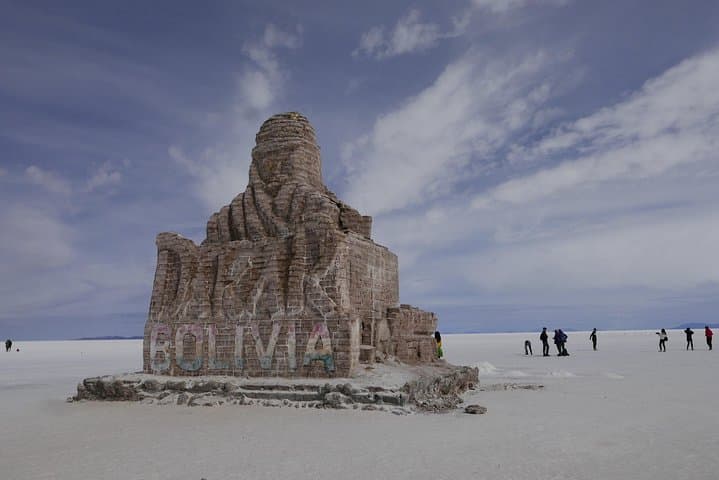
Visitors typically stop at Colchani's salt workshops and a tiny museum, wander the surreal expanse, and climb Isla Incahuasi to see giant Trichocereus cacti against the white plain. During the wet season the salar becomes a mirror, turning sky into ground; in the dry months polygonal salt plates dominate the view.
Practical guidance: the trip is long — expect roughly nine hours round trip from Uyuni — and altitude reaches about 3,650 m (12,000 ft). Dress in windproof layers and strong sun protection, carry water and snacks despite lunch being provided, and move slowly to let your body acclimatize. Respect marked paths on fragile crust and local workers at salt-processing sites. For photographers, arrive mid-afternoon for warmer light and avoid midday glare. With sensible preparation, a day here is both easily accessible and unforgettable.
moderate.
9 hours.
Light to moderate fitness; must tolerate high altitude and periods of standing and short hikes
Most full-day tours run about nine hours and depart from Uyuni town, returning there the same day.
The salar sits around 3,650 m; mild altitude symptoms are common—drink water, eat light, rest, and inform the guide if you feel unwell.
The wet season (roughly January–March) often produces a reflective water layer; the dry season (April–November) shows the classic hexagonal salt crust.
Basic facilities exist in Colchani and at some stops; tours usually include a simple lunch but bring snacks and toilet paper for remote stops.
The salar is the remnant of prehistoric lakes and has long supported indigenous salt trade; nearby Train Cemetery reflects early 20th-century rail ambitions that faded in the high plains.
The salar is environmentally sensitive and part of a growing lithium industry; follow marked routes, avoid disturbing salt-extraction areas, and support local cooperatives when buying souvenirs.
Skyline Traveller operates guided outdoor trips and adventures with an emphasis on safety, stewardship, and memorable experiences.
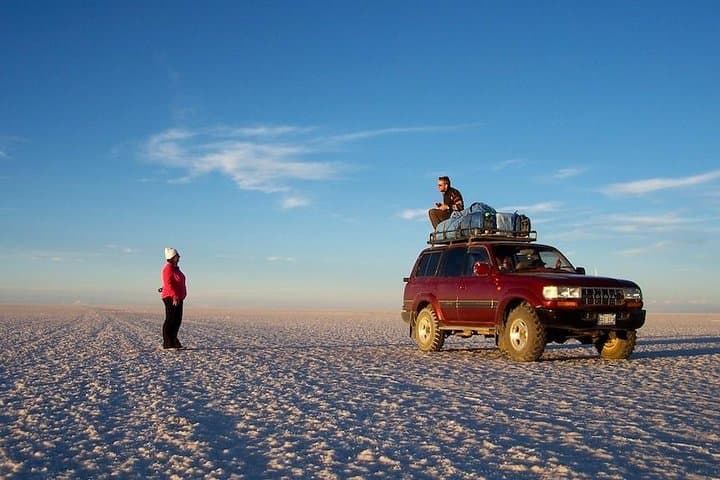
A low, hard sun glares off an endless white plain as the vehicle eases onto the salt crust; wind presses itself against your jacket like a questioning hand. The Salar de Uyuni unfolds — geometric salt tiles marching to the horizon, islands of cactus rising like watchtowers, and, in the distance, the rusted ribs of century-old locomotives at the Train Cemetery.
A low, hard sun glares off an endless white plain as the vehicle eases onto the salt crust; wind presses itself against your jacket like a questioning hand. The Salar de Uyuni unfolds — geometric salt tiles marching to the horizon, islands of cactus rising like watchtowers, and, in the distance, the rusted ribs of century-old locomotives at the Train Cemetery.
This landscape sits on the Altiplano, a remnant of prehistoric lakes that evaporated millennia ago to leave behind a thick salt sheet atop volcanic geology and lithium-rich brine. Indigenous communities around Colchani have harvested and processed salt here for generations; today the flats also feed a global demand for lithium while attracting photographers, scientists, and road-trippers.
Visitors typically stop at Colchani's salt workshops and a tiny museum, wander the surreal expanse, and climb Isla Incahuasi to see giant Trichocereus cacti against the white plain. During the wet season the salar becomes a mirror, turning sky into ground; in the dry months polygonal salt plates dominate the view.
Practical guidance: the trip is long — expect roughly nine hours round trip from Uyuni — and altitude reaches about 3,650 m (12,000 ft). Dress in windproof layers and strong sun protection, carry water and snacks despite lunch being provided, and move slowly to let your body acclimatize. Respect marked paths on fragile crust and local workers at salt-processing sites. For photographers, arrive mid-afternoon for warmer light and avoid midday glare. With sensible preparation, a day here is both easily accessible and unforgettable.