THE ADVENTURE COLLECTIVE® · Independent discovery and booking for outdoor travel

Cross the otherworldly Salar de Uyuni on a three-day expedition from La Paz that pairs stark salt deserts with high Andean lagoons and volcanic viewpoints. This tour blends long 4x4 drives with short walks, flamingo sightings, and the odd train graveyard.
Cross the otherworldly Salar de Uyuni on a three-day expedition from La Paz that pairs stark salt deserts with high Andean lagoons and volcanic viewpoints. This tour blends long 4x4 drives with short walks, flamingo sightings, and the odd train graveyard.
You step off the overnight bus into a cold, thin air and the world flattens into white: the Salar de Uyuni stretches to the horizon like polished bone, daring you to walk its impossible plane. The salt crust cracks underfoot in geometric tiles while the wind sculpts faint ripples; the island of Incahuasi rises from the expanse as a rocky oasis crowned with giant cacti that lean like old watchers.
Verified experiences and guided adventures in the surrounding area.
Operated by Inti Travel · Uyuni, Potosí
You step off the overnight bus into a cold, thin air and the world flattens into white: the Salar de Uyuni stretches to the horizon like polished bone, daring you to walk its impossible plane. The salt crust cracks underfoot in geometric tiles while the wind sculpts faint ripples; the island of Incahuasi rises from the expanse as a rocky oasis crowned with giant cacti that lean like old watchers.
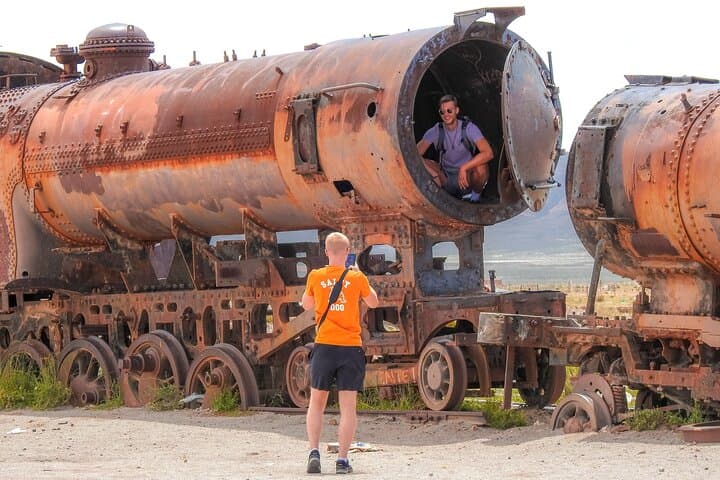
Geologically the salar is the remnant of prehistoric Lake Minchin; the salt crust itself is a few meters thick above a brine layer and sits at roughly 3,650 meters. Cultural traces are close at hand — Colchani’s salt workshops and the Train Graveyard recall Uyuni’s mining-era rush and the Aymara communities that still harvest salt and weave alpaca textiles.
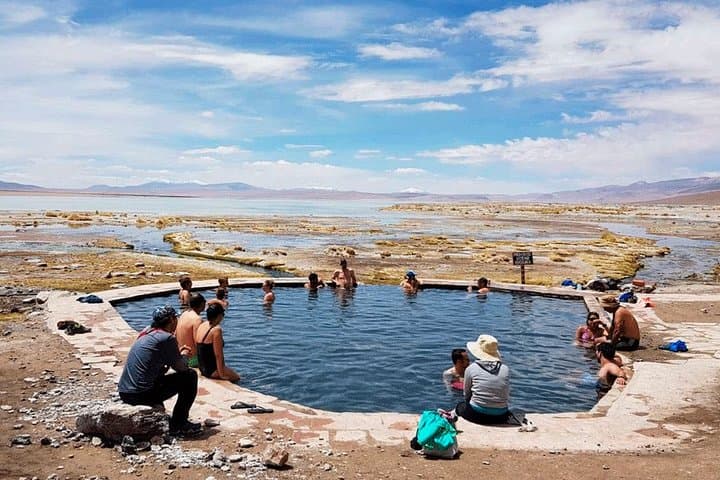
The 3-day itinerary balances long 4x4 drives and short walks: train wrecks and artisan stalls on day one, wide salt panoramas and perspective photo stops at Incahuasi, then high-altitude altiplano scenery through Eduardo Avaroa Reserve with flamingo-studded lagoons, geysers and the Red Lagoon. Expect gravel tracks, volcanic viewpoints near Ollagüe and Licancabur, and elevations climbing to 4,200–4,900 m on some stops.
Practical edge: acclimatize in La Paz if possible, carry layered insulation for cold desert nights, and sun protection for blistering daytime UV. Hydrate slowly and bring cash for small purchases. Vehicle time is long; plan for brief walks and many photo stops rather than sustained hiking. Respect the fragile salt and flamingo habitats — stay on designated routes and pack out all trash.
challenging.
3 days (plus overnight buses to/from La Paz).
Suitable for travelers comfortable with long vehicle days, short high-altitude walks, and basic hostel stays; not technically demanding but physically affected by altitude.
The overnight bus departs around 9:00 p.m. and typically arrives in Uyuni early morning after roughly 9–10 hours, depending on traffic and stops.
Yes — the itinerary includes 2 breakfasts, 3 lunches and 2 dinners; additional meals or snacks in towns may be at your own expense.
Facilities are basic and intermittent; plan for simple hostel toilets and occasional field stops — bring hand sanitizer and toilet paper.
Yes — the Eduardo Avaroa Reserve and high Andean lagoons are regular feeding grounds for several flamingo species, especially in the mornings and late afternoons.
Salar de Uyuni formed from evaporated prehistoric lakes; the Train Graveyard echoes the region’s mining boom and abandoned rail routes from the late 19th and early 20th centuries.
The high-altitude ecosystems are fragile — avoid disturbing flamingo breeding areas, do not remove salt or rocks, and pack out all waste to minimize impact.
Inti Travel operates guided outdoor trips and adventures with an emphasis on safety, stewardship, and memorable experiences.
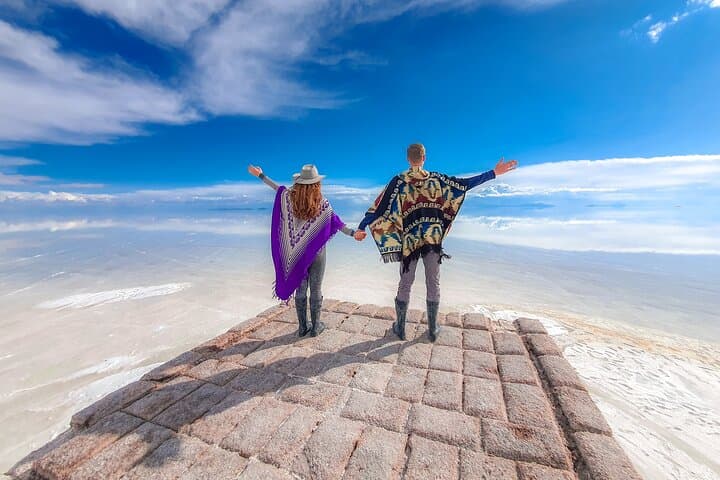
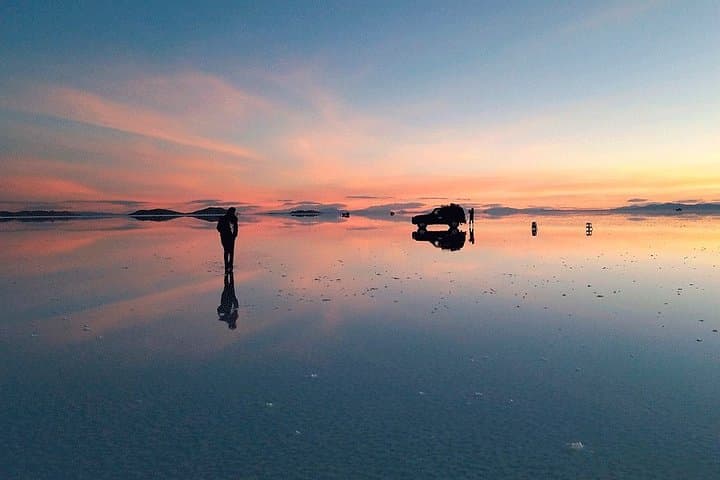
You step off the overnight bus into a cold, thin air and the world flattens into white: the Salar de Uyuni stretches to the horizon like polished bone, daring you to walk its impossible plane. The salt crust cracks underfoot in geometric tiles while the wind sculpts faint ripples; the island of Incahuasi rises from the expanse as a rocky oasis crowned with giant cacti that lean like old watchers.
You step off the overnight bus into a cold, thin air and the world flattens into white: the Salar de Uyuni stretches to the horizon like polished bone, daring you to walk its impossible plane. The salt crust cracks underfoot in geometric tiles while the wind sculpts faint ripples; the island of Incahuasi rises from the expanse as a rocky oasis crowned with giant cacti that lean like old watchers.
Geologically the salar is the remnant of prehistoric Lake Minchin; the salt crust itself is a few meters thick above a brine layer and sits at roughly 3,650 meters. Cultural traces are close at hand — Colchani’s salt workshops and the Train Graveyard recall Uyuni’s mining-era rush and the Aymara communities that still harvest salt and weave alpaca textiles.
The 3-day itinerary balances long 4x4 drives and short walks: train wrecks and artisan stalls on day one, wide salt panoramas and perspective photo stops at Incahuasi, then high-altitude altiplano scenery through Eduardo Avaroa Reserve with flamingo-studded lagoons, geysers and the Red Lagoon. Expect gravel tracks, volcanic viewpoints near Ollagüe and Licancabur, and elevations climbing to 4,200–4,900 m on some stops.
Practical edge: acclimatize in La Paz if possible, carry layered insulation for cold desert nights, and sun protection for blistering daytime UV. Hydrate slowly and bring cash for small purchases. Vehicle time is long; plan for brief walks and many photo stops rather than sustained hiking. Respect the fragile salt and flamingo habitats — stay on designated routes and pack out all trash.