THE ADVENTURE COLLECTIVE® · Independent discovery and booking for outdoor travel

Experience the Salar de Uyuni after dark on a private night tour: a short drive from Uyuni puts you on the world’s largest salt flat for stargazing, night photography, and dramatic horizon views. Warm drinks, boots and a guide are included — just bring layers and a tripod.
Experience the Salar de Uyuni after dark on a private night tour: a short drive from Uyuni puts you on the world’s largest salt flat for stargazing, night photography, and dramatic horizon views. Warm drinks, boots and a guide are included — just bring layers and a tripod.
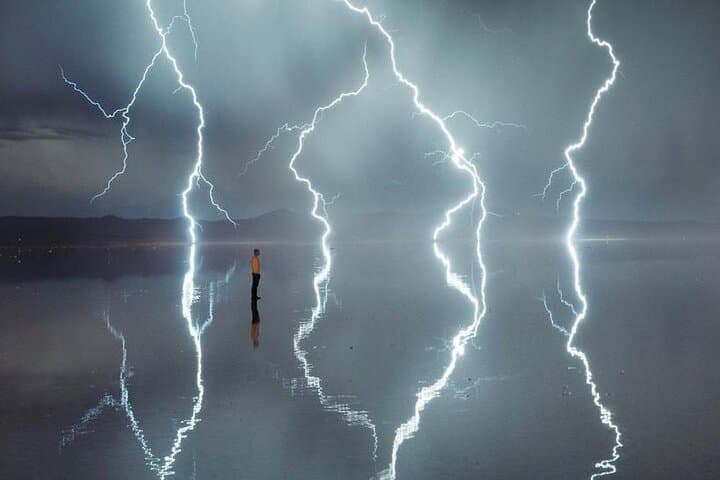
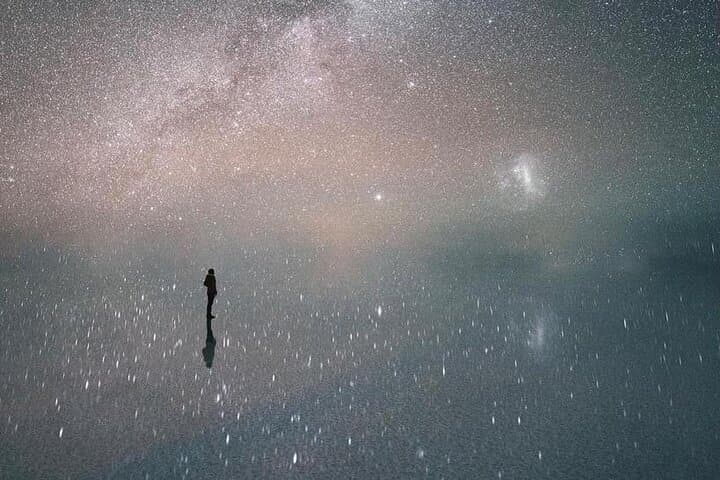
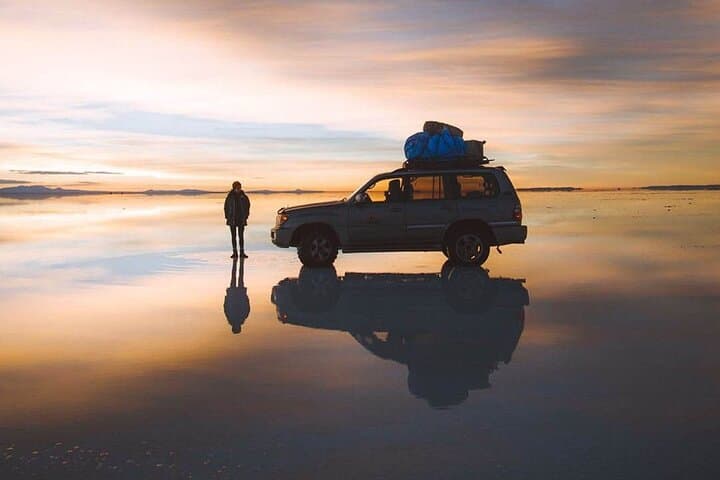
You step out of the van and the salt plain stretches beyond the reach of the headlights — a white plane that seems to inhale the sky. Night arrives quickly here; the horizon slides into deep cobalt and the Milky Way climbs like a pale river. On a private night tour of the Salar de Uyuni, the sky dares you to count its stars while the flat, reflective surface amplifies every light.
Verified experiences and guided adventures in the surrounding area.
Operated by Visit South America · Uyuni, Potosí
You step out of the van and the salt plain stretches beyond the reach of the headlights — a white plane that seems to inhale the sky. Night arrives quickly here; the horizon slides into deep cobalt and the Milky Way climbs like a pale river. On a private night tour of the Salar de Uyuni, the sky dares you to count its stars while the flat, reflective surface amplifies every light.
The salt flat is the remnant of prehistoric Lake Minchin and, later, Lake Tauca; salt mining and the local Aymara communities have long shaped how people travel this landscape. Geologically, the crust is a hard polygonal pattern over a thick salt bed, with freshwater lenses and seasonal shallow mirrors that redraw the plain each year. Culturally, Uyuni town — once a train stop and mining outpost — is the gateway, its train cemetery offering stark silhouettes at sunset.
Practical guidance: tours run in the dry season for clearer skies, but brief rides are scheduled year-round; the operator provides private transport, hot drinks, guide service and boots. Nights are cold at 3,600+ meters, so dress in insulated, windproof layers and bring a thermos, tripod and spare batteries for long exposures. Move slowly to limit altitude effects; short walks are all that’s required.
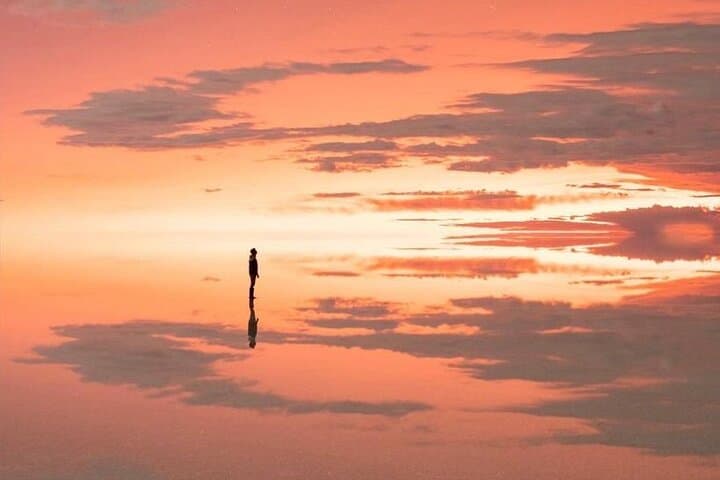
Photographers will find mirror-like reflections in the rainy months and crisp, star-filled negatives in the dry season. Keep waste packed out and follow your guide’s route to protect the fragile crust — this vast light-catching surface is both playground and ecosystem.
easy.
3–4 hours.
Suitable for most fitness levels; minimal walking and short, flat strolls required.
Typical private night tours run about 3–4 hours door-to-door from Uyuni, with roughly 1–2 hours spent on the flats depending on the chosen viewpoint.
The experience is low exertion but not recommended for pregnant travelers; children can participate but parents should monitor cold and altitude effects.
Yes: the dry season yields very clear starfields, while the rainy season (roughly December–March) can create shallow reflective surfaces that produce mirror-like reflections.
Yes — the operator typically supplies extra boots and hot drinks; bring your own layers and camera gear.
The Salar formed from evaporated prehistoric lakes and has been mined for salt and lithium; indigenous Aymara communities have long used the surrounding highlands.
The salt crust is fragile and habitats are seasonally sensitive; minimize vehicle impact, avoid leaving waste, and follow guides to protect the ecosystem.
Visit South America operates guided outdoor trips and adventures with an emphasis on safety, stewardship, and memorable experiences.
You step out of the van and the salt plain stretches beyond the reach of the headlights — a white plane that seems to inhale the sky. Night arrives quickly here; the horizon slides into deep cobalt and the Milky Way climbs like a pale river. On a private night tour of the Salar de Uyuni, the sky dares you to count its stars while the flat, reflective surface amplifies every light.
You step out of the van and the salt plain stretches beyond the reach of the headlights — a white plane that seems to inhale the sky. Night arrives quickly here; the horizon slides into deep cobalt and the Milky Way climbs like a pale river. On a private night tour of the Salar de Uyuni, the sky dares you to count its stars while the flat, reflective surface amplifies every light.
The salt flat is the remnant of prehistoric Lake Minchin and, later, Lake Tauca; salt mining and the local Aymara communities have long shaped how people travel this landscape. Geologically, the crust is a hard polygonal pattern over a thick salt bed, with freshwater lenses and seasonal shallow mirrors that redraw the plain each year. Culturally, Uyuni town — once a train stop and mining outpost — is the gateway, its train cemetery offering stark silhouettes at sunset.
Practical guidance: tours run in the dry season for clearer skies, but brief rides are scheduled year-round; the operator provides private transport, hot drinks, guide service and boots. Nights are cold at 3,600+ meters, so dress in insulated, windproof layers and bring a thermos, tripod and spare batteries for long exposures. Move slowly to limit altitude effects; short walks are all that’s required.
Photographers will find mirror-like reflections in the rainy months and crisp, star-filled negatives in the dry season. Keep waste packed out and follow your guide’s route to protect the fragile crust — this vast light-catching surface is both playground and ecosystem.