THE ADVENTURE COLLECTIVE® · Independent discovery and booking for outdoor travel

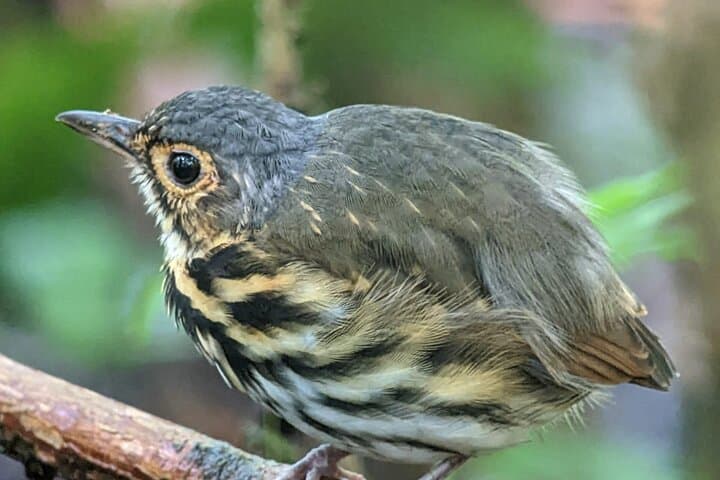
Spend three hours in Oro Verde’s primary and secondary forest with a bilingual naturalist guiding you to tanagers, trogons and the elusive antpitta. Small groups, a supplied scope and a home-style Costa Rican breakfast make this a focused morning for birders of all levels.
Spend three hours in Oro Verde’s primary and secondary forest with a bilingual naturalist guiding you to tanagers, trogons and the elusive antpitta. Small groups, a supplied scope and a home-style Costa Rican breakfast make this a focused morning for birders of all levels.
You step off the coastal road and into a pocket of cloud-filtered light — the forest at Oro Verde holds its own weather, cool and expectant.
Verified experiences and guided adventures in the surrounding area.
Operated by Centro de Información Uvita · Uvita, Puntarenas
You step off the coastal road and into a pocket of cloud-filtered light — the forest at Oro Verde holds its own weather, cool and expectant.
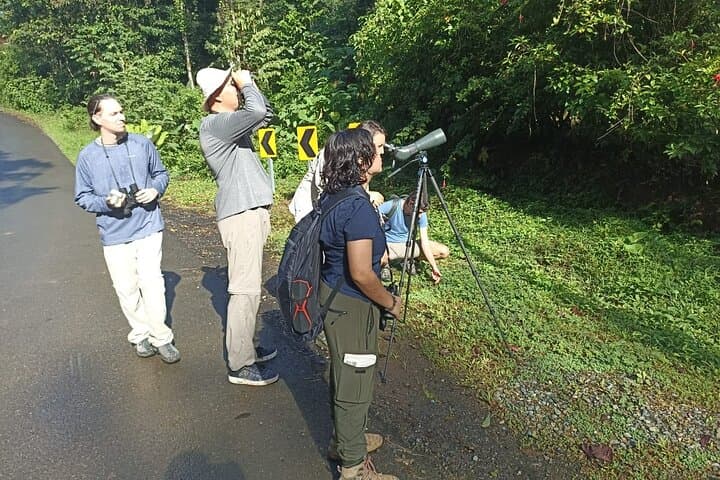
A bilingual naturalist leads a small group along soft dirt trails; binoculars hum with muted excitement as tanagers flash through the midstory and a trogon perches like punctuation on a bare branch. The reserve sits on roughly 155 hectares of primary and secondary forest above 200 meters elevation, where understory plants thicken and shy species like antpitta occasionally answer a call.
Oro Verde is privately managed by the Duarte family for over 40 years, preserving a slice of Pacific slope habitat where volcanic soils meet coastal climate influences — the geology gives the forest quick drainage, the microclimates create diverse feeding and nesting zones.
Local culture is present in the welcome: a typical Costa Rican breakfast served at the Duarte house after the walk, and guides who read bird behavior as clearly as locals read weather.
Practical guidance: the route is suitable for beginner walkers but expect uneven roots and modest elevation change; wear closed-toe shoes and bring a rain layer during the wet months. Guides provide binoculars and a scope, but a compact field guide or app speeds ID work. Start early to catch peak feeding activity; plan for a 3-hour window that includes quiet listening time.
Respect the habitat: stay on trails, keep voices low, and turn off phone sounds. With patient observation and basic preparation, a morning at Oro Verde delivers concentrated birdlife and a clear feel for Costa Rica’s Pacific forest ecology.
moderate.
3 hours.
Moderate fitness — suitable for beginners who can walk uneven ground for up to three hours with short pauses.
The tour lasts three hours and follows short, easy-to-moderate trails suitable for beginner walkers with a moderate fitness level.
Yes — guides supply a telescope and binoculars, but bringing personal optics is recommended if you own them.
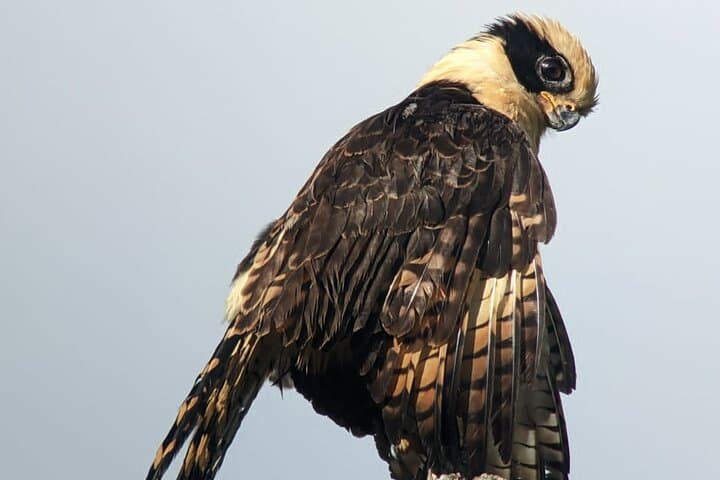
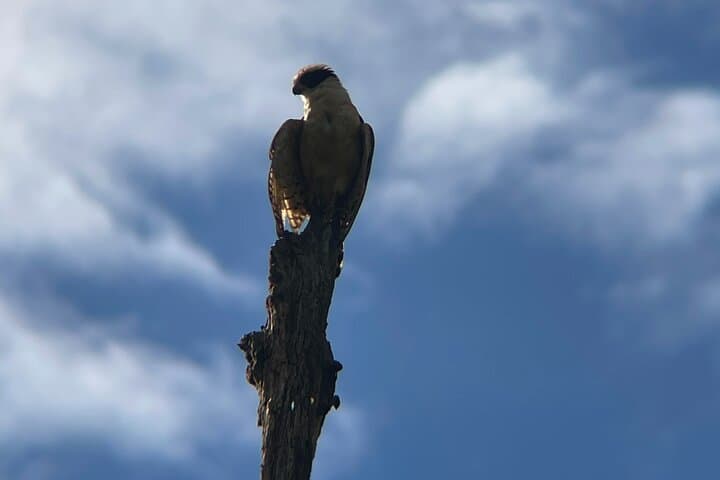
Common sightings include tanagers and trogons, and with patience you may glimpse rarer species like antpitta and a variety of hummingbirds and migrant warblers.
Yes — the activity includes a typical Costa Rican breakfast served at the Duarte family house after the walk.
Oro Verde is a privately managed 155-hectare reserve cared for by the Duarte family for more than 40 years, preserving both primary and regrowing secondary forest on Costa Rica’s Pacific slope.
Visitor numbers are kept small to limit disturbance; staying on trails and minimizing noise helps protect nesting birds and understory species.
Centro de Información Uvita operates guided outdoor trips and adventures with an emphasis on safety, stewardship, and memorable experiences.
You step off the coastal road and into a pocket of cloud-filtered light — the forest at Oro Verde holds its own weather, cool and expectant.
You step off the coastal road and into a pocket of cloud-filtered light — the forest at Oro Verde holds its own weather, cool and expectant.
A bilingual naturalist leads a small group along soft dirt trails; binoculars hum with muted excitement as tanagers flash through the midstory and a trogon perches like punctuation on a bare branch. The reserve sits on roughly 155 hectares of primary and secondary forest above 200 meters elevation, where understory plants thicken and shy species like antpitta occasionally answer a call.
Oro Verde is privately managed by the Duarte family for over 40 years, preserving a slice of Pacific slope habitat where volcanic soils meet coastal climate influences — the geology gives the forest quick drainage, the microclimates create diverse feeding and nesting zones.
Local culture is present in the welcome: a typical Costa Rican breakfast served at the Duarte house after the walk, and guides who read bird behavior as clearly as locals read weather.
Practical guidance: the route is suitable for beginner walkers but expect uneven roots and modest elevation change; wear closed-toe shoes and bring a rain layer during the wet months. Guides provide binoculars and a scope, but a compact field guide or app speeds ID work. Start early to catch peak feeding activity; plan for a 3-hour window that includes quiet listening time.
Respect the habitat: stay on trails, keep voices low, and turn off phone sounds. With patient observation and basic preparation, a morning at Oro Verde delivers concentrated birdlife and a clear feel for Costa Rica’s Pacific forest ecology.