THE ADVENTURE COLLECTIVE® · Independent discovery and booking for outdoor travel

Wander Utrecht’s canals, climb the shadow of the Dom Tower, and taste market life on a focused 2-hour walking tour. This guided route pairs medieval history with modern Dutch city culture for an efficient, sensory introduction to the city.
Wander Utrecht’s canals, climb the shadow of the Dom Tower, and taste market life on a focused 2-hour walking tour. This guided route pairs medieval history with modern Dutch city culture for an efficient, sensory introduction to the city.
You step off a tram and onto stone streets slick with light rain; the Oudegracht’s water threads through the city, daring you to slow down and look. The Dom Tower rises ahead, its sandstone face a vertical clock that has watched Utrecht grow from a Roman fort into a bustling university city.
Verified experiences and guided adventures in the surrounding area.
Operated by Opatrip.com Netherlands · Utrecht, Utrecht
You step off a tram and onto stone streets slick with light rain; the Oudegracht’s water threads through the city, daring you to slow down and look. The Dom Tower rises ahead, its sandstone face a vertical clock that has watched Utrecht grow from a Roman fort into a bustling university city.
The route follows medieval trade lines: wharves built into the canal walls, cellars converted into cafés, and a market square that still trades cheese and flowers much like it did in the 17th century. Geologically, Utrecht sits on river deposits and reclaimed peatlands—flat ground that lets the city spread horizontally, not vertically—so expect easy, level walking with frequent bridges and cobbled thresholds.
Culturally the city is equal parts student energy and heritage: church spires, contemporary galleries, and a bike flow that never stops. Local insights include pausing at the wharf-level cafés for a canal-side espresso and watching barge traffic glide past the quay houses.
Practical guidance: the guided walk is ~2 hours, covers roughly 2–3 miles (3–5 km) at an easy pace, and stops at the cathedral, a hidden green courtyard, a bustling market, and the medieval castle precinct. Wear grippy shoes for cobbles and a light rain layer year-round; bring a small amount of cash for market purchases though cards are widely accepted. Morning tours avoid peak cycling and market crowds; evenings offer warmer light but cooler temperatures.
This tour suits travelers who want an efficient, sensory introduction to Utrecht—historic architecture, lively markets, and canal-side rhythms—all delivered on foot with a local guide to explain the stories behind the stones.
easy.
2 hours.
Suitable for most fitness levels; participants should be able to stand and walk for 2 hours with short breaks.
The tour lasts about 2 hours and covers roughly 3–5 km (2–3 miles) at a relaxed pace with multiple stops.
Yes; the route is flat and accessible for most ages, though cobbles and bridges require attentive walking.
No—this walking tour provides guided commentary and external views; entrance fees to museums or the Dom Tower are not included unless specified.
Private tours are typically offered in English; check booking details or request other languages when reserving.
Utrecht grew from a Roman fort into a medieval trade hub; the Dom Tower, begun in the 14th century, remains the city’s historical focal point.
The canals and historic wharves are sensitive to pollution and overcrowding—avoid feeding wildlife, use marked crossings, and support local businesses that practice sustainable tourism.
Opatrip.com Netherlands operates guided outdoor trips and adventures with an emphasis on safety, stewardship, and memorable experiences.



You step off a tram and onto stone streets slick with light rain; the Oudegracht’s water threads through the city, daring you to slow down and look. The Dom Tower rises ahead, its sandstone face a vertical clock that has watched Utrecht grow from a Roman fort into a bustling university city.
You step off a tram and onto stone streets slick with light rain; the Oudegracht’s water threads through the city, daring you to slow down and look. The Dom Tower rises ahead, its sandstone face a vertical clock that has watched Utrecht grow from a Roman fort into a bustling university city.
The route follows medieval trade lines: wharves built into the canal walls, cellars converted into cafés, and a market square that still trades cheese and flowers much like it did in the 17th century. Geologically, Utrecht sits on river deposits and reclaimed peatlands—flat ground that lets the city spread horizontally, not vertically—so expect easy, level walking with frequent bridges and cobbled thresholds.
Culturally the city is equal parts student energy and heritage: church spires, contemporary galleries, and a bike flow that never stops. Local insights include pausing at the wharf-level cafés for a canal-side espresso and watching barge traffic glide past the quay houses.
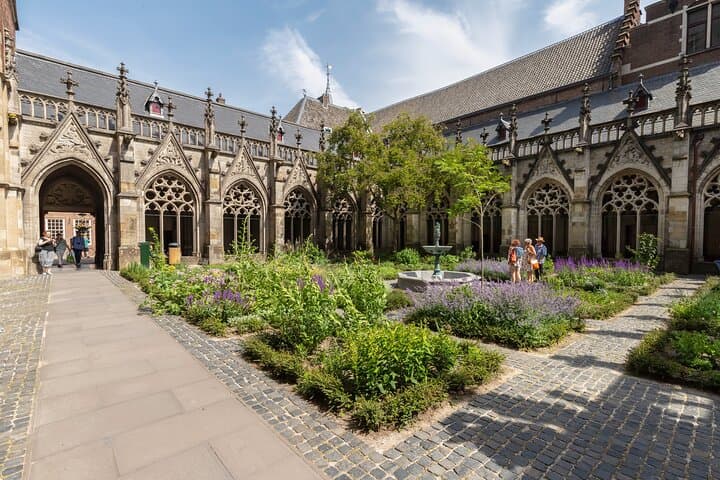
Practical guidance: the guided walk is ~2 hours, covers roughly 2–3 miles (3–5 km) at an easy pace, and stops at the cathedral, a hidden green courtyard, a bustling market, and the medieval castle precinct. Wear grippy shoes for cobbles and a light rain layer year-round; bring a small amount of cash for market purchases though cards are widely accepted. Morning tours avoid peak cycling and market crowds; evenings offer warmer light but cooler temperatures.
This tour suits travelers who want an efficient, sensory introduction to Utrecht—historic architecture, lively markets, and canal-side rhythms—all delivered on foot with a local guide to explain the stories behind the stones.