THE ADVENTURE COLLECTIVE® · Independent discovery and booking for outdoor travel

Walk the rutty trails of Aspen’s original burial ground and hear first-hand stories of miners and pioneers. This compact hour-long tour combines local history, rough trail footing, and clear practical guidance for a thoughtful mountain walk.
Walk the rutty trails of Aspen’s original burial ground and hear first-hand stories of miners and pioneers. This compact hour-long tour combines local history, rough trail footing, and clear practical guidance for a thoughtful mountain walk.
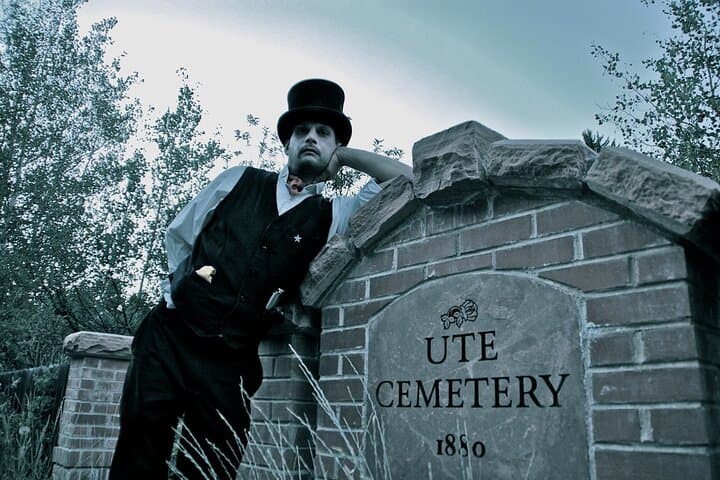
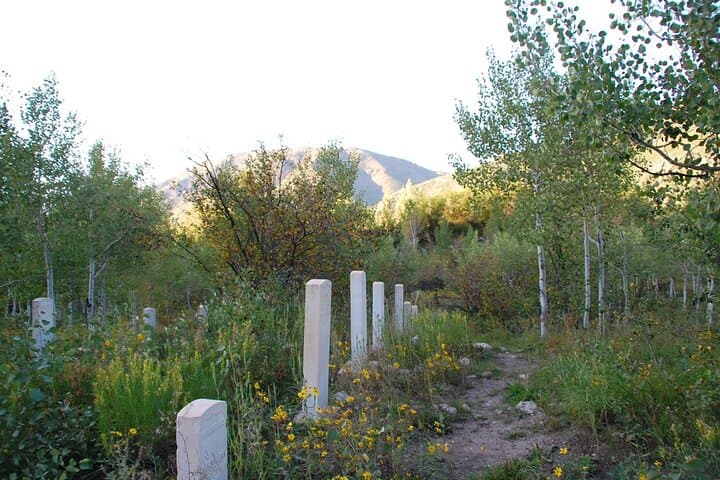
A cold wind from the surrounding ridges cuts across the bike path as you step through a small brick entrance and onto the rutty, hilly trail that leads through Aspen’s earliest burial ground. Headstones lean at odd angles, names worn by decades of sun and snow, while the hush of the valley lowers the city noise to a distant murmur — the landscape insisting you listen.
Verified experiences and guided adventures in the surrounding area.
Operated by Dean's Aspen Tours · Aspen, Colorado
A cold wind from the surrounding ridges cuts across the bike path as you step through a small brick entrance and onto the rutty, hilly trail that leads through Aspen’s earliest burial ground. Headstones lean at odd angles, names worn by decades of sun and snow, while the hush of the valley lowers the city noise to a distant murmur — the landscape insisting you listen.
The Ute Cemetery dates to Aspen’s silver boom and the town’s early pioneer era; here you’ll hear practical stories of miners, families and the extremes of 19th-century mountain life. Geologically the site sits where glacially carved valleys meet steep moraines; the soil and slope cause uneven footing and slight elevation change that remind you this is a working mountain environment, not a manicured park. Culturally, the tour ties local memory to present-day Aspen, connecting material history — dates, inscriptions, masonry styles — to the boom-and-bust cycles that shaped the town.
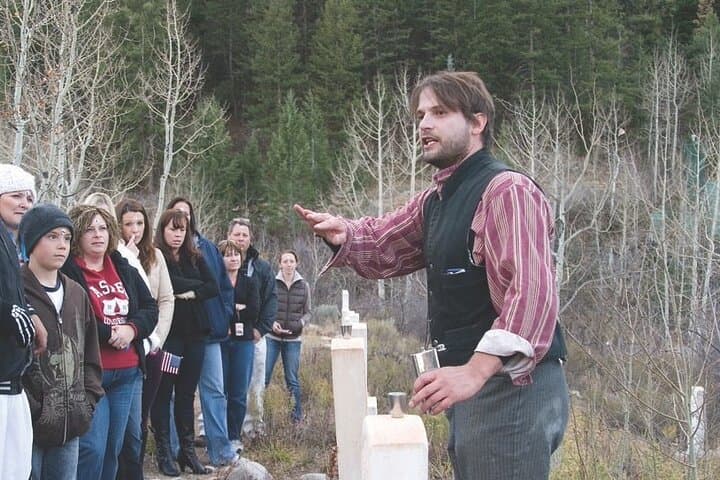
Expect an hour on foot, leaving and returning to the Ute Ave brick marker across from the Ute Trail. The guide will point out notable graves, interpret funeral practices of early settlers, and flag vegetation that stabilizes the hillside. Practical notes: dress in layers, wear footwear with good traction, and be ready for sudden temperature drops in shade. Photography is allowed but show care around markers. The route is brief but uneven; take your time on descents and step around fragile stones. The result is a compact, thoughtful walk through Aspen’s human and geological past — immediate, practical, and quietly revealing.
moderate.
1 hour.
Suitable for people with a moderate level of fitness who can navigate short, uneven uphill and downhill sections.
The tour runs approximately 60 minutes and starts and finishes at the brick entrance on Ute Ave across from the Ute Trail.
Service animals are permitted; pets are not generally recommended due to fragile markers and uneven trails.
No — the route includes rutty, hilly dirt paths and uneven surfaces that are not suitable for strollers or wheelchairs.
Dress in layers, bring a warm hat on cool days and a waterproof jacket if rain is in the forecast; shaded areas will be noticeably colder earlier in the day.
The cemetery reflects Aspen’s 19th-century silver boom and the town’s early pioneer families; many markers date to the late 1800s and illustrate frontier funerary practices.
Stay on established footpaths, avoid touching or leaning on headstones, and carry out any trash — erosion and human contact accelerate wear on historic markers.
Dean's Aspen Tours operates guided outdoor trips and adventures with an emphasis on safety, stewardship, and memorable experiences.
A cold wind from the surrounding ridges cuts across the bike path as you step through a small brick entrance and onto the rutty, hilly trail that leads through Aspen’s earliest burial ground. Headstones lean at odd angles, names worn by decades of sun and snow, while the hush of the valley lowers the city noise to a distant murmur — the landscape insisting you listen.
A cold wind from the surrounding ridges cuts across the bike path as you step through a small brick entrance and onto the rutty, hilly trail that leads through Aspen’s earliest burial ground. Headstones lean at odd angles, names worn by decades of sun and snow, while the hush of the valley lowers the city noise to a distant murmur — the landscape insisting you listen.
The Ute Cemetery dates to Aspen’s silver boom and the town’s early pioneer era; here you’ll hear practical stories of miners, families and the extremes of 19th-century mountain life. Geologically the site sits where glacially carved valleys meet steep moraines; the soil and slope cause uneven footing and slight elevation change that remind you this is a working mountain environment, not a manicured park. Culturally, the tour ties local memory to present-day Aspen, connecting material history — dates, inscriptions, masonry styles — to the boom-and-bust cycles that shaped the town.
Expect an hour on foot, leaving and returning to the Ute Ave brick marker across from the Ute Trail. The guide will point out notable graves, interpret funeral practices of early settlers, and flag vegetation that stabilizes the hillside. Practical notes: dress in layers, wear footwear with good traction, and be ready for sudden temperature drops in shade. Photography is allowed but show care around markers. The route is brief but uneven; take your time on descents and step around fragile stones. The result is a compact, thoughtful walk through Aspen’s human and geological past — immediate, practical, and quietly revealing.